Back to Don's Maps
 Back to Australian rock art and other Oz sites
 Giant Wallaroo Rock Art site
( Click on the image above to see the full size photo )
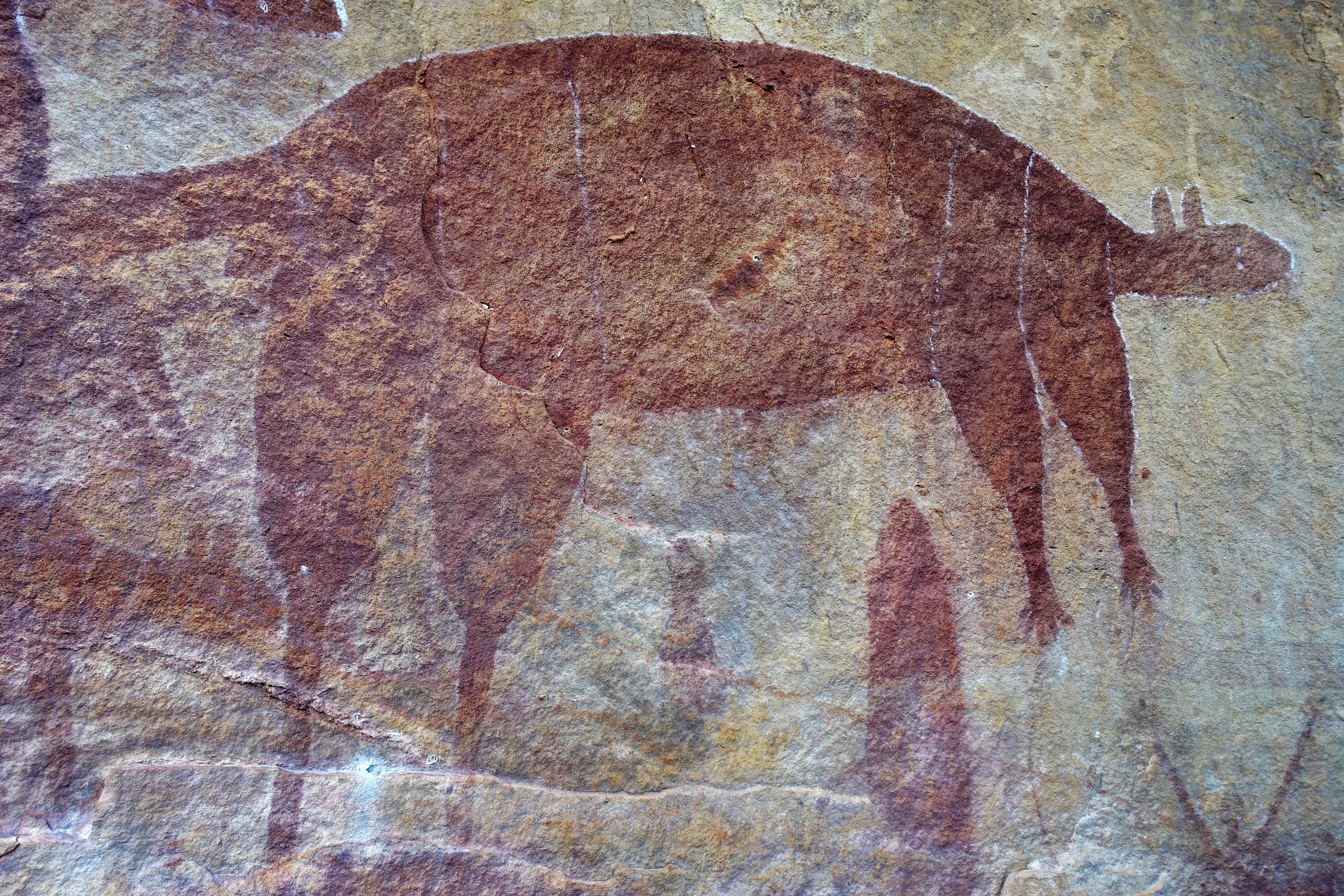
One of the giant wallaroos at the site.
Photo: Don Hitchcock 2023
Location: Wallaroo Gallery
( Click on the image above to see the full size photo )
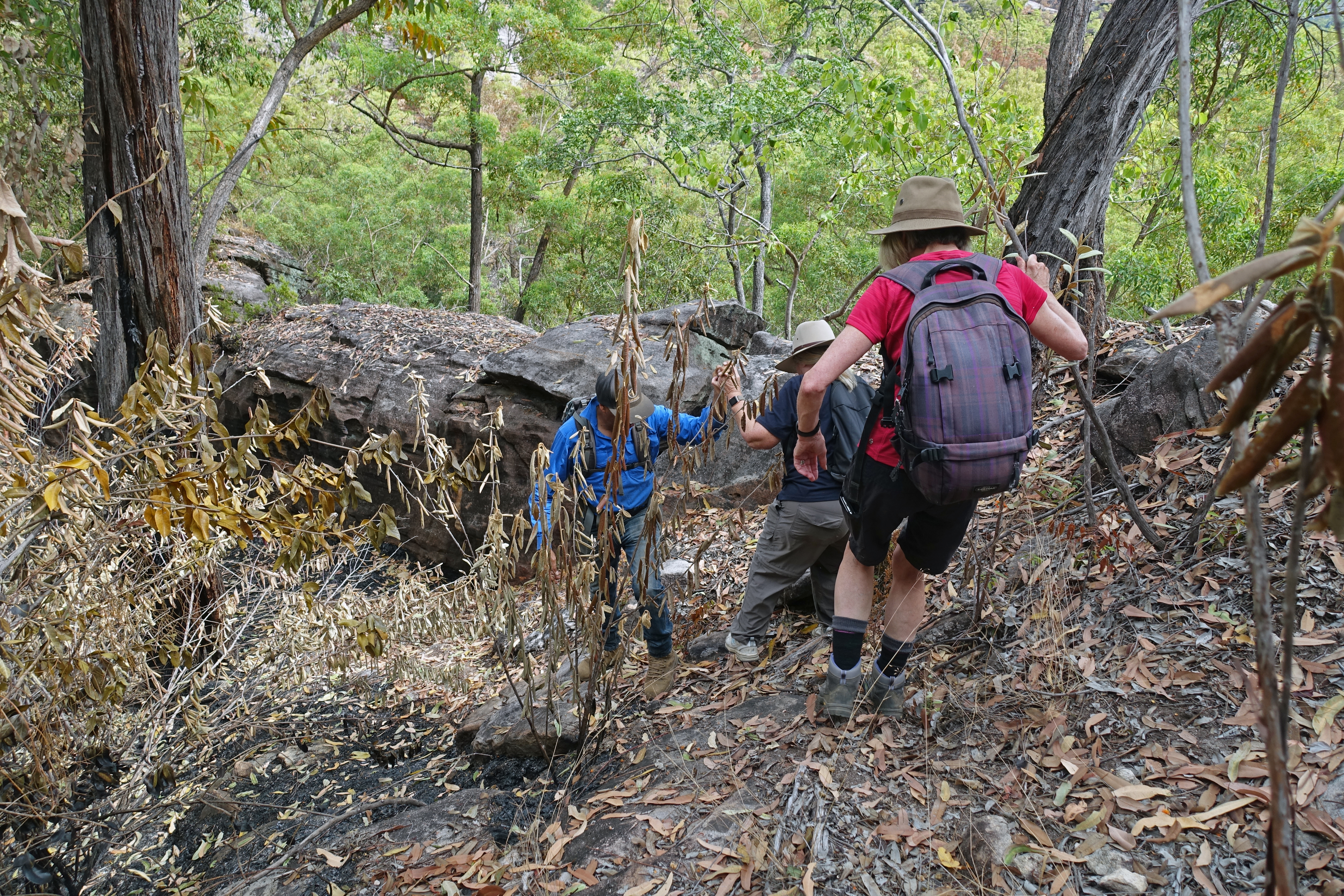
Wallaroo Gallery is reached by climbing down the steep valley sides to Pine Tree Creek, and then climbing to the rock art site higher up on the other side.
Photo: Don Hitchcock 2023
Location: Wallaroo Gallery
( Click on the image above to see the full size photo )
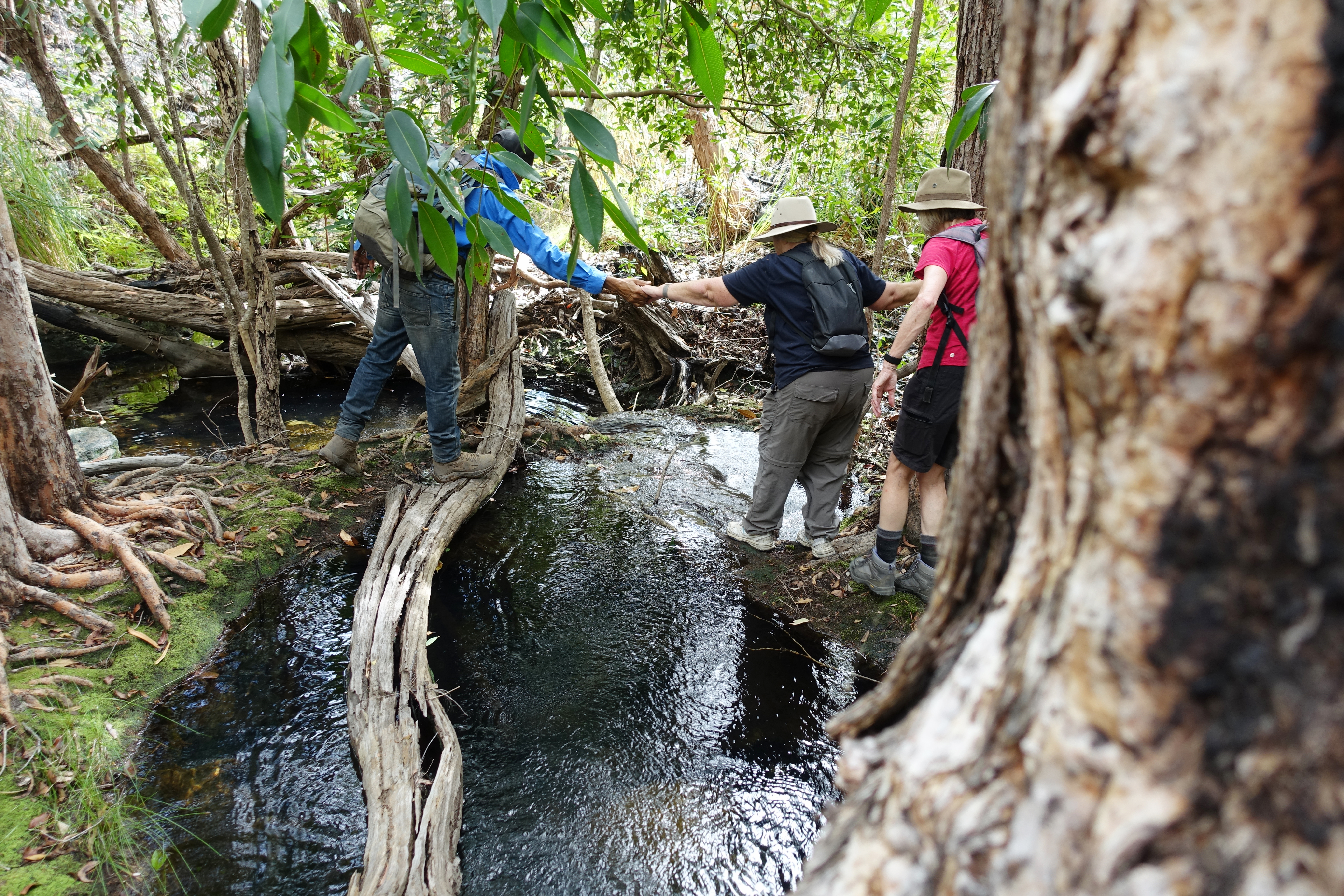
Crossing Pine Tree Creek.
Johnny Murison (at left) is a traditional owner from the Kuku-yalanji people, and he takes his guests on tours of the rock art sites in the vicinity of the small town of Laura, four hours drive from Cairns.
Photo: Don Hitchcock 2023
Location: Wallaroo Gallery
( Click on the image above to see the full size photo )
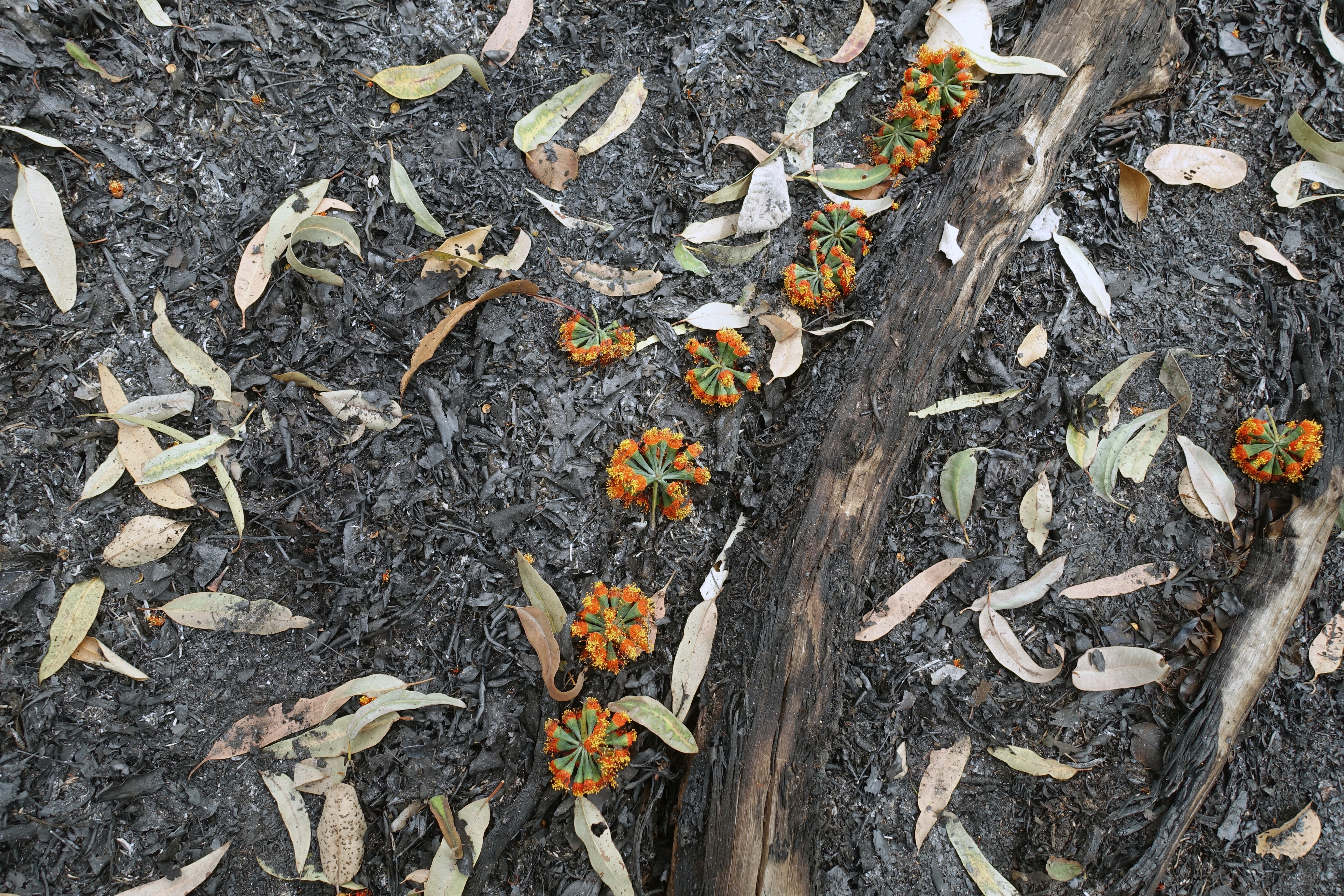
A Eucalyptus phoenicea (Scarlet gum) had dropped some of its flowers, possibly when local parrots such as rainbow lorikeets were feeding on them. Rainbow lorikeets harvest nectar and pollen, but also eat fruits, seeds and some insects.
The area had been burnt, since we were in the dry season, and periodic burning keeps the tracks open, and provides green pick for macropods such as wallaroos.
Photo: Don Hitchcock 2023
Location: Wallaroo Gallery
( Click on the image above to see the full size photo )
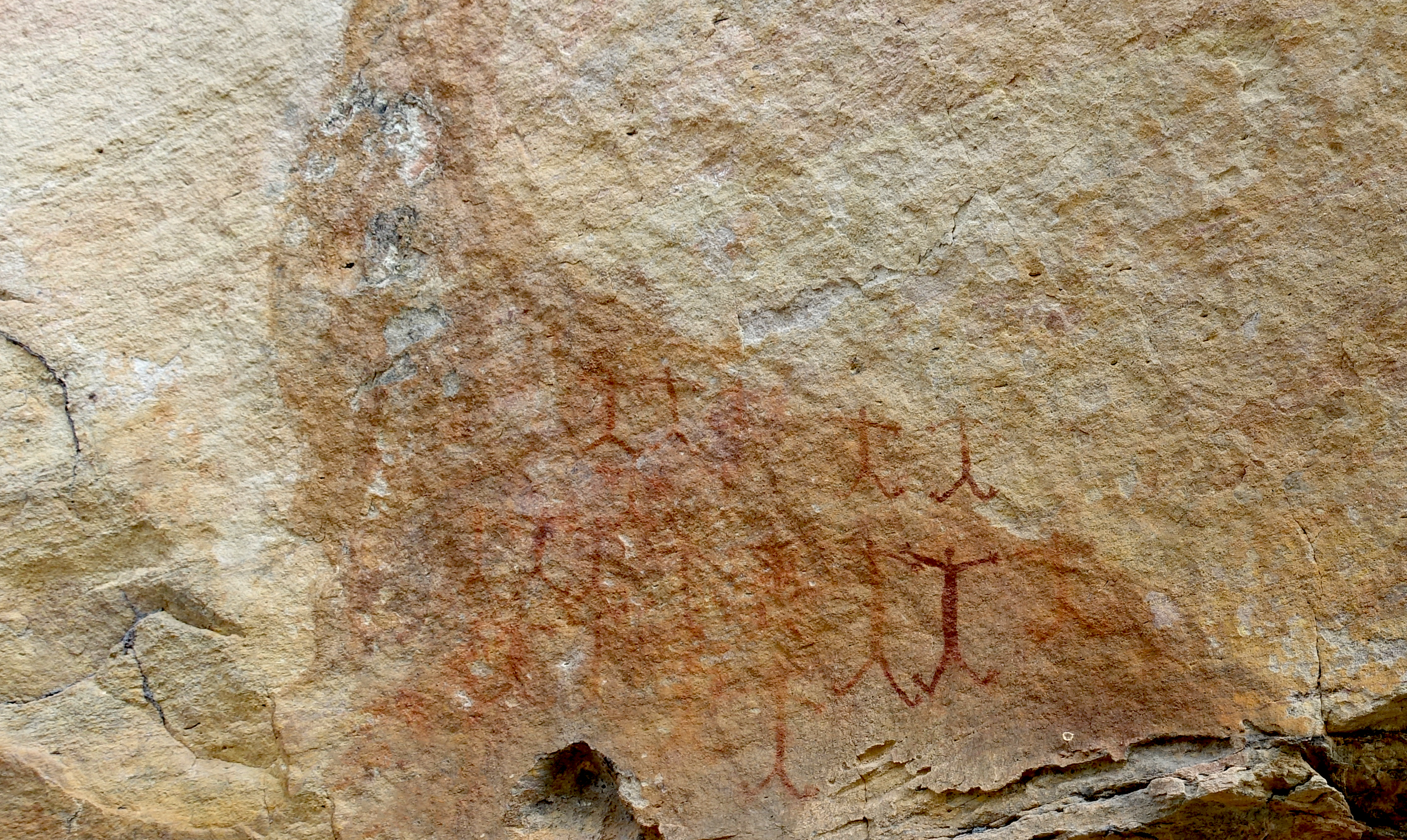
After a steep climb in hot and humid conditions, we reached the Wallaroo Gallery. These dancing stick figures are possibly ancestral spirits.
Photo: Don Hitchcock 2023
Location: Wallaroo Gallery
( Click on the image above to see the full size photo )
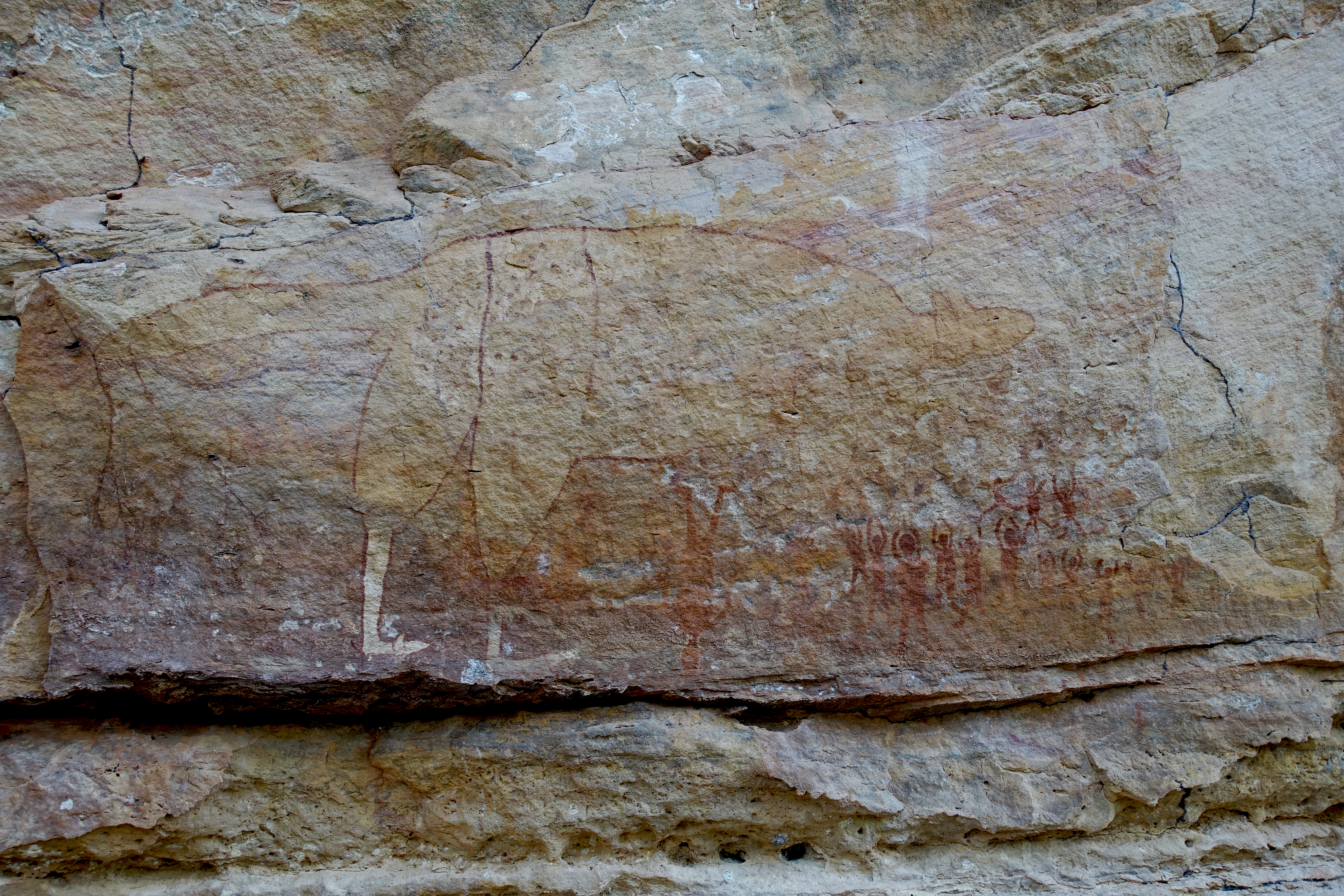
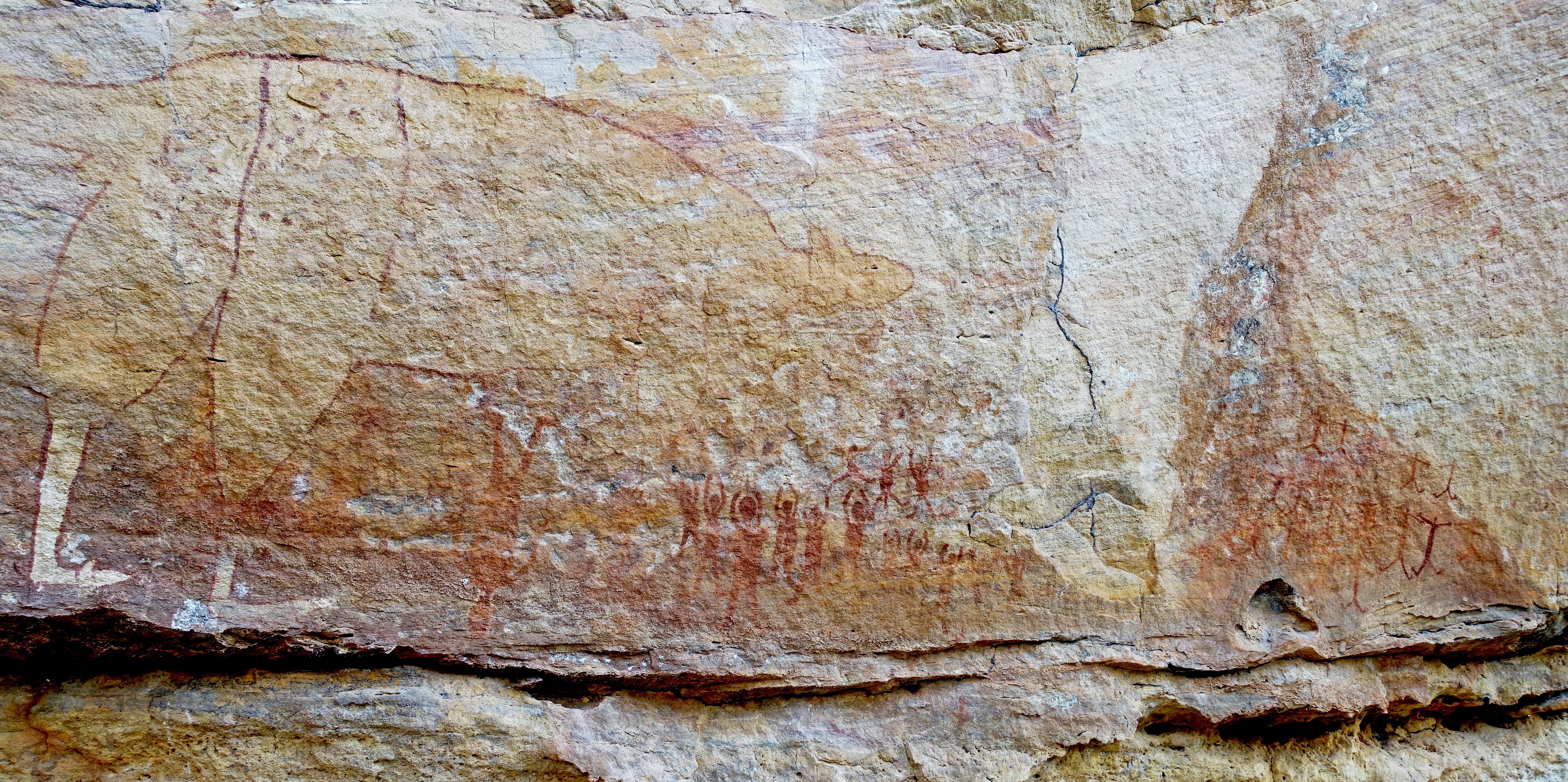
This giant wallaroo is outlined in red ochre, and filled in with a mustard coloured ochre.
Below this wallaroo is an upside down spirit figure, and a frieze of dancing spirit ancestor figures, with their hands held high above their heads.
Photo: Don Hitchcock 2023
Location: Wallaroo Gallery
( Click on the image above to see the full size photo )
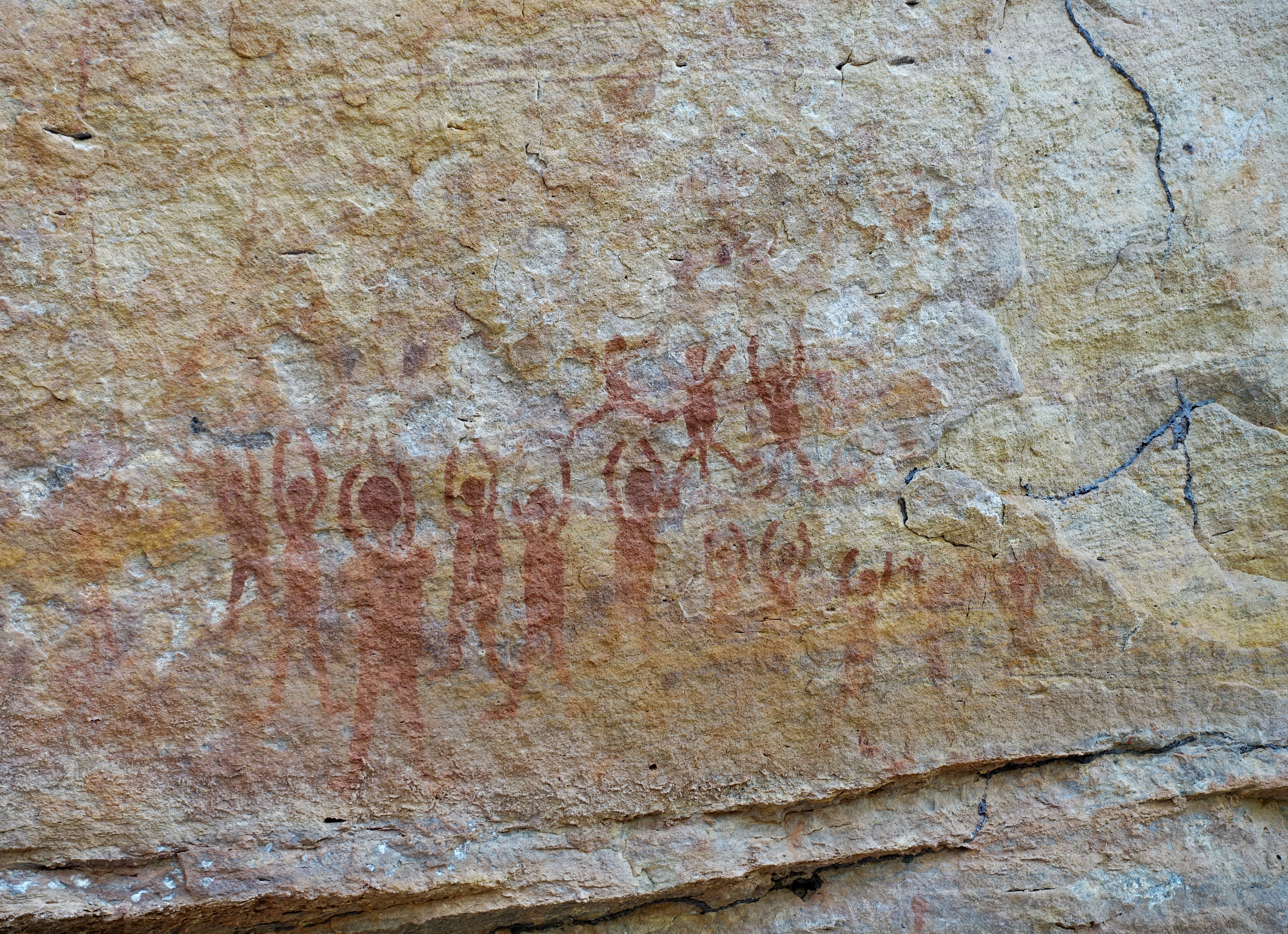
Close up of the frieze of dancing spirit ancestor figures, with their hands held high above their heads.
Photo: Don Hitchcock 2023
Location: Wallaroo Gallery
( Click on the image above to see the full size photo )
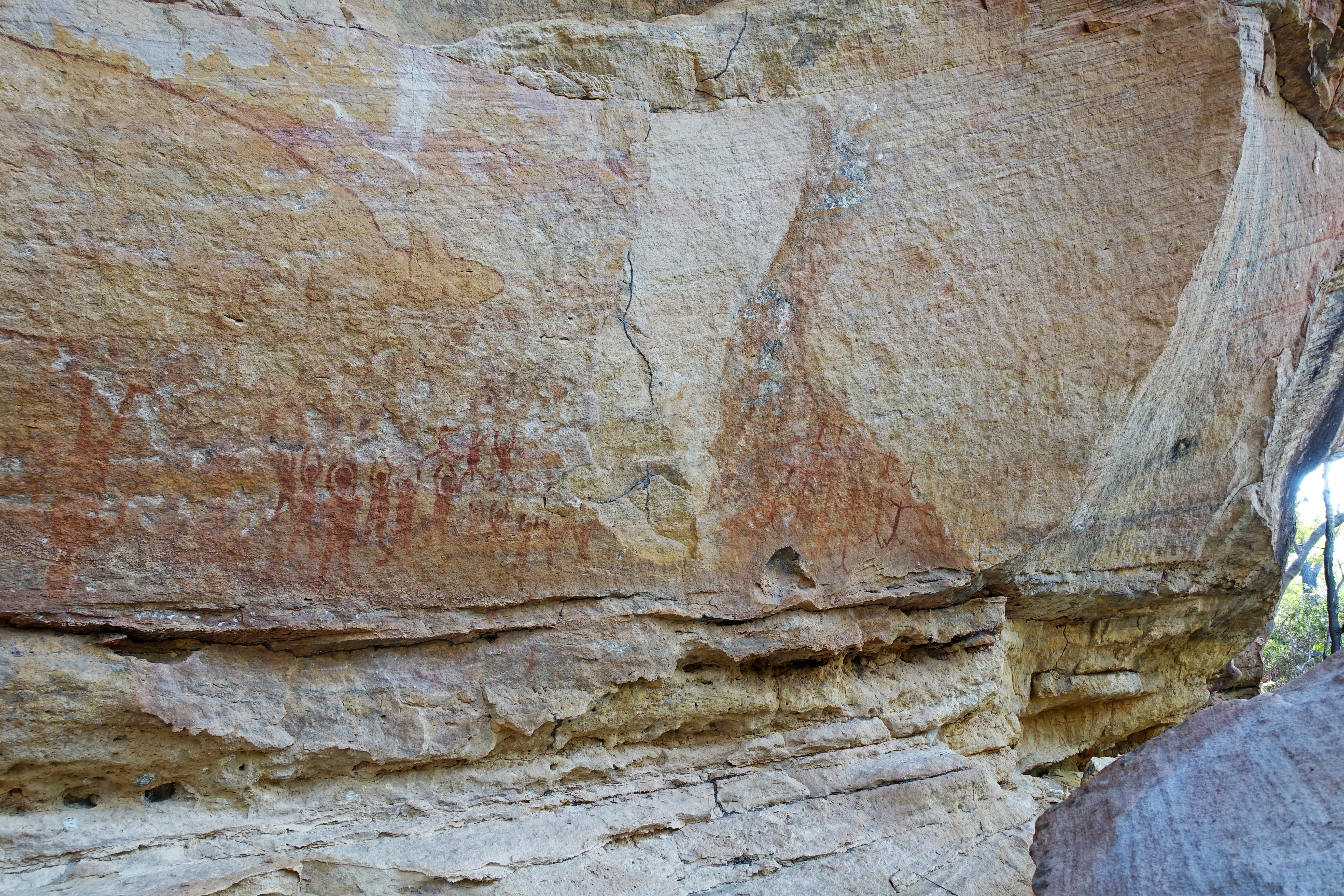
This shows the physical relationship on the rock face between the wallaroo, dancing figures with hands above their heads, and the stick figures to the right.
Photo: Don Hitchcock 2023
Location: Wallaroo Gallery
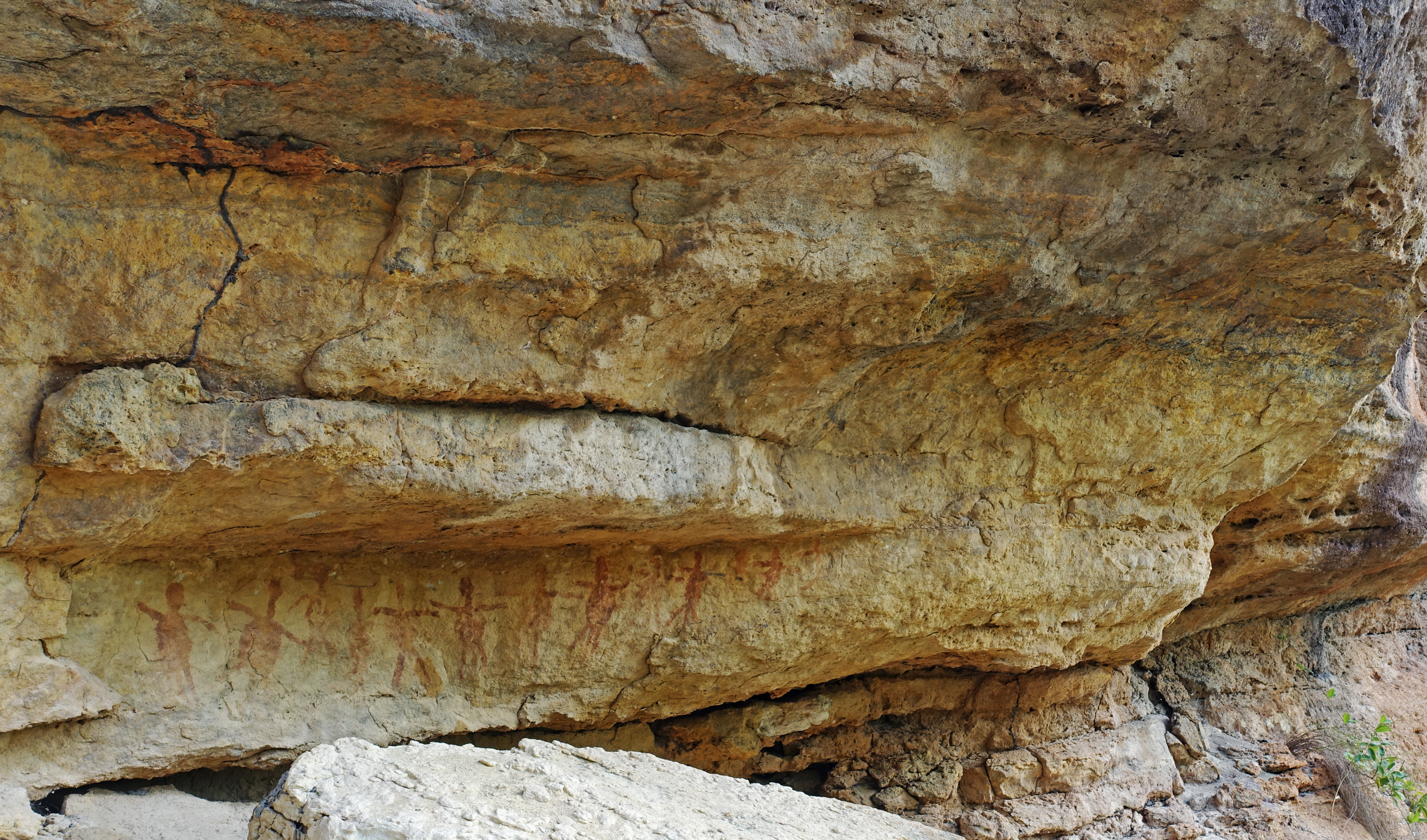
This part of the rock site is well protected from the weather by a large overhang.
Photo: Don Hitchcock 2023
Location: Wallaroo Gallery
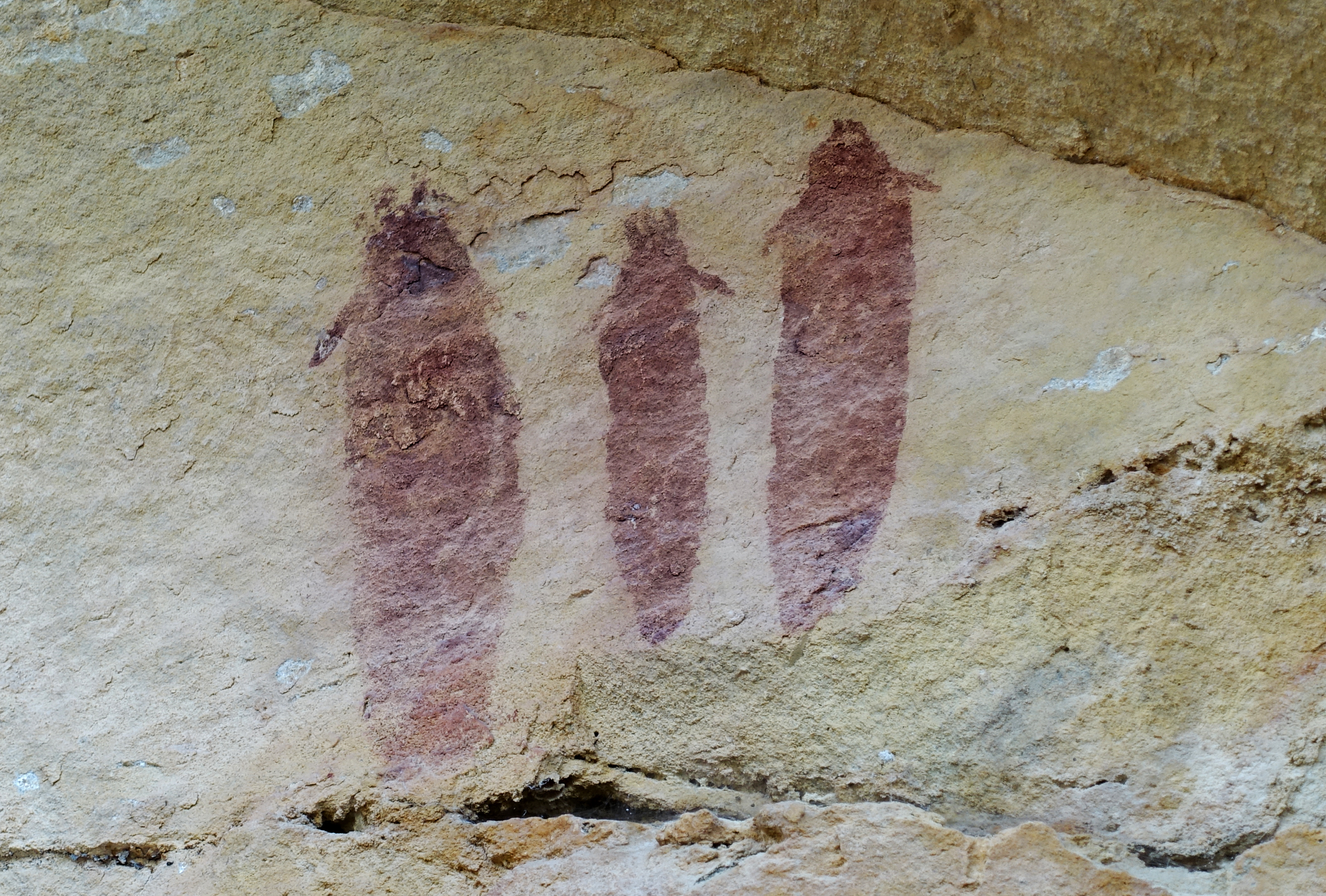
These male dancing figures are much more substantial, and show long phalluses.
Photo: Don Hitchcock 2023
Location: Wallaroo Gallery
Eel tailed catfish, showing the barbels or whiskers of this species.
Photo: Don Hitchcock 2023
Location: Wallaroo Gallery
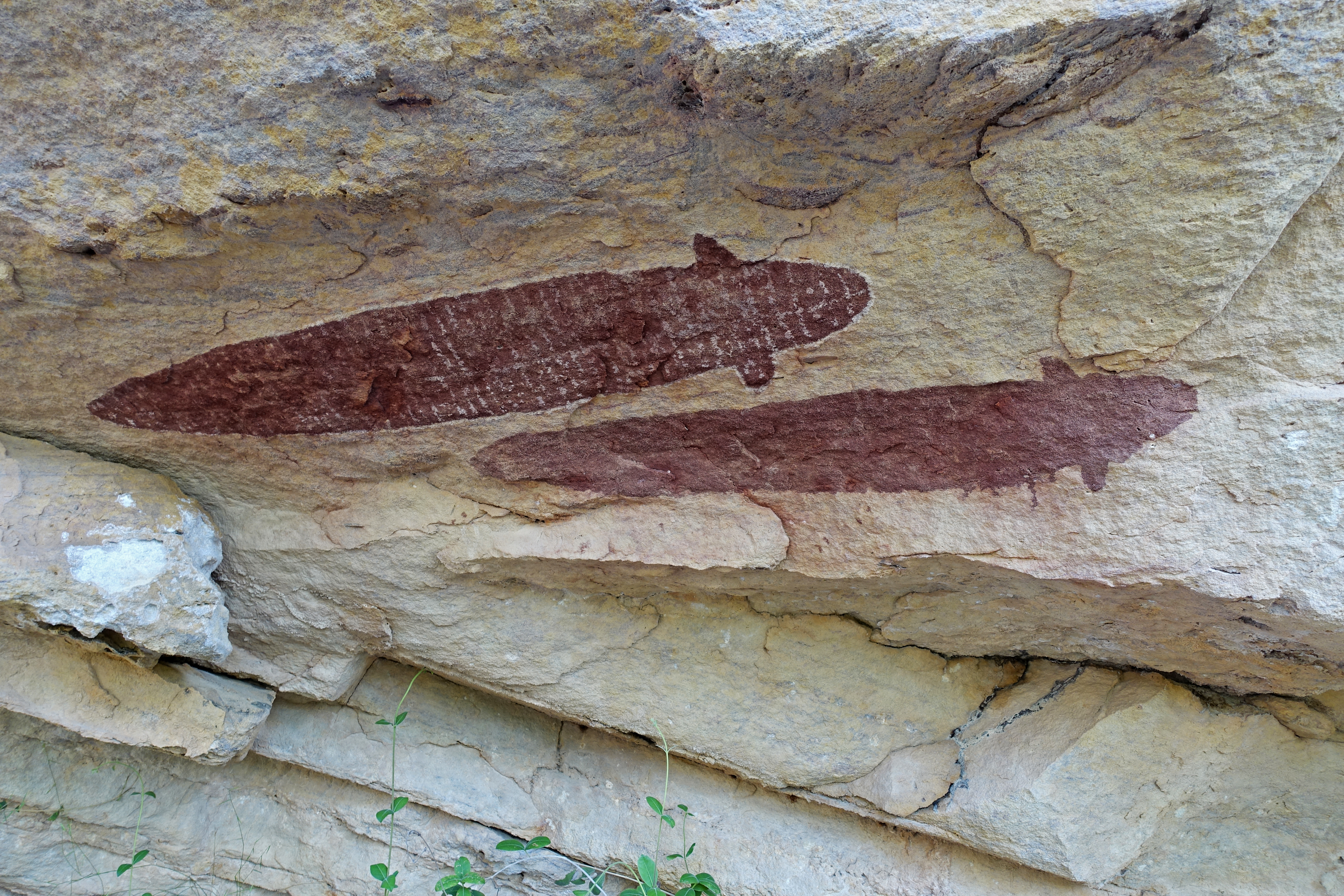
Two eels, one without decoration, the other with a white outline and white transverse lines.
A useful resource for the identification of the fish in the rock art of the Laura region is provided by Cole et al. (2024)
Photo: Don Hitchcock 2023
Location: Wallaroo Gallery
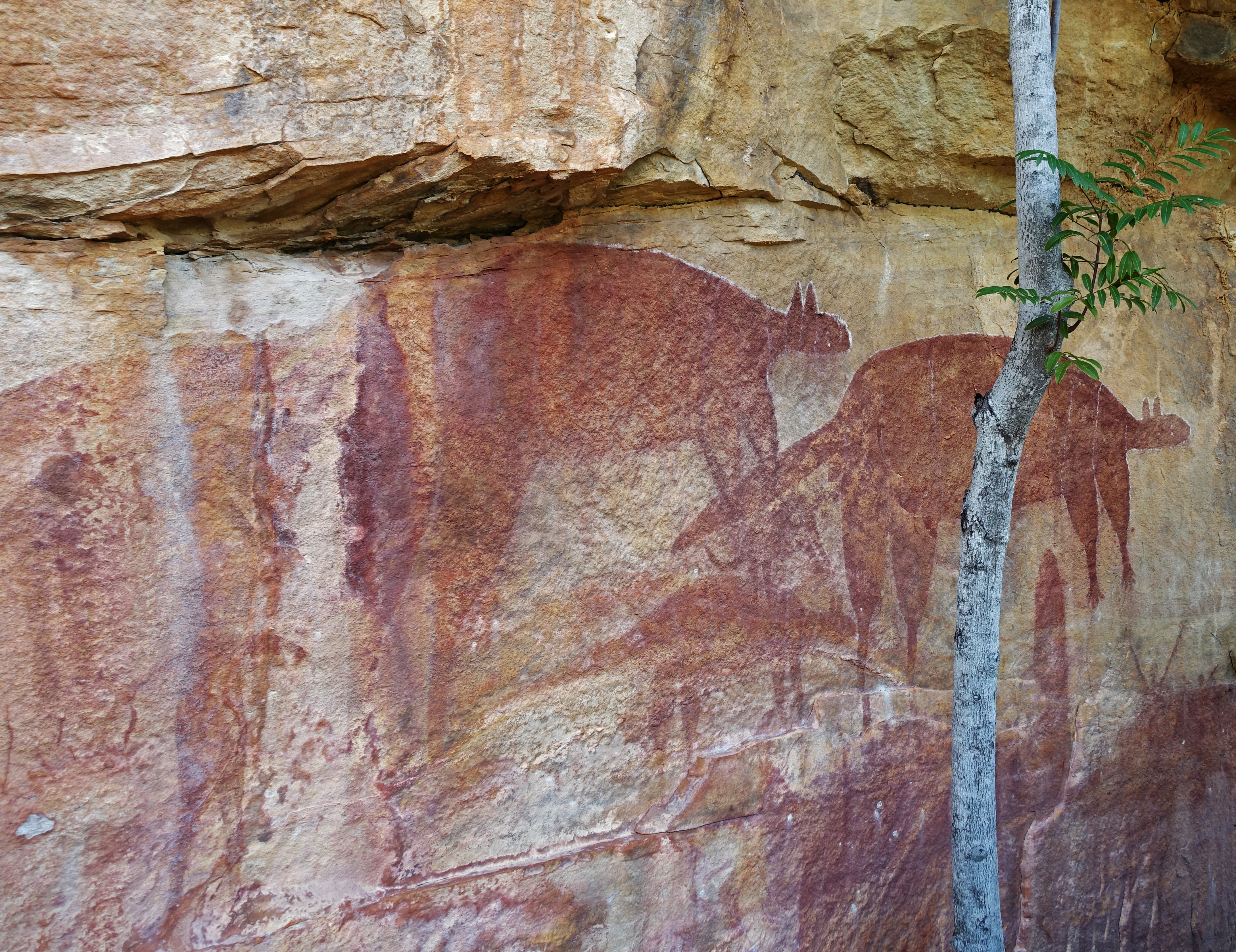
Three wallaroos in red ochre, outlined in white ochre, with the right hand example decorated with vertical lines of white ochre.
The small animal between the two wallaroos on the left is a dingo, judging by its thin upcurved tail.
Photo: Don Hitchcock 2023
Location: Wallaroo Gallery
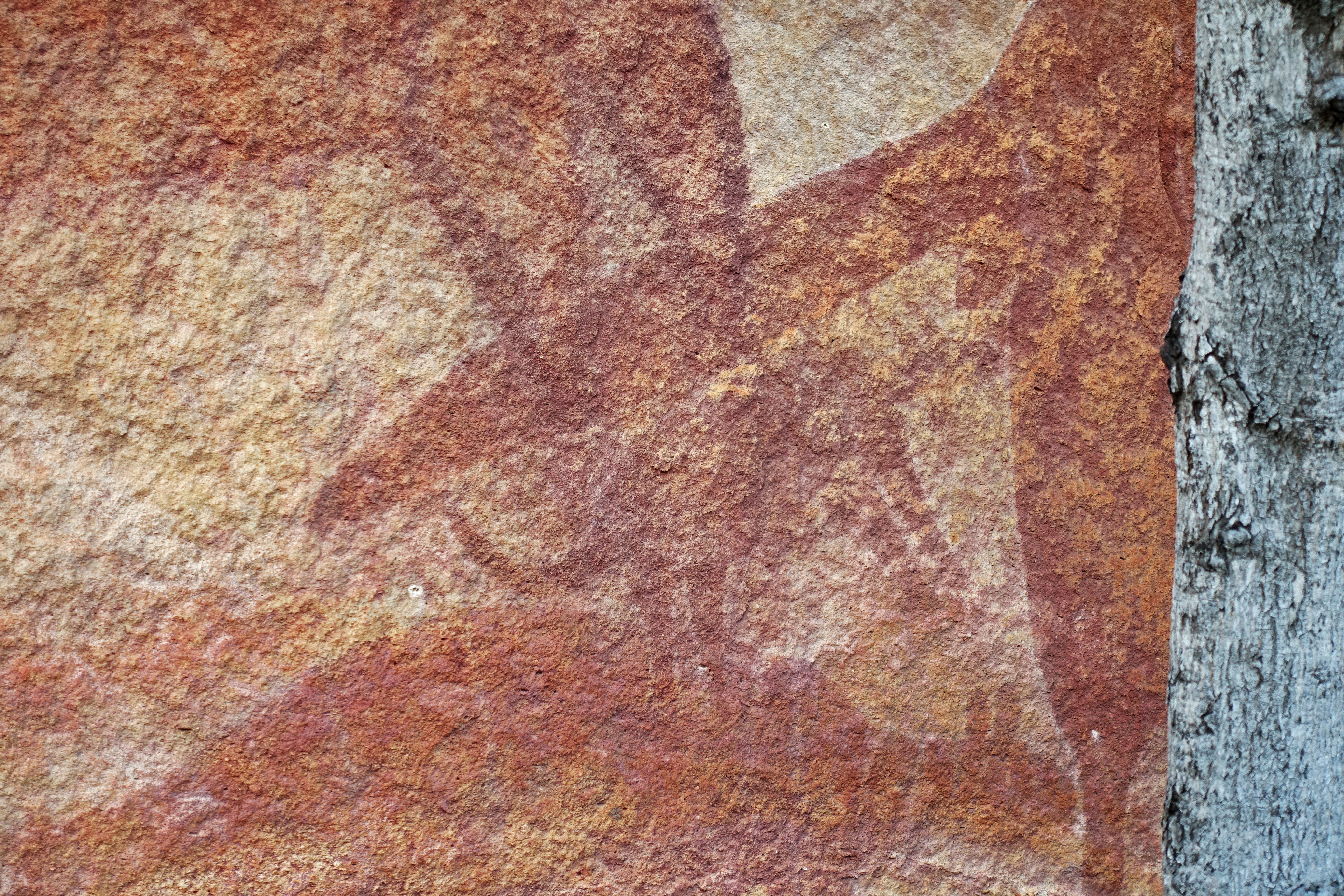
Close up of the dingo.
Photo: Don Hitchcock 2023
Location: Wallaroo Gallery
Close up of the right hand wallaroo.
Note the upraised hands of the anthropoid figure on the right of this image.
Photo: Don Hitchcock 2023
Location: Wallaroo Gallery
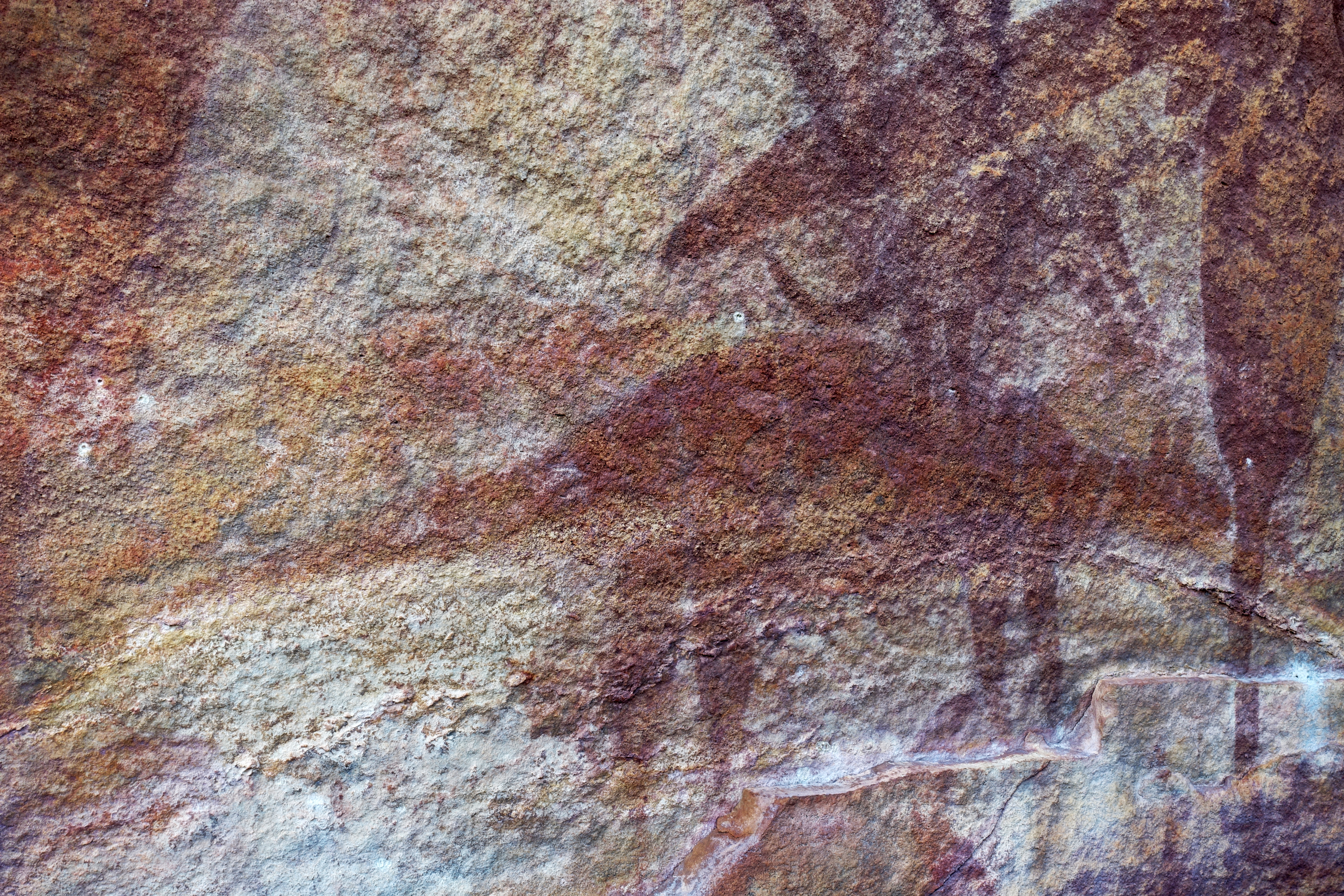
Close up of the lower, small wallaroo.
Photo: Don Hitchcock 2023
Location: Wallaroo Gallery
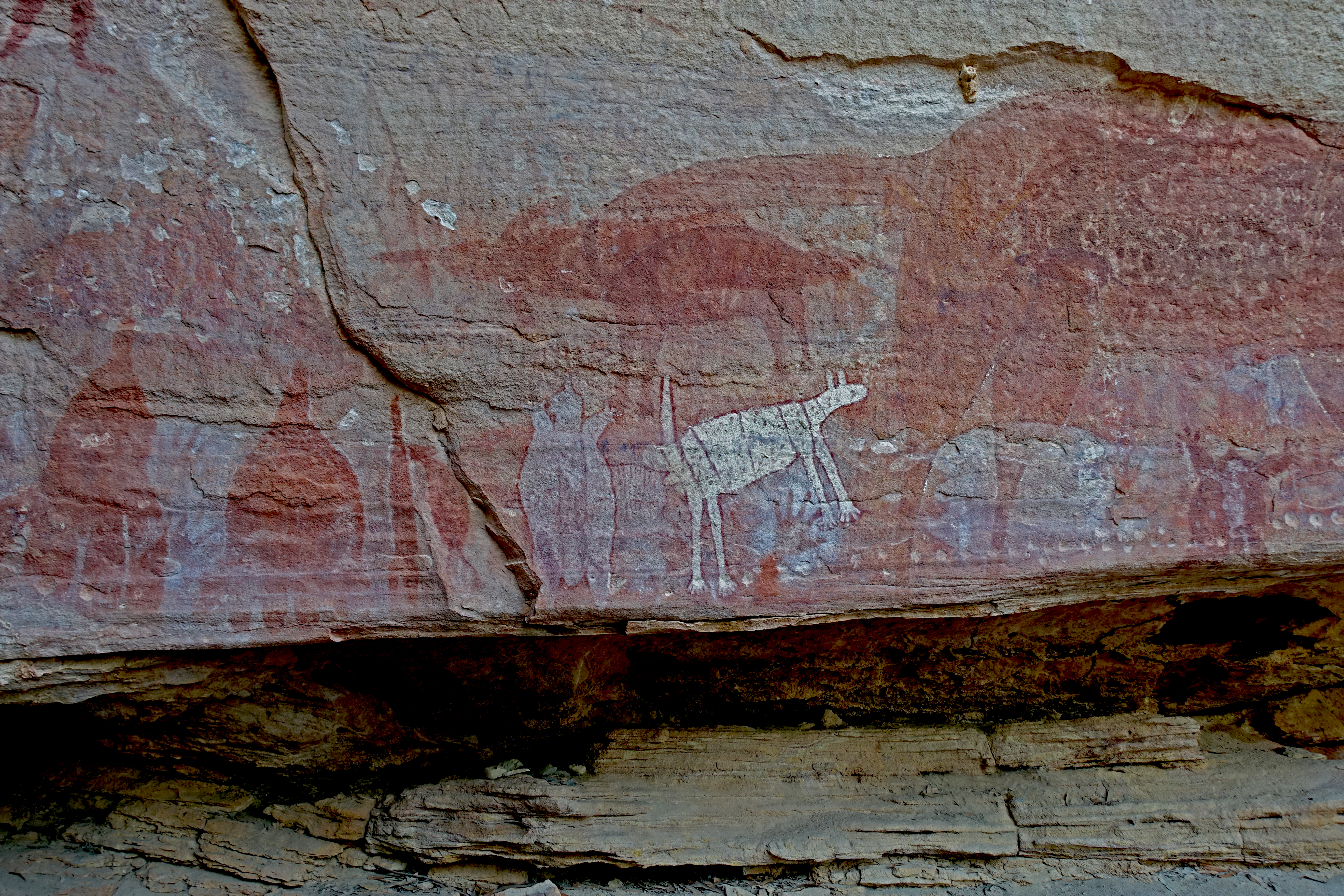
Echidna and wallaroo in the centre of the image.
( Click on the image above to see the full size photo without the added red rectangle )
The images on the left in the red rectangle may be distorted echidnas or, more likely, anthropomorphic Kalkadoon motifs.
Photo: Don Hitchcock 2023
Location: Wallaroo Gallery
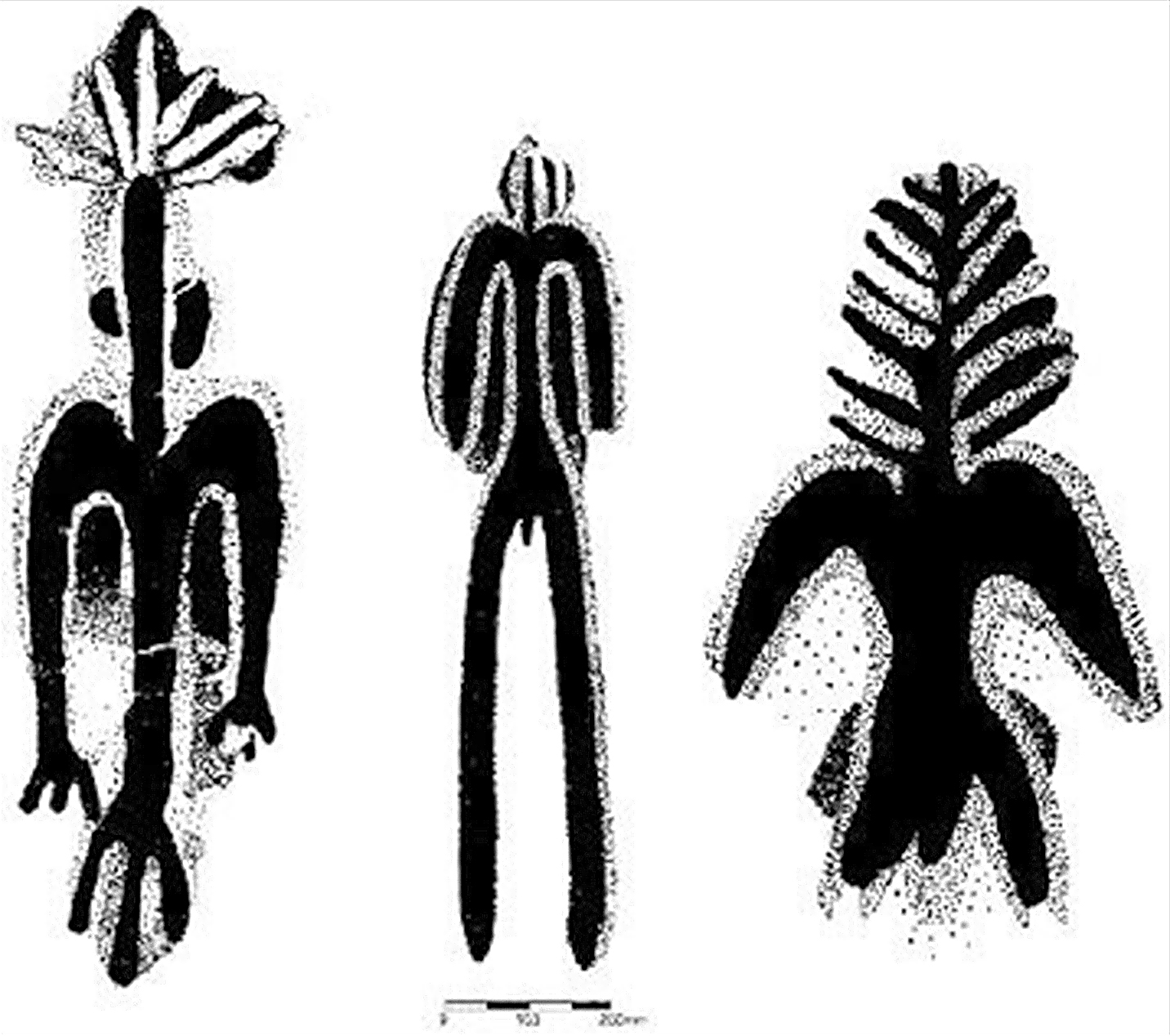
( Click on the image above to see the full size photo )
These are anthropomorphic Kalkadoon motifs, northwest central Queensland, two of which have headdresses with a strong similarity to the figure above.
Photo: Ross et al. (2008)
Proximate Source: McDonald & Clayton (2016)
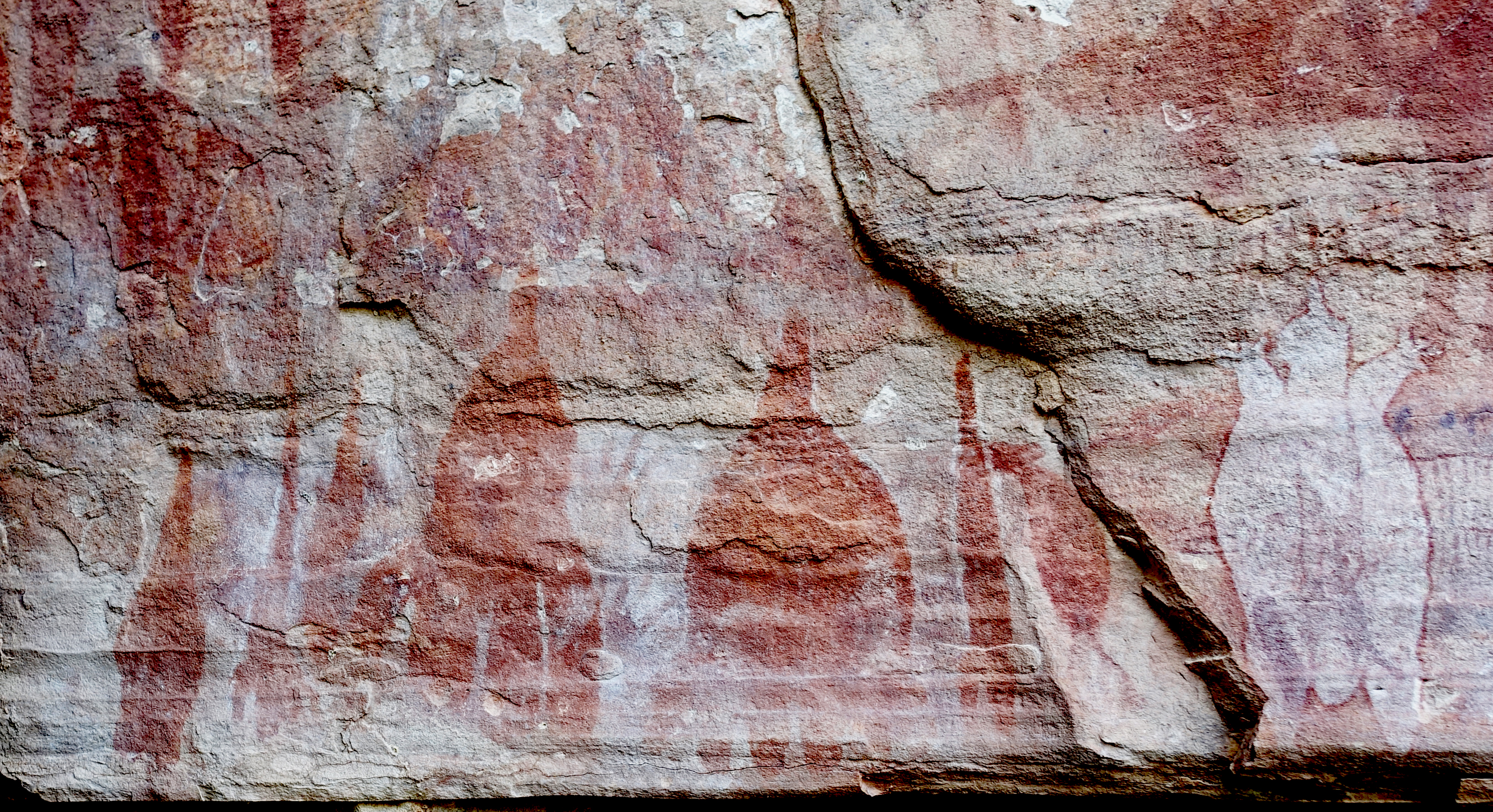
Close up of the white echidna outlined in red on the right, and the possibly anthropomorphic Kalkadoon motifs, as well as an anthropomorphic figure at the top left.
Photo: Don Hitchcock 2023
Location: Wallaroo Gallery
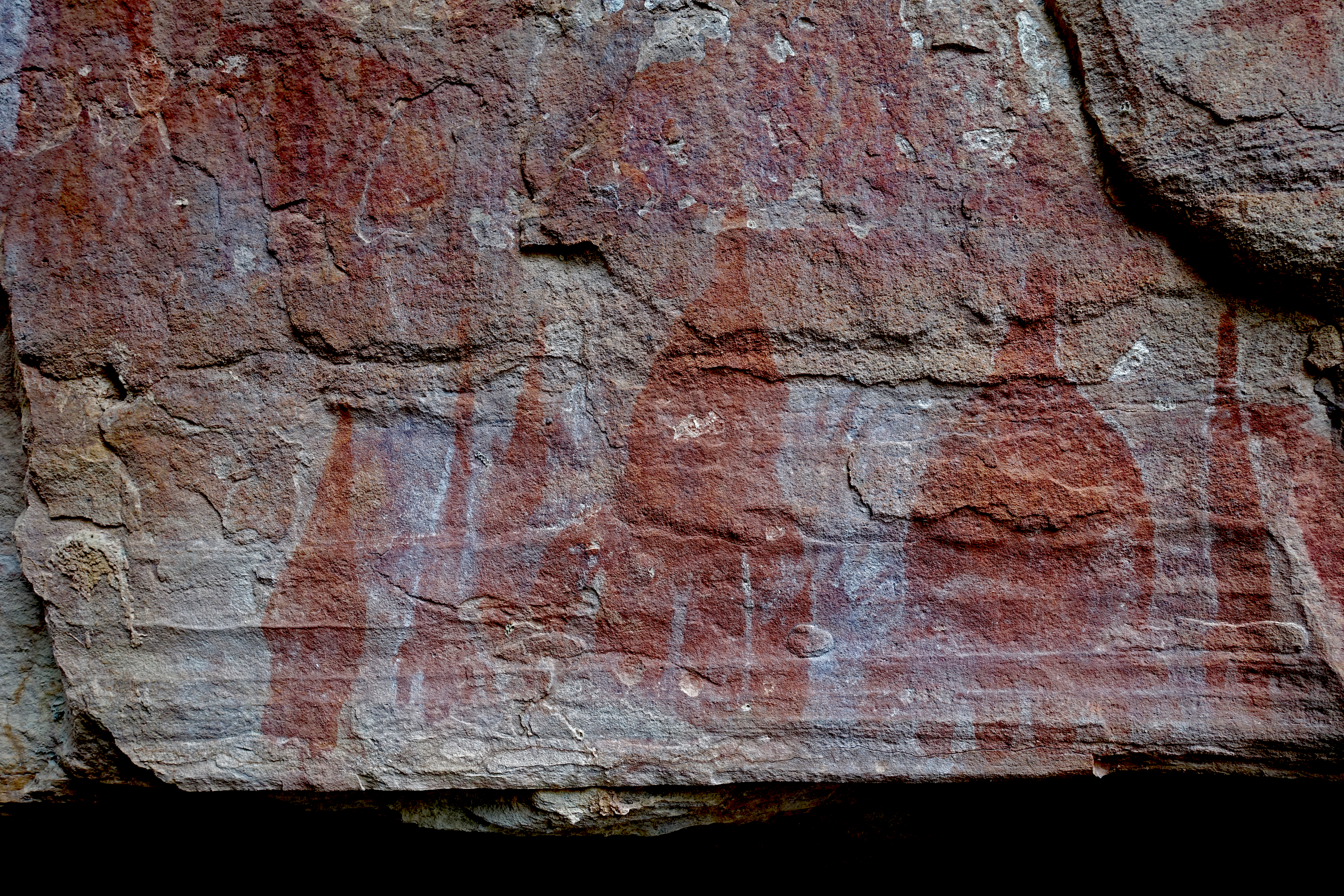
Another version of the panel above.
Photo: Don Hitchcock 2023
Location: Wallaroo Gallery
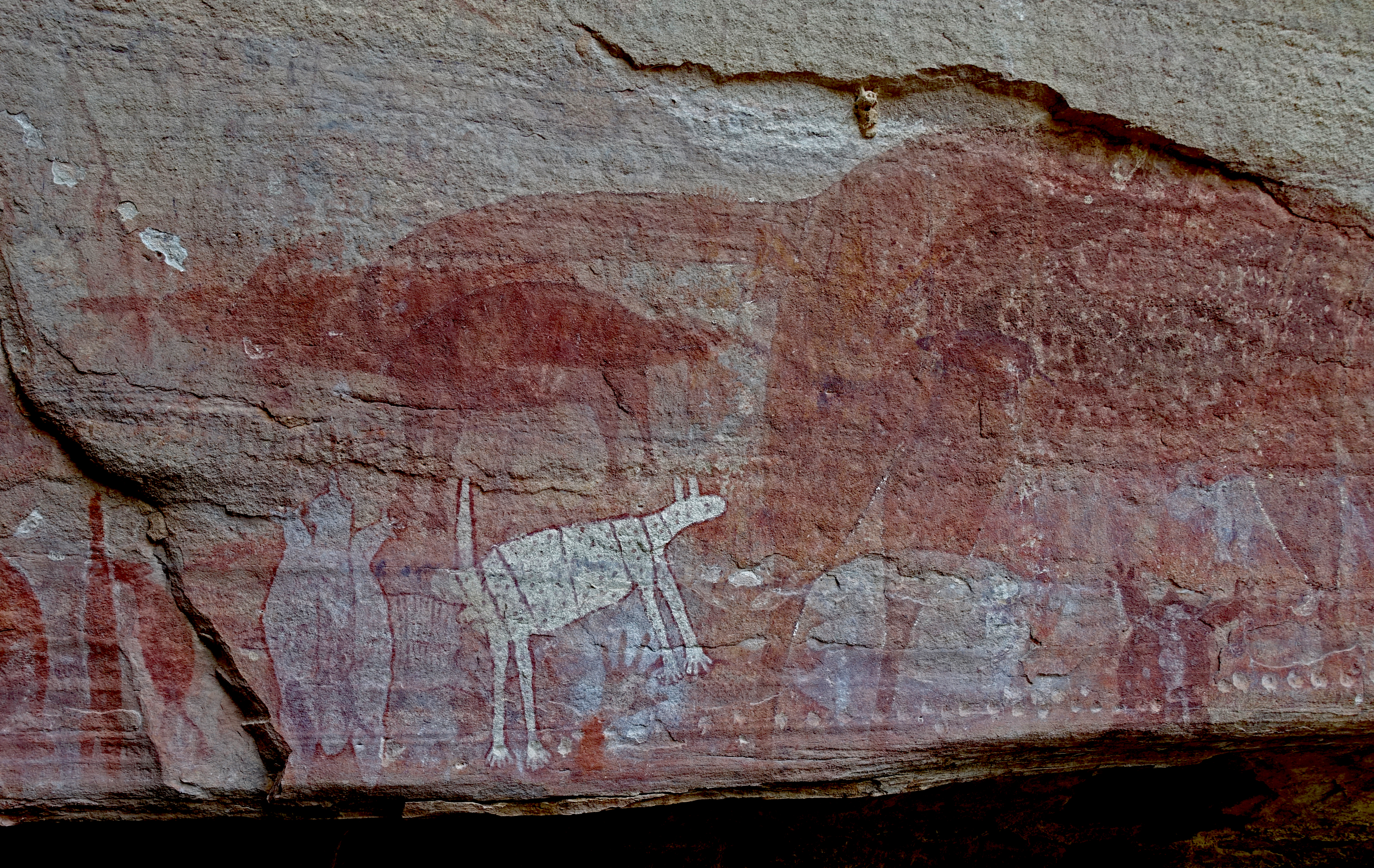
White echidna outlined in red on the left, a small wallaroo beside it on its right, with a negative human handprint below the white wallaroo, possibly a fresh water crocodile above them overlain with a small red wallaroo, a large wallaroo on the far right, with a partial echidna with well defined claws below that.
Note also the small red quinkan figure to the left of the white echidna.
Photo: Don Hitchcock 2023
Location: Wallaroo Gallery
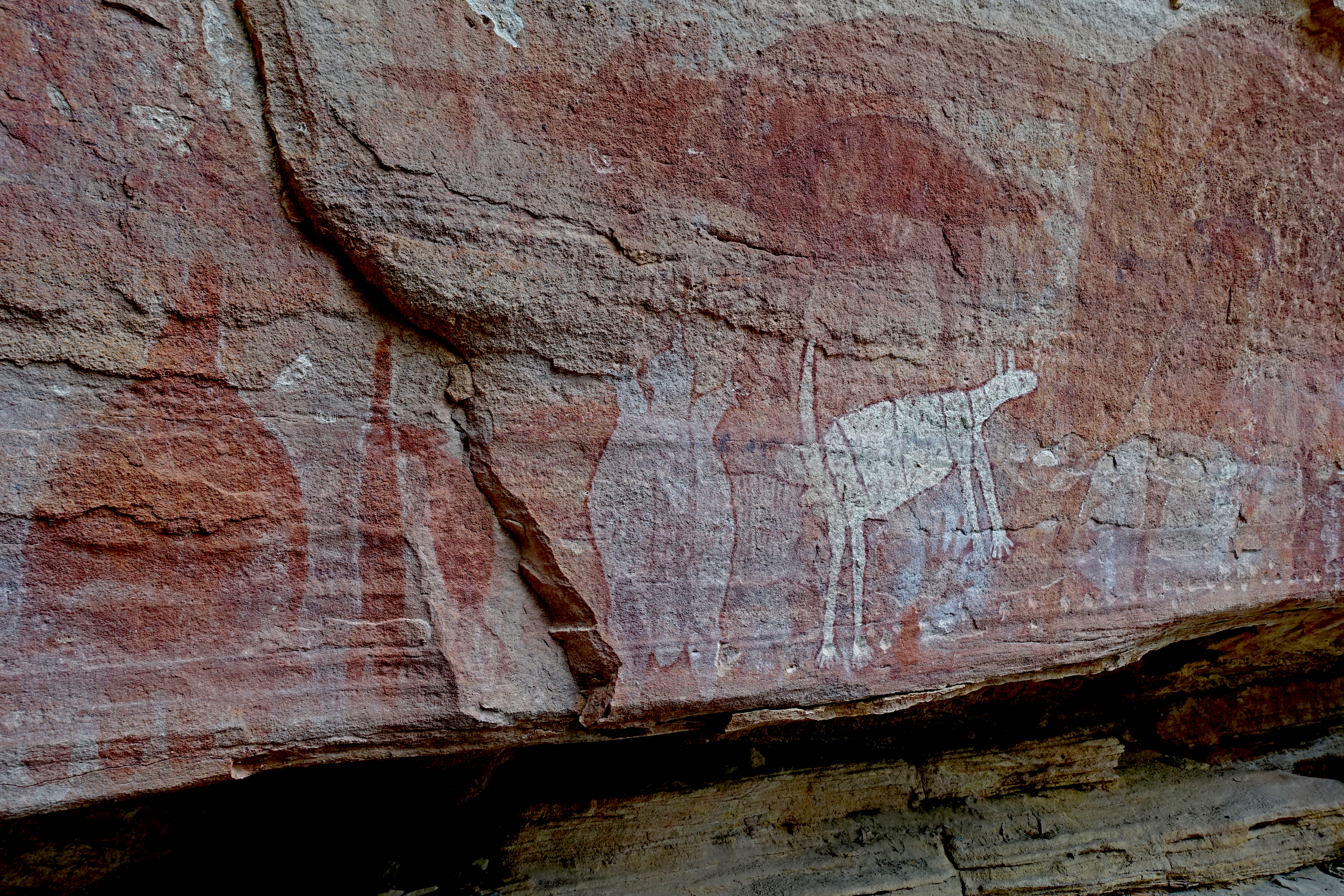
Another version of the panel above.
Photo: Don Hitchcock 2023
Location: Wallaroo Gallery
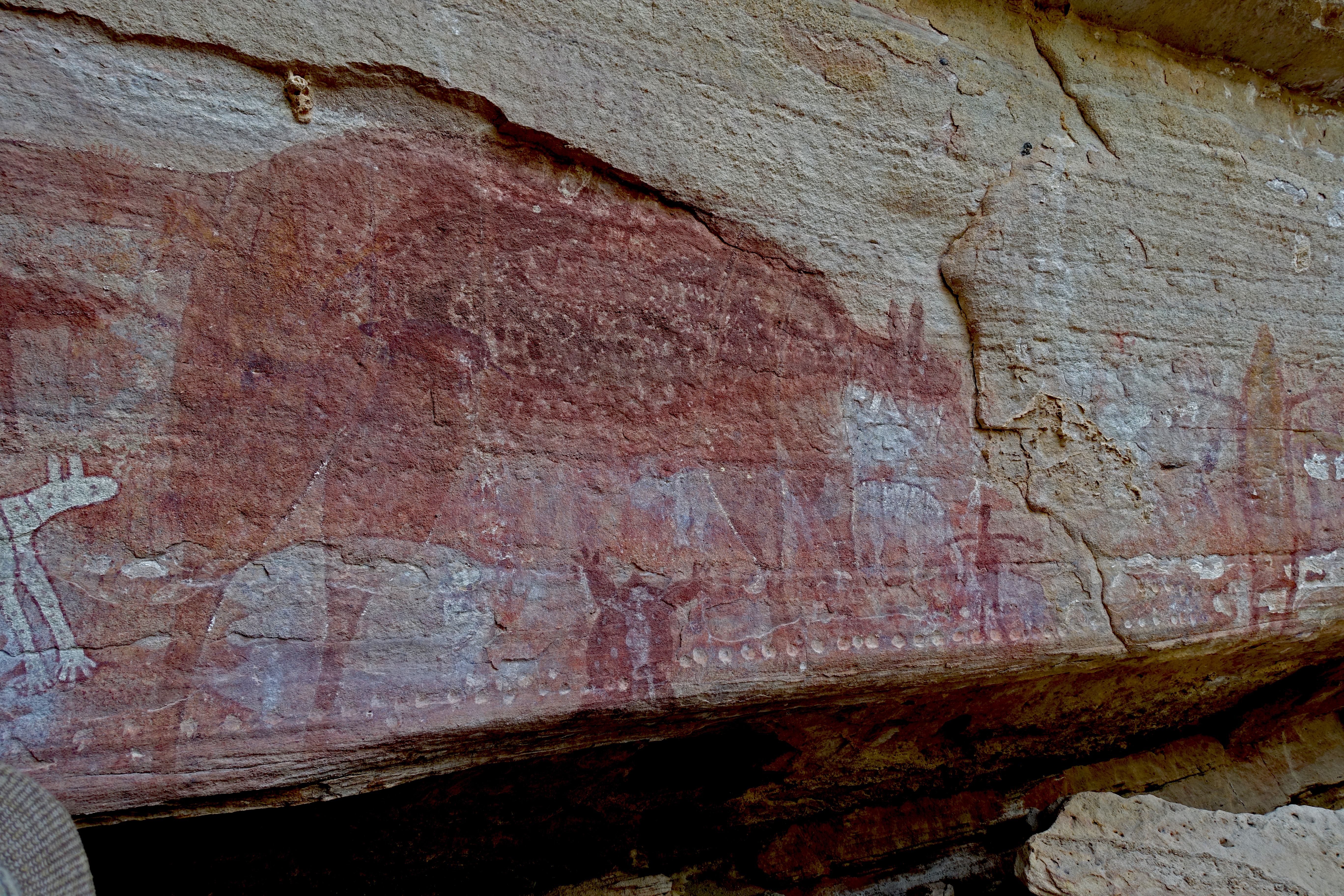
Giant wallaroo centre, small red echidna below that, and an anthropomorphic figure, apparently with four arms, or more likely just two arms and the breasts of a woman.
Photo: Don Hitchcock 2023
Location: Wallaroo Gallery
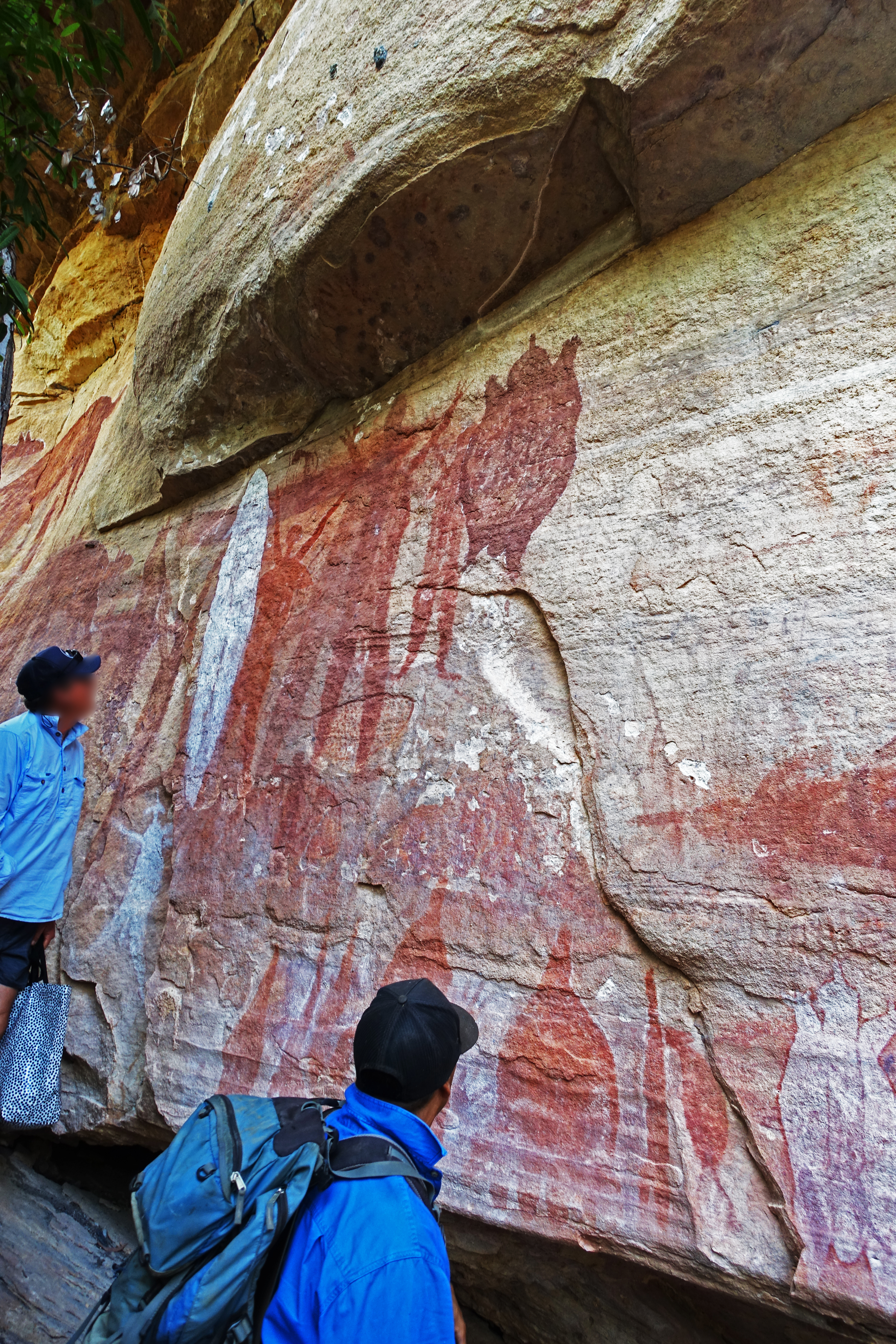
This complex set of images has been protected to some extent from the weather by an overhang.
On the left is a white eel, with the red figure of a woman to its right. on the left of the woman is a double figure, firstly a pale red figure that may be a freshwater crocodile, partially obscured by the darker red of a man with just four or three fingers spread out, with what may be another male figure on the right. This figure is partially obscured by a large and well drawn echidna.
Below and slightly to the left of the eel is a white Quinkan figure, with distinctive head. Many Quinkan figures, particularly the male imjin or Timara types are characterised by large heads with elongated ears.
On the right of the Quinkan figure are several possible Kalkadoon motifs in red ochre. To the right of them is what may be another Quinkan figure in red ochre, with a more recent well drawn white echidna outlined in red. Directly above the echidna are what appear to be what remains of an older painting of spirit figures. Above them is what may be the horizontal figure of a fresh water crocodile, with a very narrow snout.
Photo: Don Hitchcock 2023
Location: Wallaroo Gallery
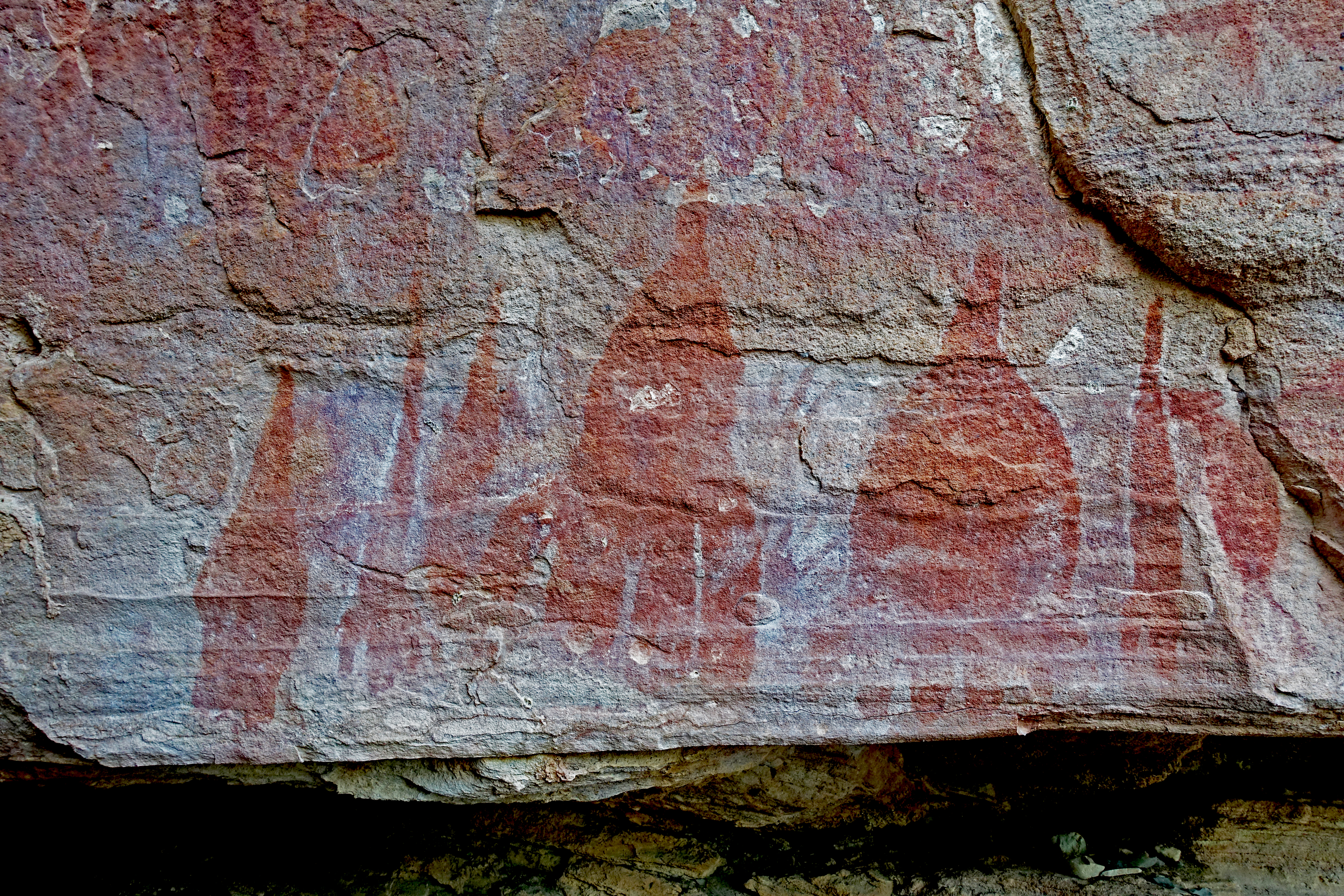
This shows the frieze of Kalkadoon motifs and the red quinkan figure above with more clarity.
Photo: Don Hitchcock 2023
Location: Wallaroo Gallery
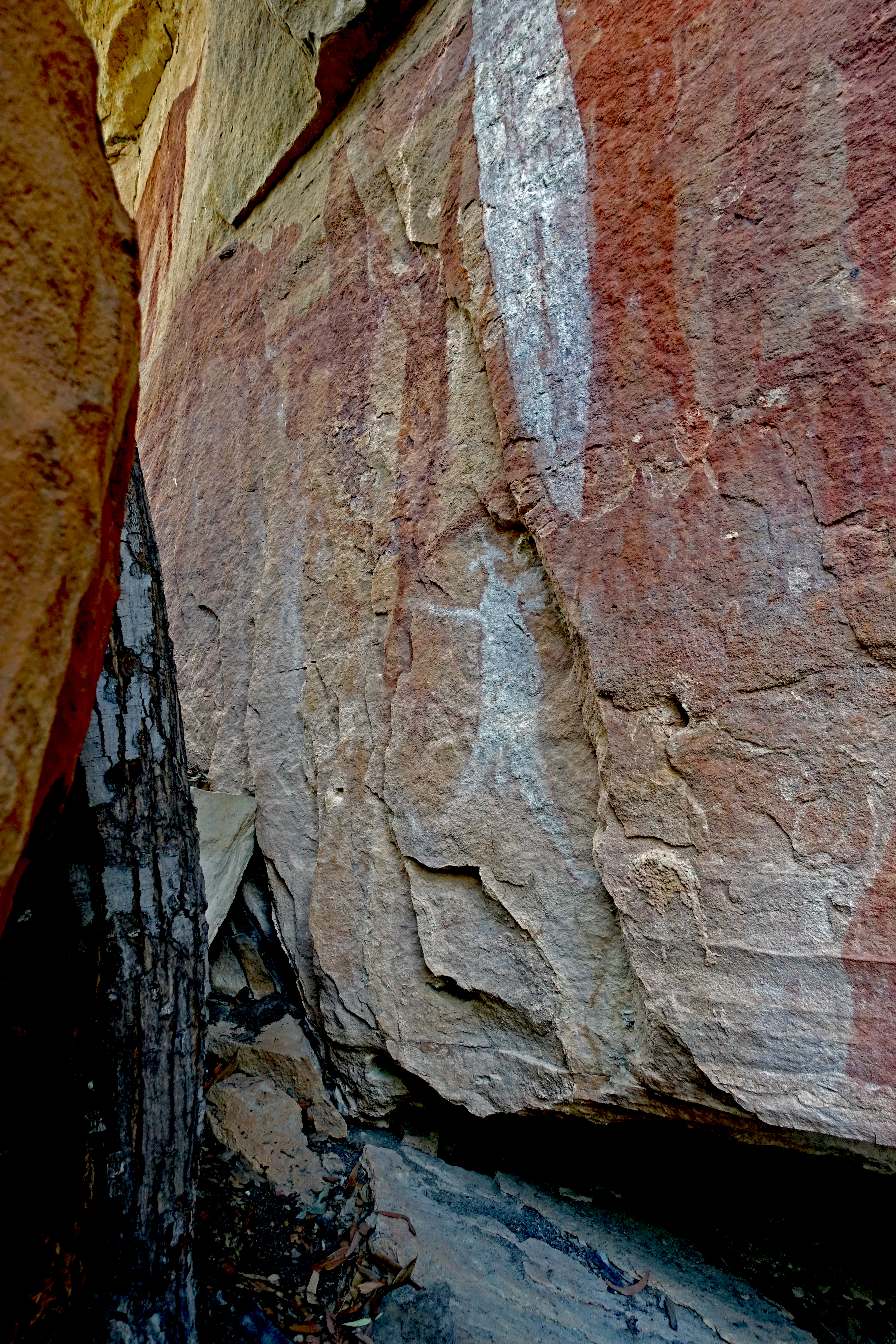
White quinkan figure in quite good condition because of its protected position on the wall.
Photo: Don Hitchcock 2023
Location: Wallaroo Gallery
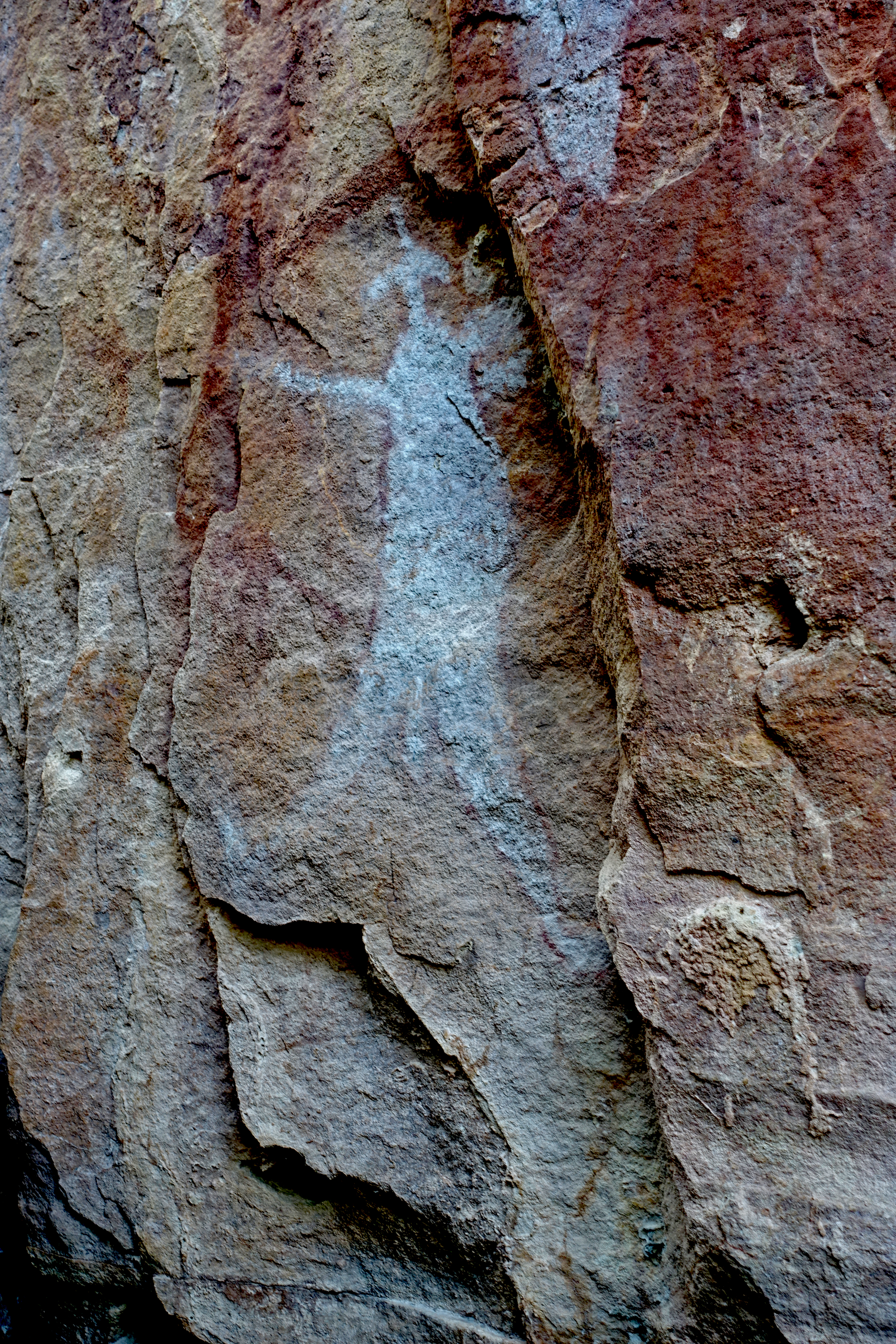
Close up of the white quinkan figure above.
Photo: Don Hitchcock 2023
Location: Wallaroo Gallery
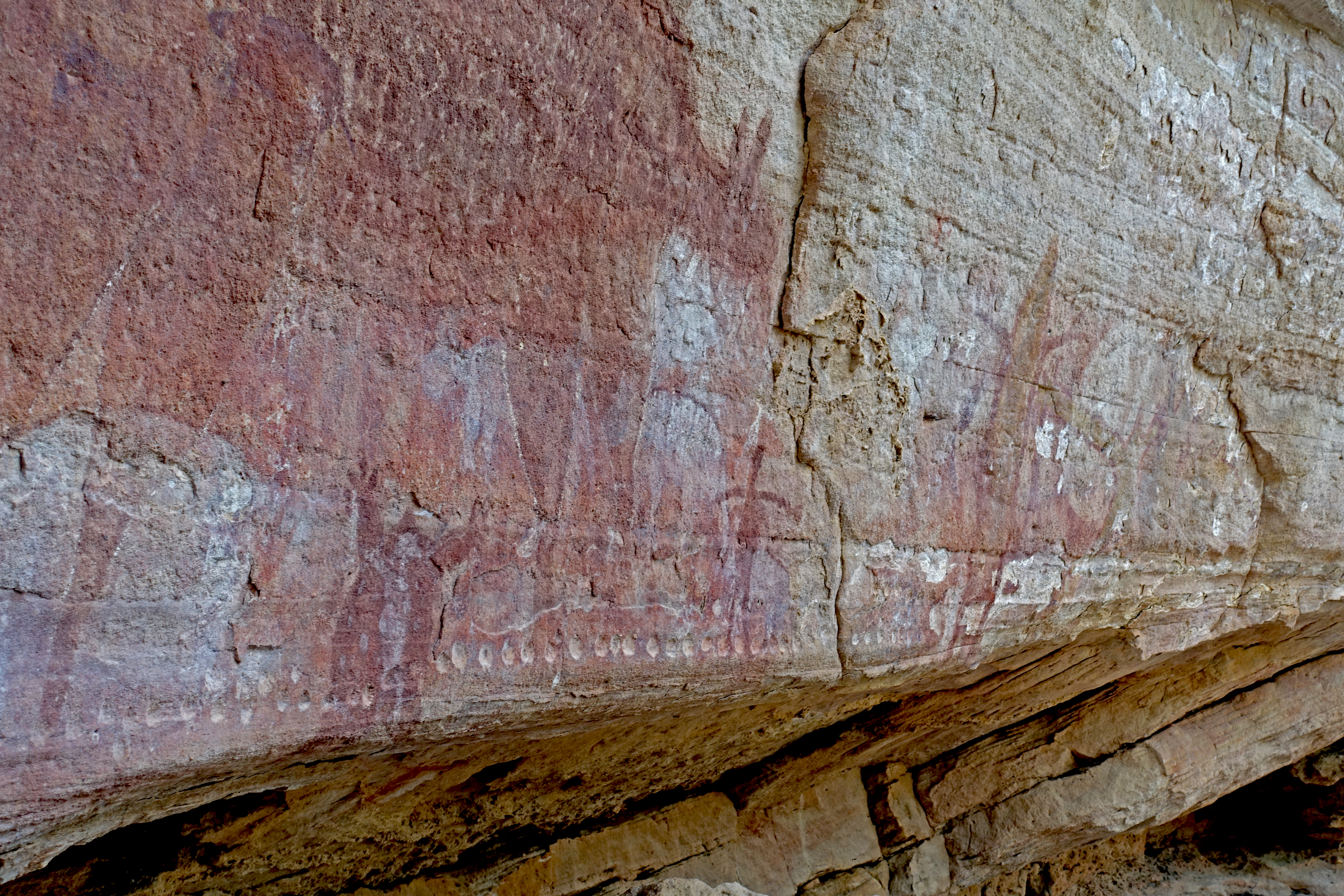
This part of the wall had a row of cupules along the base.
Cupules are small, hemispherical pits pounded into rock surfaces, and are highly significant in the Aboriginal art of the Laura region in Queensland as one of the oldest surviving forms of rock art, dating back to the late Pleistocene, potentially 30 000 to 40 000 years ago. They represent a foundational, non-figurative artistic tradition that persisted for thousands of years, anchoring the deep cultural connection between Aboriginal people, their ancestors, and the landscape, their 'country'. Their ongoing creation into the recent past indicates a long-lasting, continuous tradition. These engravings frequently cluster around natural features like cave mouths or natural boundaries, acting as markers for significant sites or places within the Dreamtime, often structuring human movement through the landscape.
Those in Laura are generally considered non-utilitarian, often associated with ritual, ceremony, or sacred sites.
The Laura area is famous for its 'Quinkan' rock art. Cupules are part of the broader, complex, and sometimes very old, assemblage of petroglyphs and paintings that define this region. The persistent re-use of these sites for thousands of years, often featuring newer paintings over ancient, deeply patinated cupules, shows an enduring, uninterrupted relationship with the land despite tumultuous times.
Paintings on this part of the rock face include a giant wallaroo, a large red ochre echidna, The figure of a woman, and a fresh water crocodile.
Photo: Don Hitchcock 2023
Location: Wallaroo Gallery
Text: based on Cole (2012) and other sources
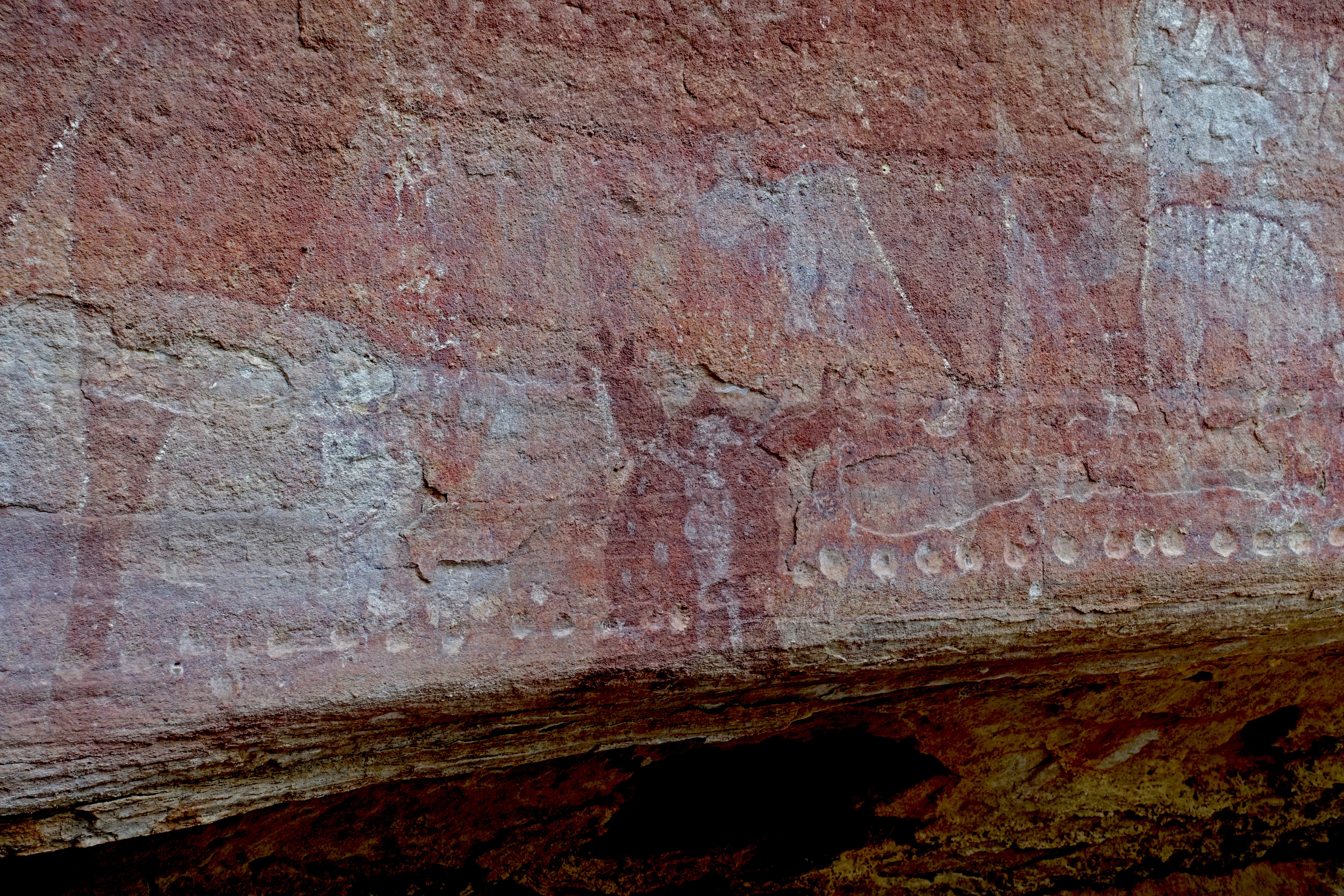
Close up of the giant red wallaroo and a large echidna above.
There is an enigmatic white figure, possibly a quinkan figure, painted on top of the echidna, and cupules line the base of the rock wall.
Photo: Don Hitchcock 2023
Location: Wallaroo Gallery
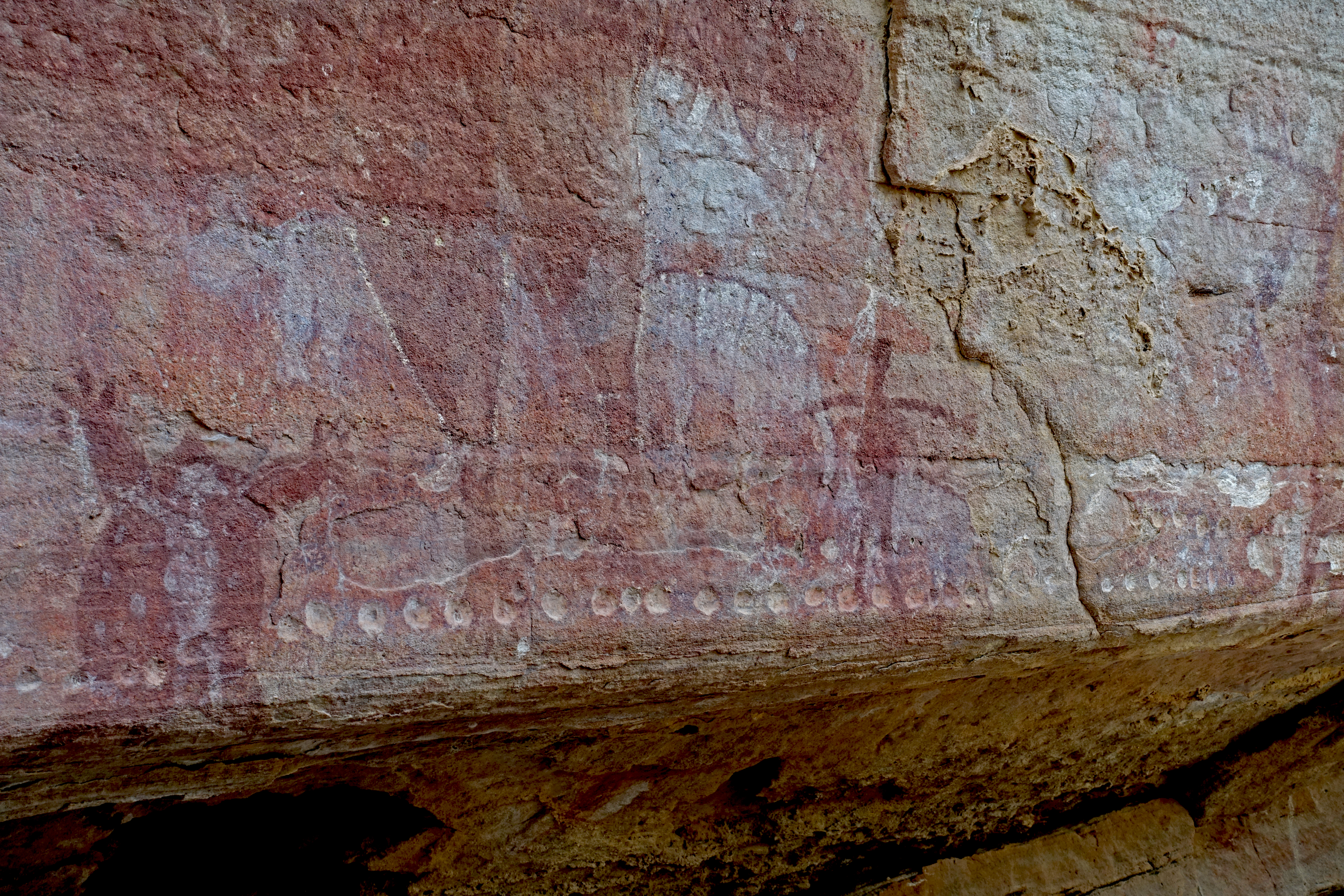
Close up of the giant red wallaroo's forequarters and the large echidna, which has been overpainted with what seems to be a quinkan figure with characteristic long ears, but with one leg crossed over the other, as though it is dancing.
At the middle right is a red ochre female figure, with unidentifiable white ochre figures to the left of it.
Photo: Don Hitchcock 2023
Location: Wallaroo Gallery
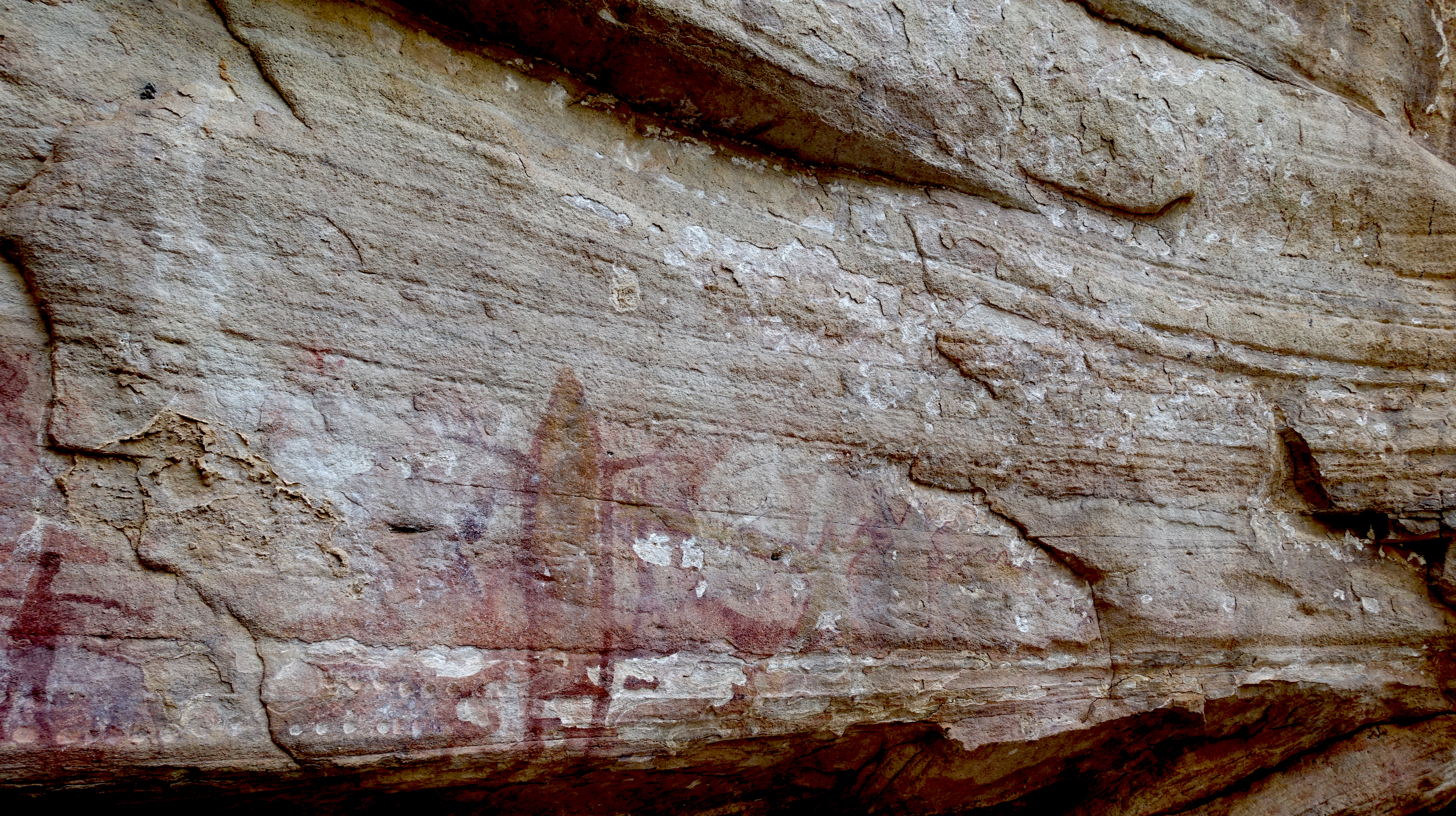
The central enigmatic image may have be a combination of two separate paintings. It may be that there was a light brown central section which has been outlined and extended in red ochre, forming what looks like a strange figure with two arms, the right arm with possibly three fingers emerging from it, and with two legs.
The line of cupules ends within this panel.
Photo: Don Hitchcock 2023
Location: Wallaroo Gallery
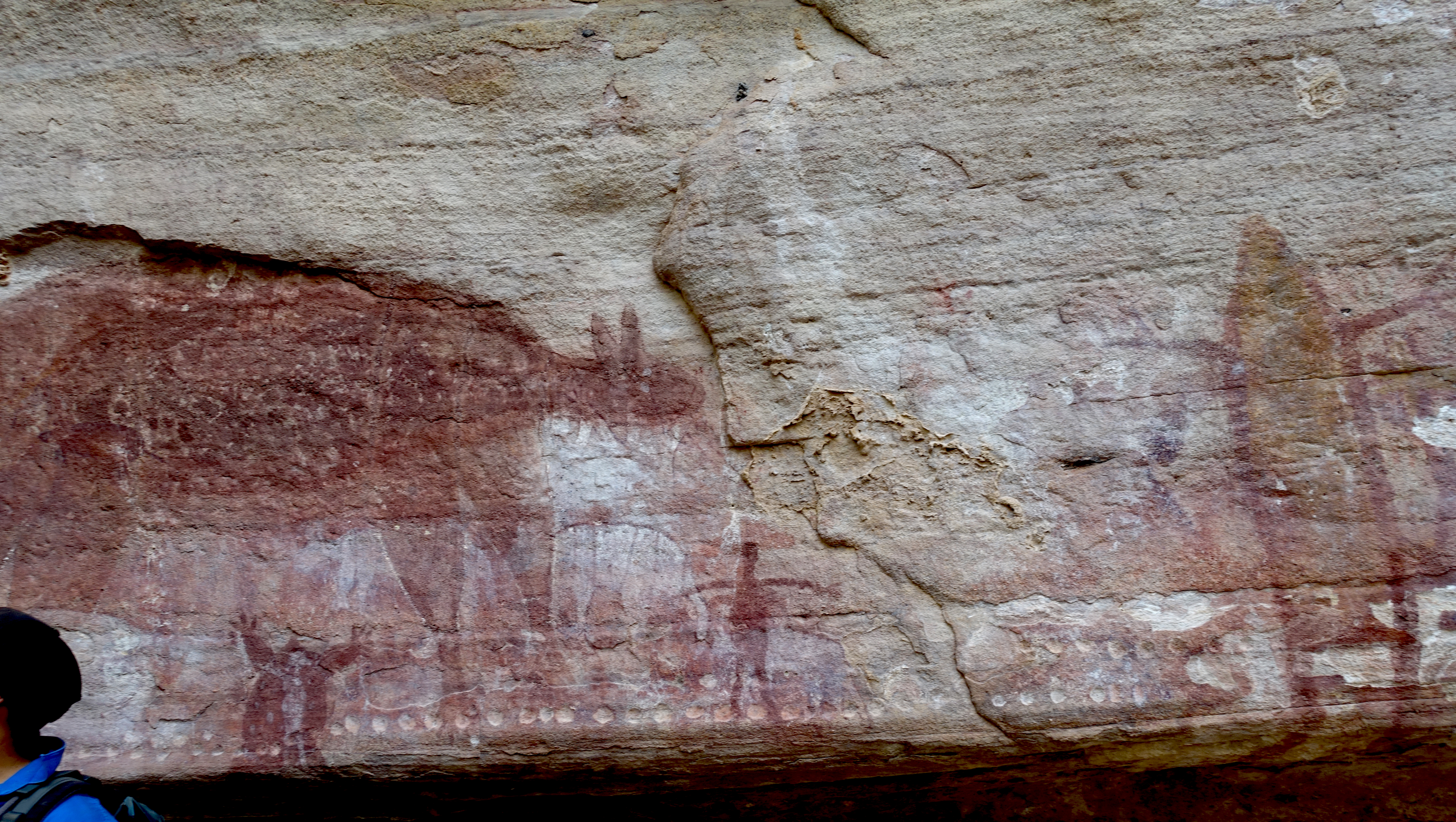
Another view of the panel above.
Photo: Don Hitchcock 2023
Location: Wallaroo Gallery
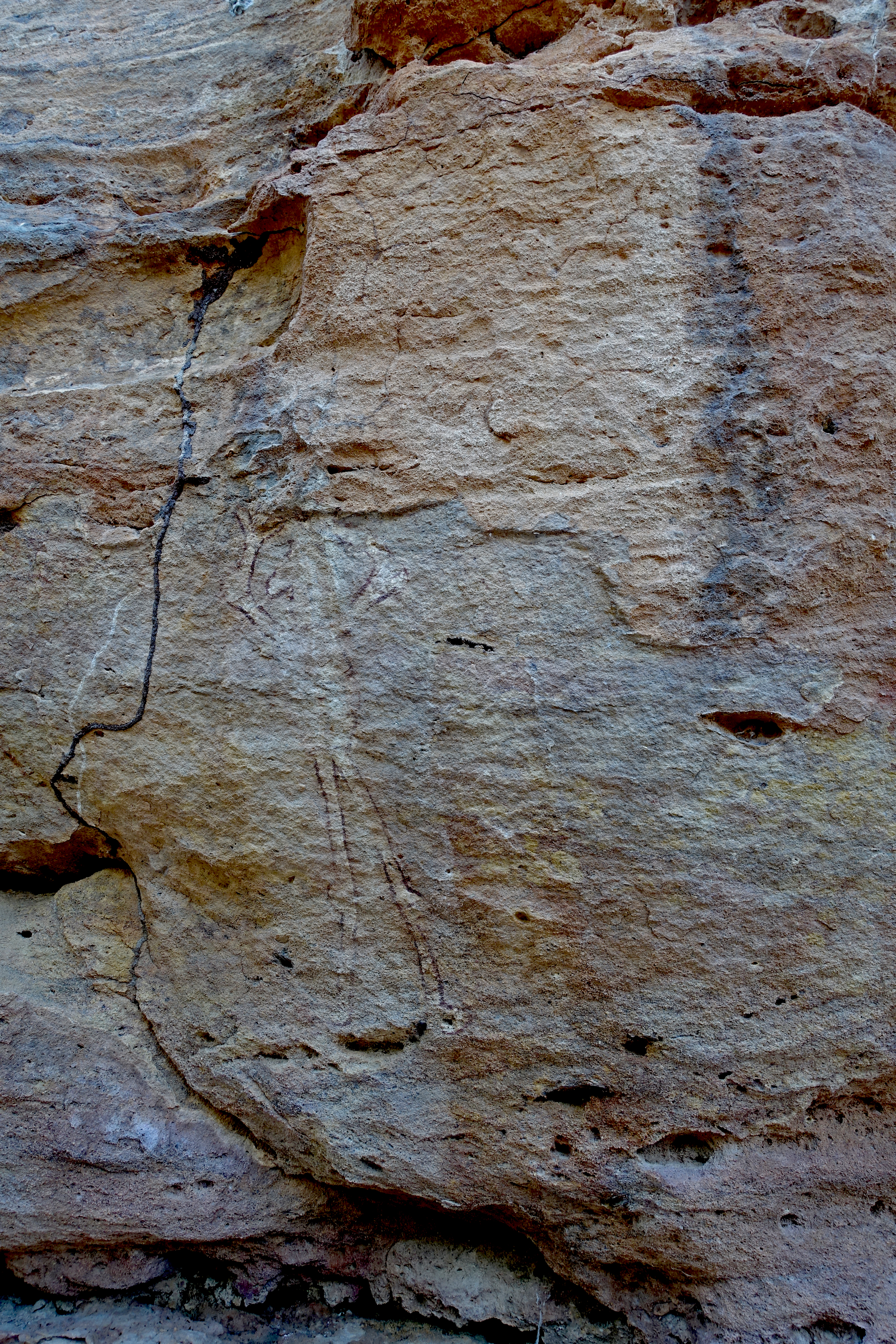
An isolated Quinkan figure with legs and arms and hands, shown with apparently two fingers on each hand.
Photo: Don Hitchcock 2023
Location: Wallaroo Gallery
References
- Cole N., Watchman A., 2005: AMS dating of rock art in the Laura Region, Cape York Peninsula, Australia - Protocols and results of recent research, Antiquity, 79(305), DOI:10.1017/S0003598X00114590.
- Cole N., 2012: Ancient art and modern Australians: evidence for continuity in an Aboriginal knowledge system, in Clottes J. (dir.) 2012. — L’art pléistocène dans le monde / Pleistocene art of the world / Arte pleistoceno en el mundo Actes du Congrès IFRAO, Tarascon-sur-Ariège, septembre 2010 – Symposium « Art pléistocène en Australie
- Cole N., Musgrave C., George R., Wallis L., Laura Indigenous Land and Sea Rangers, 2024: Categorising catfish, jewfish and eel motifs in Laura (Quinkan) rock art, Cape York Peninsula, Australia, Rock Art Research 2024,Volume 41, Number 1, pp. 28-40
- Fillios M., Taçon P., 2016: Who let the dogs in? A review of the recent genetic evidence for the introduction of the dingo to Australia and implications for the movement of people, Journal of Archaeological Science: Reports, Elsevier Ltd.
- McDonald J., Clayton L., 2016: Rock Art Thematic Study, Report to the Department of the Environment and the Australian Heritage Council, Centre for Rock Art Research and Management, University of WA.
- Morrison M., McNaughton D., Shiner J., 2010: Mission-Based Indigenous Production at the Weipa Presbyterian Mission, Western Cape York Peninsula (1932–66), Int J Histor Archaeol, DOI 10.1007/s10761-009-0096-8, Springer.
- Ross, J. et al., 2008: More than Motifs: the archaeological analysis of rock art in arid regions of the southern hemisphere, Chungara, pp.273–294.
- Taylor R., 2002: "Ironwood Erythrophleum chlorostachys in the Northern Territory: aspects of its ecology in relation to timber harvesting", Report to Agriculture, Fisheries and Forestry, Australia.
Back to Don's Maps
 Back to Archaeological Sites