The Reindeer People
These photographs and text are from the excellent book by Ivar Lissner, translated into English by J. Maxwell Brownjohn called 'Man, God and Magic', published in 1961.
In 1939, at the beginning of the Second World War, he wanted to enter the uncharted area of the Amur Bend, in Manchuria, at that time controlled by the Japanese.
He spent a whole year assembling permits, passports and papers, surmounting one obstacle after another. Then he travelled the entire length of the Amur, 2750 miles, a distance from England to Newfoundland, three times the length of the Rhine. The Amur drains all of the swampland of the Siberian taiga. The water is as clear as crystal, and was called by the Chinese the Black River, to distinguish it from the silt laden yellow rivers which drain China. He reached the northernmost point of Manchuria safely, lived in the trackless taiga and got to know the people living there. He remained in the forests of Manchuria and the steppes of Mongolia for some years. These photographs are a testimony to his endurance and strength of character.
Most of the people of this area, the Tungus, depended at that time on the reindeer for food, clothing and shelter. It is a fascinating story.
|
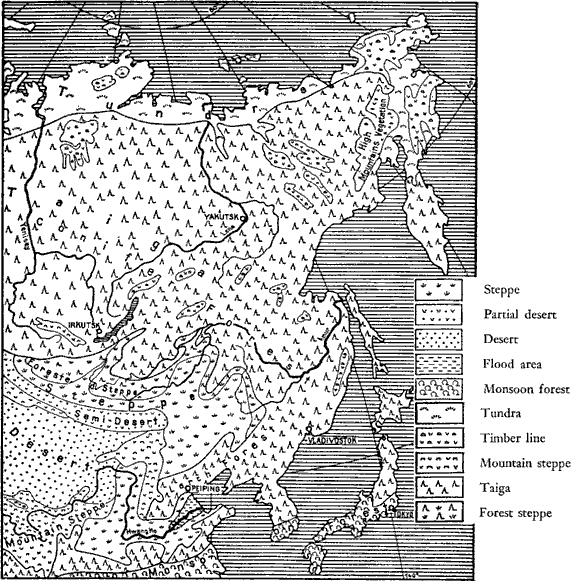
Vegetation map of northeastern Asia. Much of this vast area is uncultivated, and uncultivatable.
Photo: Lissner - Man, God and Magic
|
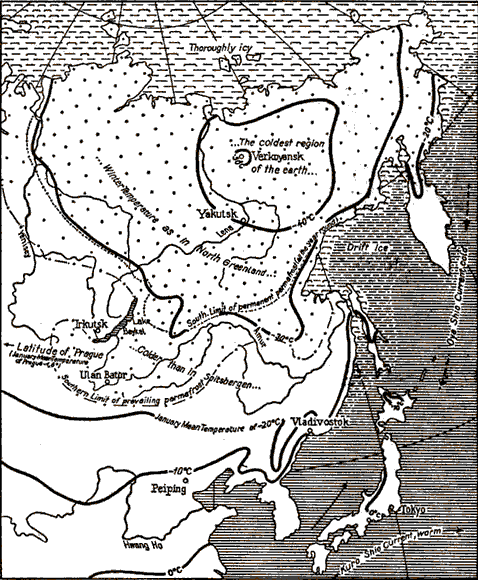
Winter weather map of northeast Asia. At the northern Amur Bend there is, even in summer, a constant frost three to six feet beneath the surface. The area is so cold because the warm Kuroshio current is deflected toward the east by the islands of Japan. The cold Oyashio current enters the sea of Okhotsk from the north. Verkoyansk is the coldest spot in the world.
Photo: Lissner - Man, God and Magic
|
|
|
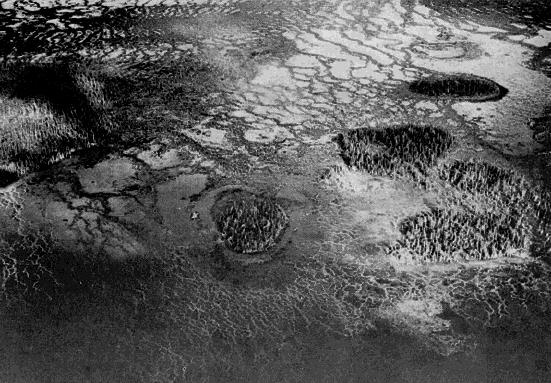
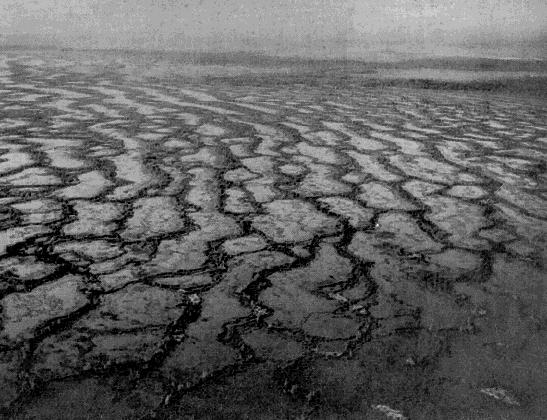
Immense and oppressive enough to daunt the stoutest heart, these taiga marshes are deathtraps which can take days to cross.
Photo: Lissner - Man, God and Magic
|
Swamp taiga, a perilous and inhospitable expanse stretching for as far as the eye can see. The Russians call these marshy basins totchki
Photo: Lissner - Man, God and Magic
|
|
Lissner - Man, God and Magic Ch 13, The Taiga, P 123
Taiga is the virgin forest of Siberia. But it is more. Taiga is wild, uncleared terrain, mostly forest, but also composed of open ground, swamps and barren hillocks. Taiga is what the Russian peasant calls the land that begins where his tillage ends.
.... the greater part of northern and central Siberia is swamp taiga. The largest marshy area in the world, it stretches for hundreds of miles and consists of stagnant lakes and boggy pools of glistening green water interspersed with myriad tufts of grass. The general name for the people of this area is the Tungu. The Orochi are a particular group of the Tungu who subsist almost entirely on the products of the reindeer.
.... In the North Manchurian taiga ........... I knew the Orochi, the reindeer men. Oro means reindeer, and chon is a man. .............. The whole culture of the Orochi, everything they own or do, stems from or refers to the reindeer. The reindeer is not a wild animal that has been caught or broken in, but a beast of burden bred by generation after generation.
|
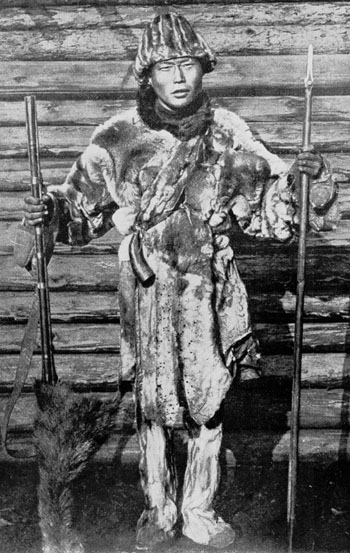
An Orochon in hunting garb. The Orochon are breeders and hunters of reindeer whose nomadic culture and economy are based entirely on that animal. Even their name reflects this. On the left is an old musket, on the right a palma, the wooden shaft surmounted by a blade with which the Orochon formerly hunted bear.
Photo: Lissner - Man, God and Magic
|
Reindeer feed principally on lichen. They also eat fungi, berries, and young tree roots, but without lichen they do not thrive.
The average dead-weight a reindeer can carry effectively is about seventy two pounds, or 33 kilograms. A reindeer carrying this weight will cover twenty or thirty miles of the most difficult terrain in one day, and in winter, when two or four animals are harnessed to a sled, they are capable of doing forty five miles or more, although the Orochi do not use sleds.
Reindeer are tended and milked by the women folk. Their milk is sweet and thick, but poor in fat. Almost everything the Tungus wears is made of reindeer hide: the stout mocassins which protect his feet, his trousers, his Tungus apron, his jerkin, his cap and, unless they are made of blue squirrel skin, his thick gloves.
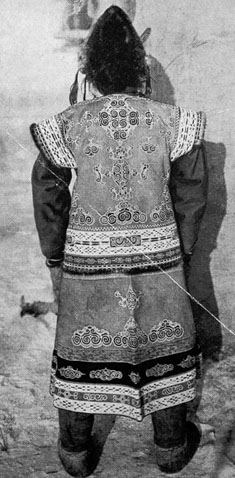
Everything worn by the Orochon comes from the reindeer, from skin cap to mocassins. Outer garments are richly decorated, stained with vegetable dyes and sewn together with reindeer hair.
Photo: Lissner - Man, God and Magic
|
|
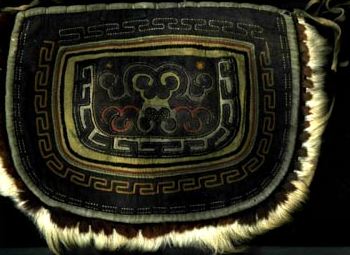
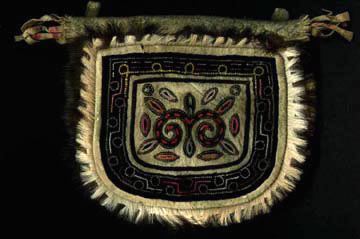
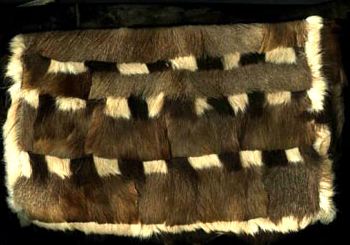
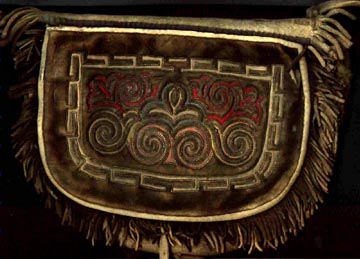
Some Orochon Items in the Loukashkin Collection
In 1935, Anatole S. Loukashkin, then Curator of Harbin Museum of Natural History at the Manchuria Research Institute, directed a collecting expedition to the Great Khingan Mountains, with Orochon tribesmen as guides and hunters. His story of this expedition gives many glimpses into the lives of these people. Below are some decorated bags from this expedition.
Photo: http://www.loukashkin.org/Orochon/Default.htm
Orochon families usually roam in groups of three or four, their reindeer forming communal herds which are left to graze and find water for themselves. Reindeer leave camp during halts to look for pastures which are generally many miles from their owners resting places, sometimes staying away for days on end. They return to their owners because of the threat of the wolf, from which the Orochi protect them.
A reindeer herd generally consists of two or three bucks, about twenty five gelded males, twenty-odd does, ten to fifteen young does of breeding age, and about thirty calves. Roughly half the animals dies before reaching sexual maturity, for reindeer are extremely susceptible to infections, particularly pneumonia.
In summer reindeer are tormented by flies, and horsefly larvae can kill a full grown reindeer. The Orochi build large fires on a still summer day, and the reindeer stand in the smoke to evade the torturing clouds of gnats and gadflies.
The Orochon needs no stick or whip to drive his reindeer. They obey his word of command, and each reindeer has a name and comes when it is called.
In former times, the Orochi used to hunt bear with a spear called the palma, an extremely dangerous undertaking, because the spear had to be thrust into the animal's heart from close quarters, when the bear reared to attack.
|
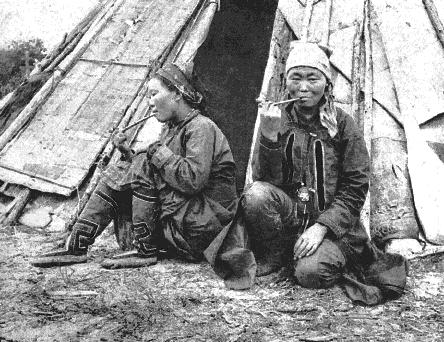
Orochon women seated before a tent in a forest clearing. This picture shows clearly how tents are faced with strips of birch bark about two feet wide and twenty feet long. The material is impregnated with natural juices before use.
Photo: Lissner - Man, God and Magic
|
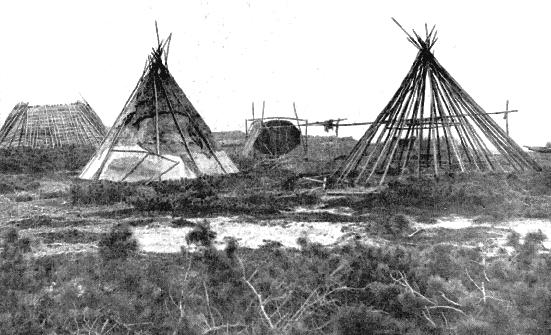
Various stages in the construction of an Orochon tent. A framework of thin branches is covered with birch bark and later secured by a few external poles.
Photo: Lissner - Man, God and Magic
|
|
|
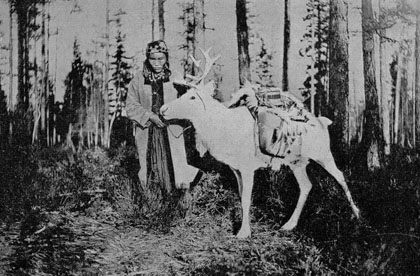
Oro is the reindeer and chon the man. The Tungus' reindeer are smoke grey, black, or, as in this picture, white. They carry an average load of 80 pounds (36 kg) each and are tended by the womenfolk.
Photo: Lissner - Man, God and Magic
|
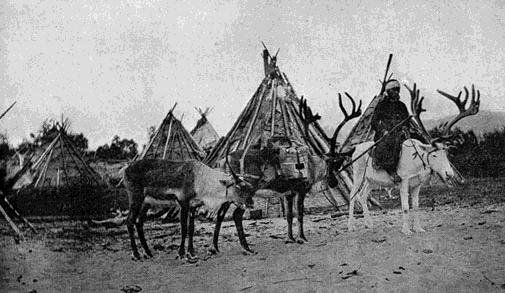
Orochon tents pitched in the icy winter landscape of the taiga are heated by fires whose smoke escapes through vents in their roofs. At night, the Orochi sleep naked under furs, back to back in pairs to conserve warmth. The Orochon girl riding the white reindeer on the right is holding a palma or spear in her hand.
Photo: Lissner - Man, God and Magic
|
|
|
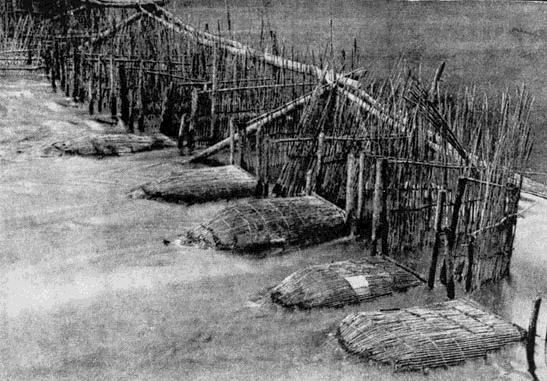
A river spanned by the wickerwork wier baskets in which the Tungus catch fish.
Photo: Lissner - Man, God and Magic
|
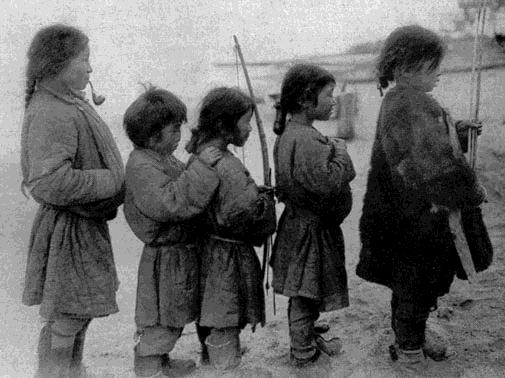
These five young Orochi belong to the same family. The eldest girl is already allowed to smoke a pipe.
Photo: Lissner - Man, God and Magic
|
|
|
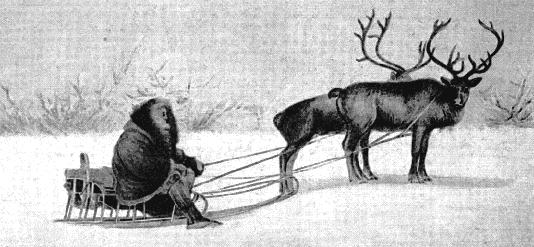
Koryak are a group of Tungus who do use reindeer sledges. The animals are harnessed in oblique formation by traces of varying lengths. Although each sledge is normally drawn by three to five reindeer, it can only cover between fifteen and twenty five miles a day in winter, and in summer even less. (This estimate conflicts with the figure given above of forty five miles or more)
Photo: Lissner - Man, God and Magic
|
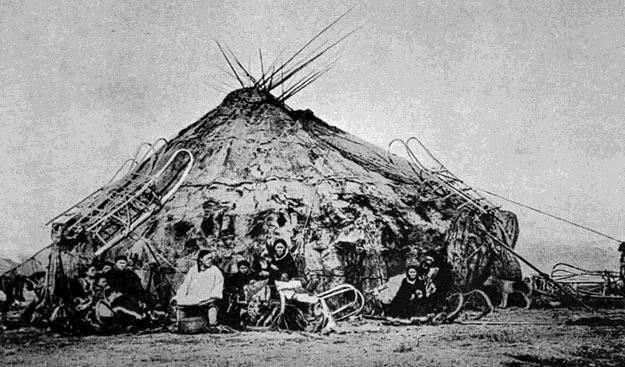
Covered with skins and strong enough to withstand the strongest gales, this large tent belongs to the Reindeer Koryaks. On its roof can be seen three reindeer sledges which have been used to weight it down.
Photo: Lissner - Man, God and Magic
|
|
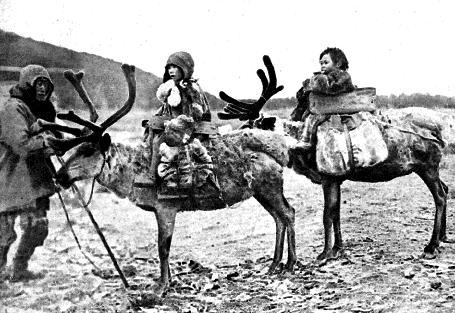
No child of the tundra Yukaghirs ever falls out of these saddles. Reindeer are entrusted even with cradles containing young babies.
Photo: Lissner - Man, God and Magic
|
|
|
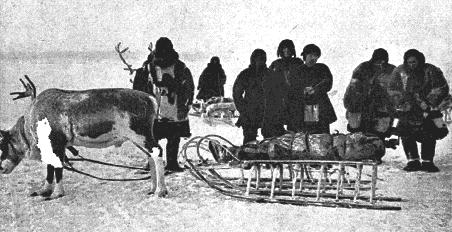
The body of a Yukaghir girl on its way to a tundra funeral, drawn by reindeer.
Photo: Lissner - Man, God and Magic
|
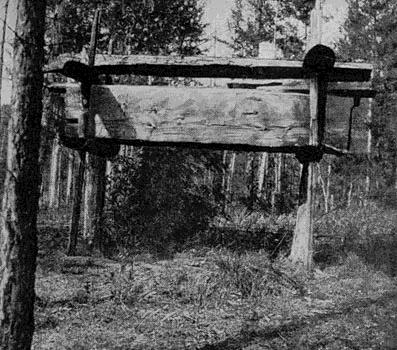
The Orochi bury their dead in wooden coffins which they mount on tree stumps to prevent wolves from disturbing the bodies inside. They believe that a dead man should be laid to rest in an airy place where he can hear the rustle of the surrounding forest and from which his soul can float away unhindered.
Photo: Lissner - Man, God and Magic
|
|
|
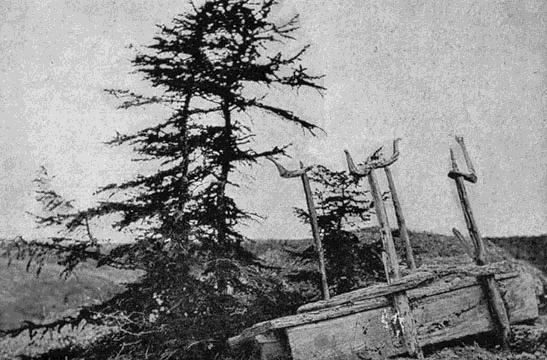
Coffin of a Tungusic shaman. The four posts are surmounted by figures of birds, apparently Great Northern Divers. Their significance stems from the fact that human souls can assume the shape of birds and that bird figures are often used in aids in shamanism.
Photo: Lissner - Man, God and Magic
|
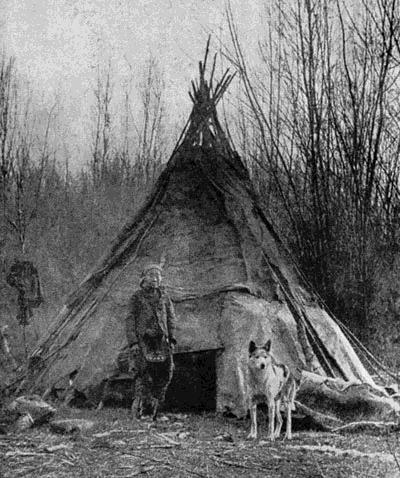
An old Yukaghir woman in front of her tent on the upper reaches of the Kolyma. The tent is covered with skins and has the usual smoke vent at its peak.
Photo: Lissner - Man, God and Magic
|
|
|
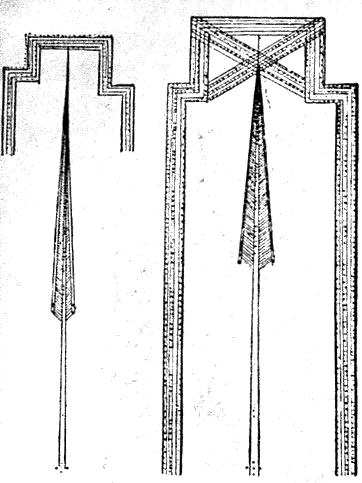
Love letter written on birch bark by a Yukaghir girl. The slender arrow on the left represents the man of her choice and the broad arrow on the right the girl herself. He is standing in an almost dismantled house, which denotes his imminent departure, while she is enclosed by a complete house. The oblique beams signify grief and sorrow. Free translation: 'You are going away, leaving me here alone. I weep and grieve on your account.'
Photo: Lissner - Man, God and Magic
|
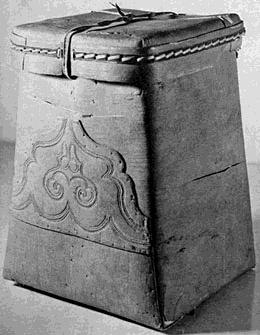
A tall birchbark box like those used by the Tungus for gathering berries. The people of the taiga are very skilled at working with this material.
Photo: Lissner - Man, God and Magic
|
|
|
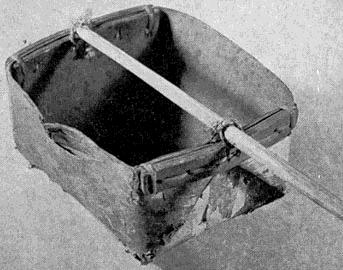
A watertight dipper made of impregnated birchbark, complete with lip. Like the men of the stone age, the taiga and tundra people possess a rich material culture of which bone and wooden utensils are part.
Photo: Lissner - Man, God and Magic
|
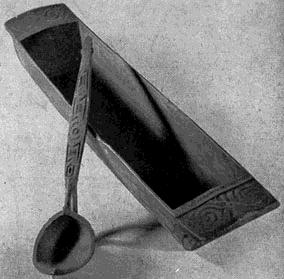
Almost all paleo-Siberian and Tungusic tribes formerly used eating utensils make of wood, birchbark or fishskin. Here is an ornamented wooden bowl for fish or meat, and a soup spoon.
Photo: Lissner - Man, God and Magic
|
|
|
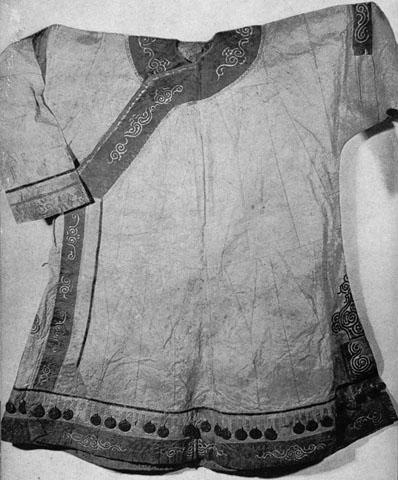
Dyed in three colours, this Gilyak tunic is made of fishskins so neatly sewn together that the garment is completely windproof and watertight.
Photo: Lissner - Man, God and Magic
|
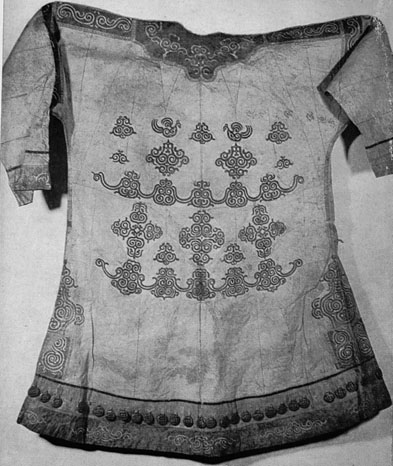
We tend to forget that the peoples of Siberia, together with the Mongols and Buryats, wear extremely colourful clothing. This Gilyak woman's fishskin smock is decorated in blue and red and has a row of brass pendants along its hem. This is the finely ornamented back of the smock above.
Photo: Lissner - Man, God and Magic
|
|
|
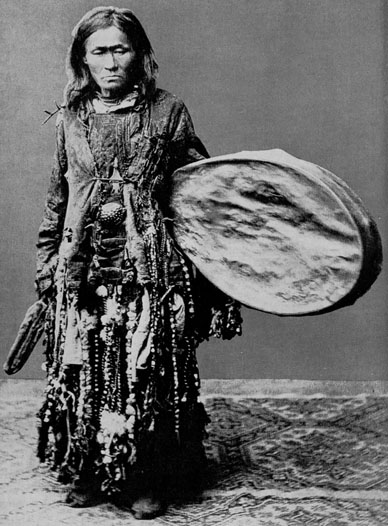
This female Orochon shaman had spent a lifetime in the forests of the North Manchurian taiga enclosed by the Amur Bend. The numerous small animal symbols and chains are aids in establishing contact with the spirits, while the oval drum serves to heighten the requisite state of ecstasy during which the spirits inhabit a shaman's body and his own soul leaves it to roam about the sky.
Photo: Lissner - Man, God and Magic
|
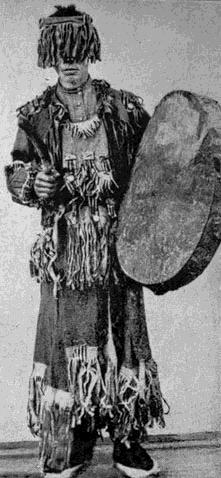
A Yakut shaman from the district of Verchne-Kolymsk. Note the fringe or veil obscuring the shaman's eyes.
Photo: Lissner - Man, God and Magic
|
|
|
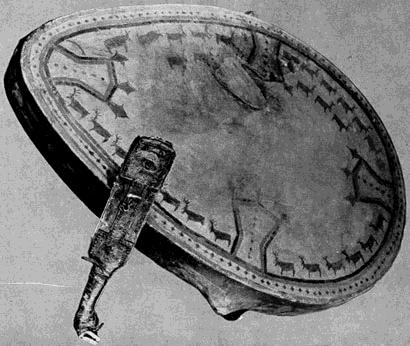
Tungusic shaman's drum. The shaman beats his drum in order to capture spirits, enter a state of ecstasy and escape his corporeal bonds. He thereby travels to the centre of the world and can, at the same time, rise into the sky. His frenzy communicates itself to his audience. The edge of this drumskin is decorated with pictures of reindeer and the handle of the drumstick is carved into the shape of an animal's head.
Photo: Lissner - Man, God and Magic
|
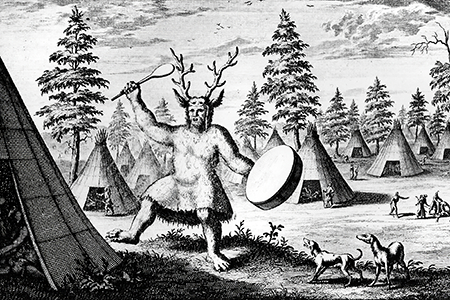
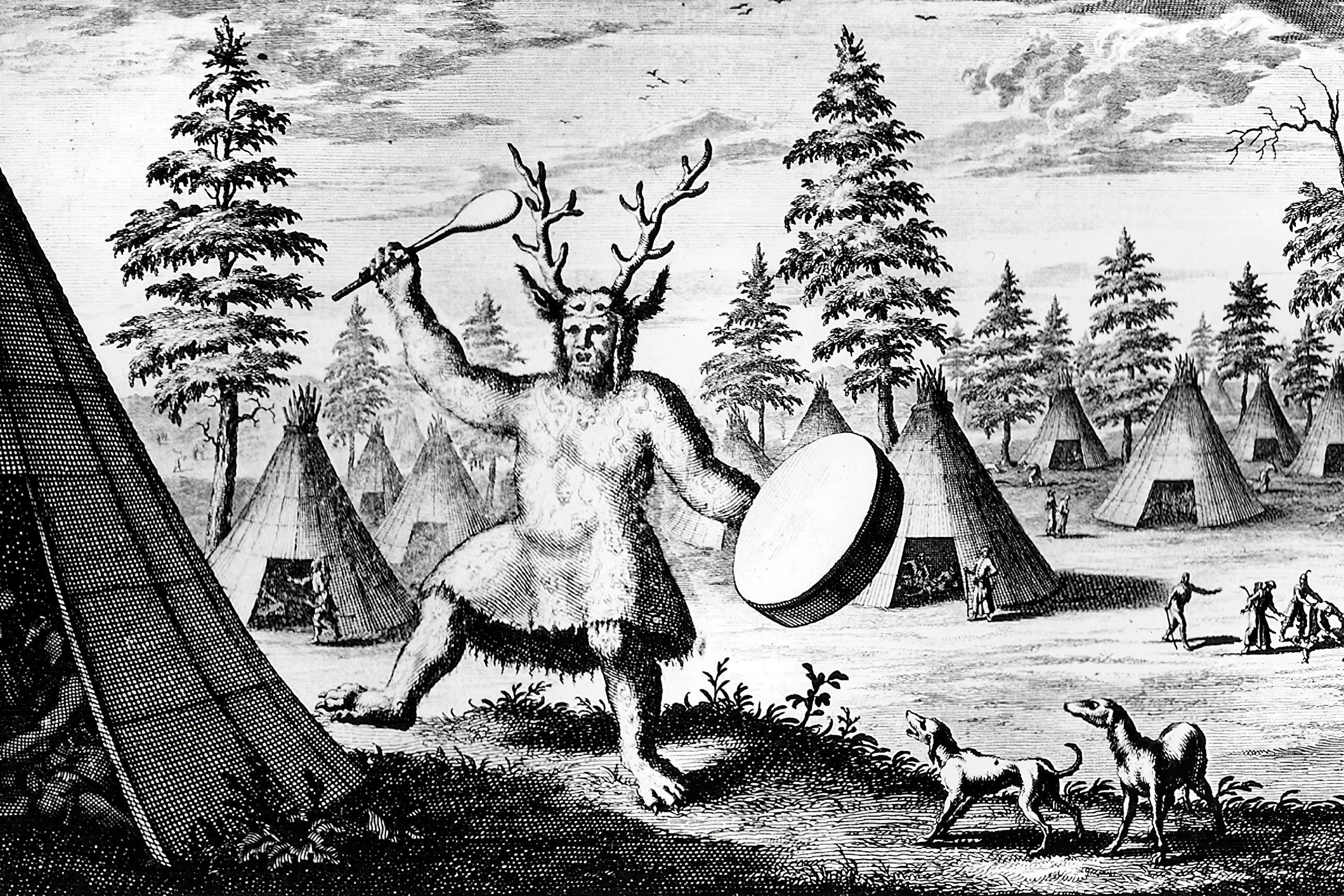
An old engraving of a Tungusic shaman, bearing a striking resemblance to the 'dancing magician' discovered by Count Begouen in the Trois Freres cave in 1918.
This is the earliest known depiction of a Siberian shaman, produced by the Dutch explorer Nicolaes Witsen, who authored an account of his travels among Samoyedic- and Tungusic-speaking peoples in 1692. Witsen labelled the illustration as a 'Priest of the Devil' and gave this figure clawed feet to highlight his demonic qualities.
Photo: Nicolaes Witsen, 1692
Permission: Public Domain
Text: Wikipedia
|
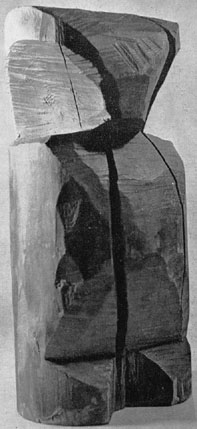
Kichikagi, spirit aid of the Gilyak shaman. If one tells the shaman the truth, the bearlike figure remains motionless, but if one lies to him it quivers.
Photo: Lissner - Man, God and Magic
|