Back to Don's Maps
 Back to Archaeological Sites
Afontova Gora - Афонтова Гора
The settlement is dated to 20 000 - 18 000 BP, a very cold part of the last ice age, and the northern ice sheet can not have been far away.

View of Afontova Gora
Photo: Sergey Kashtalianov, via Panoramio

Late Paleolithic, 20 000 - 18 000 BP, Asian USSR, Valley of the Yenisei River.
Поздний Палеолит, 20 000 - 18 000 лет назад азиатская СССР долина енисея.
1 - Knives made on blades.
5 - Scrapers.
Photo: Vladimir Gorodnjanski 2007
Source: The Hermitage Museum, Saint Petersburg
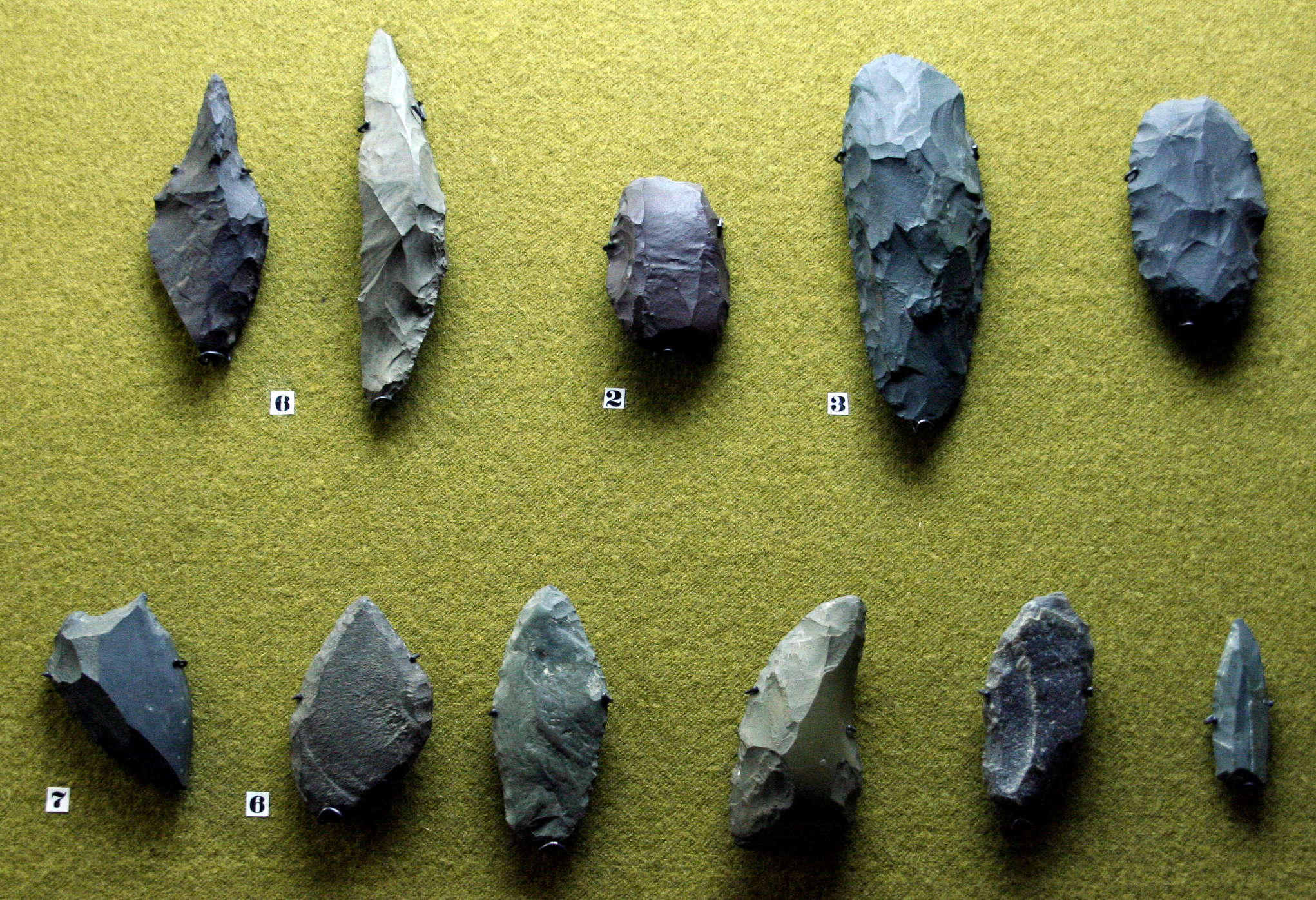
2 - possibly an adze.
3 - chopping tools.
6 - points.
7 - awl.
Photo: Vladimir Gorodnjanski 2007
Source: The Hermitage Museum, Saint Petersburg
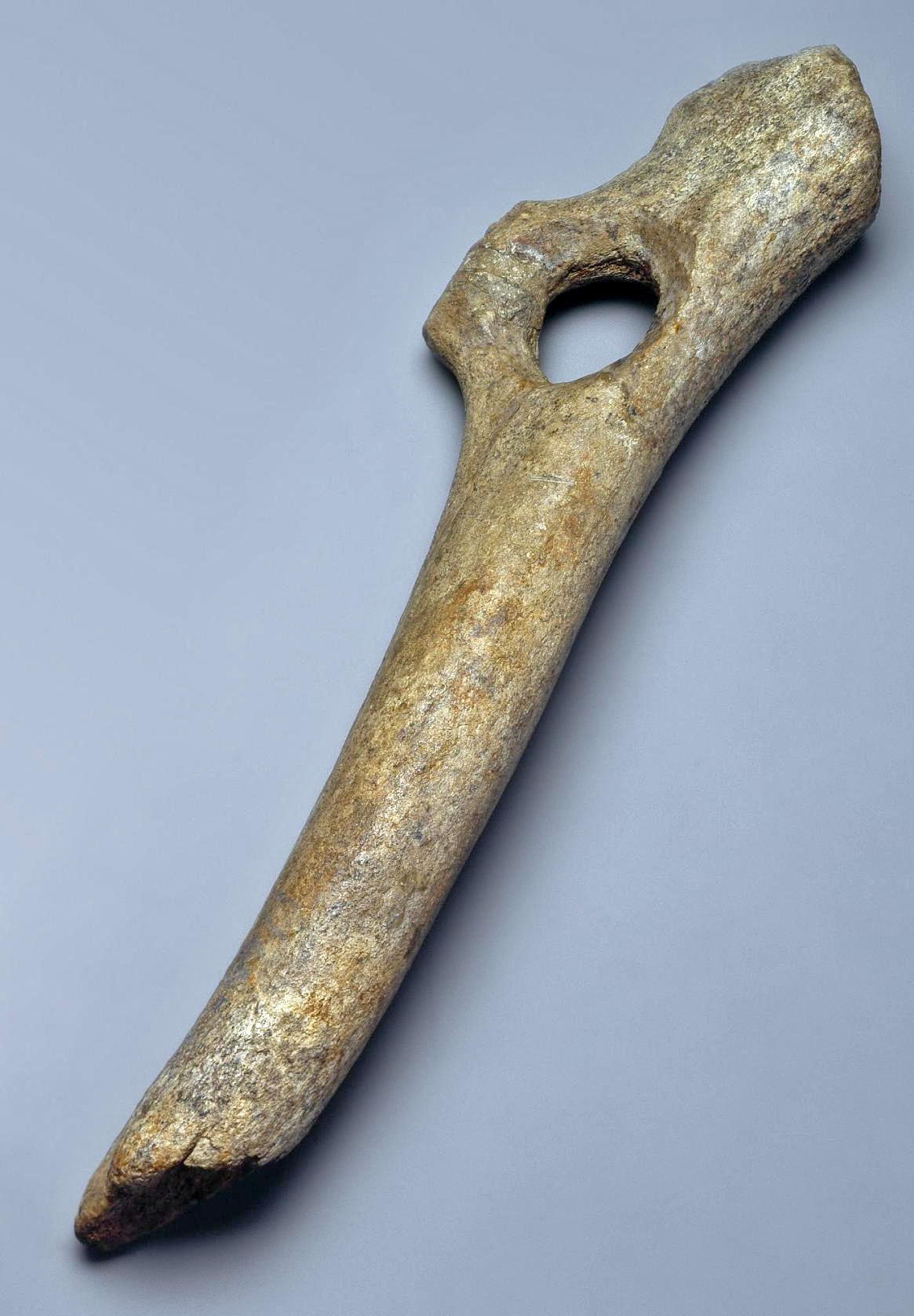
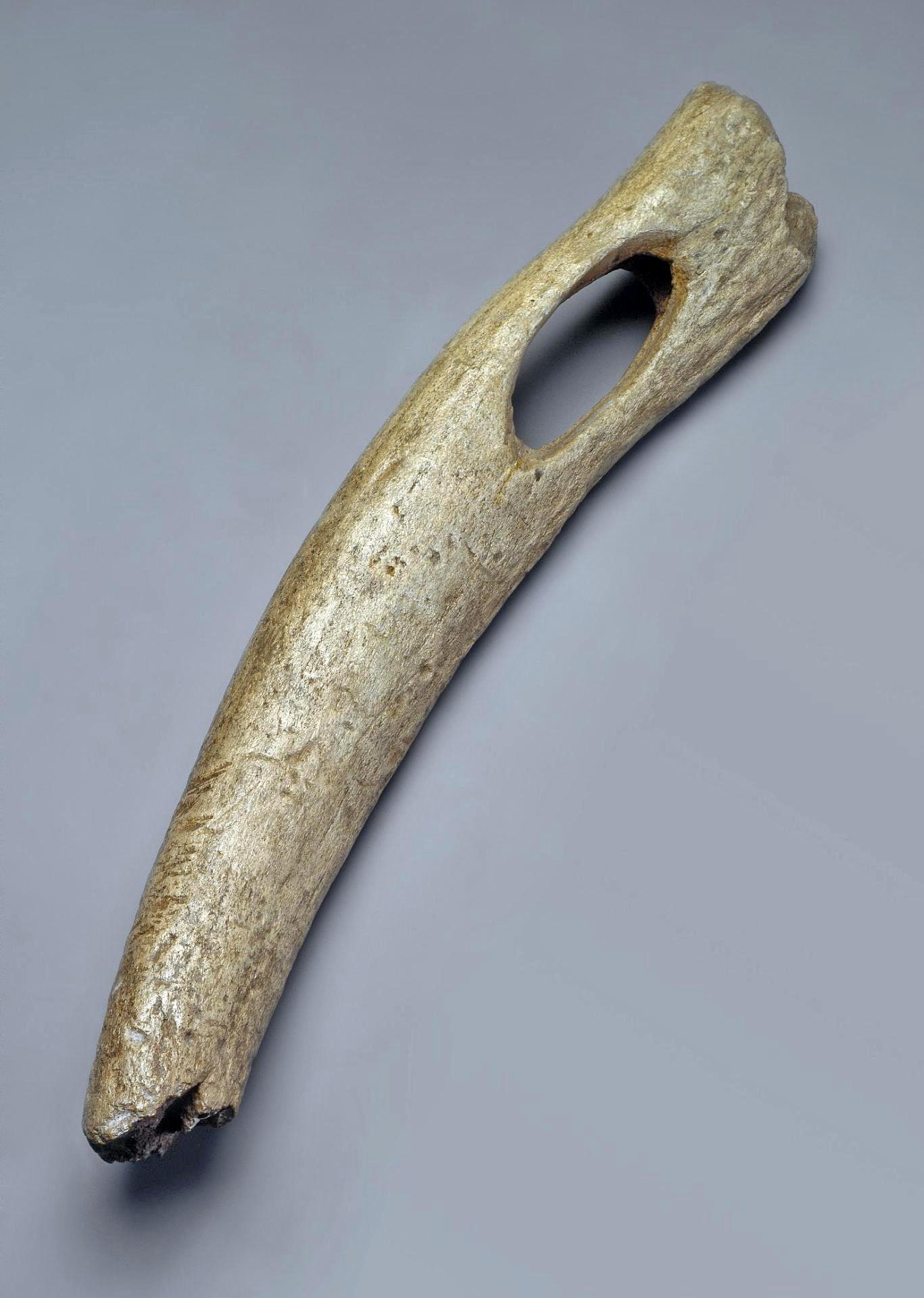
Spear straighteners, Afontovskaya Culture. Late Paleolithic, 20 000 - 18 000 BP
Location: Afontova gora (mountain) II Site (excavations by G.P. Sosnovsky, 1920s)
Deer antler, length (left and right): 23 cm, 27 cm.
Inventory Number: 1574-65
note that the right hand straightener has an elongated hole. This may be because the hole has not been made in the strongest part of the antler, at a junction, and has been elongated by wear. Note also that the left hand spear straightener looks more like one made from reindeer antler - Don )
Photo: http://www.hermitagemuseum.org/
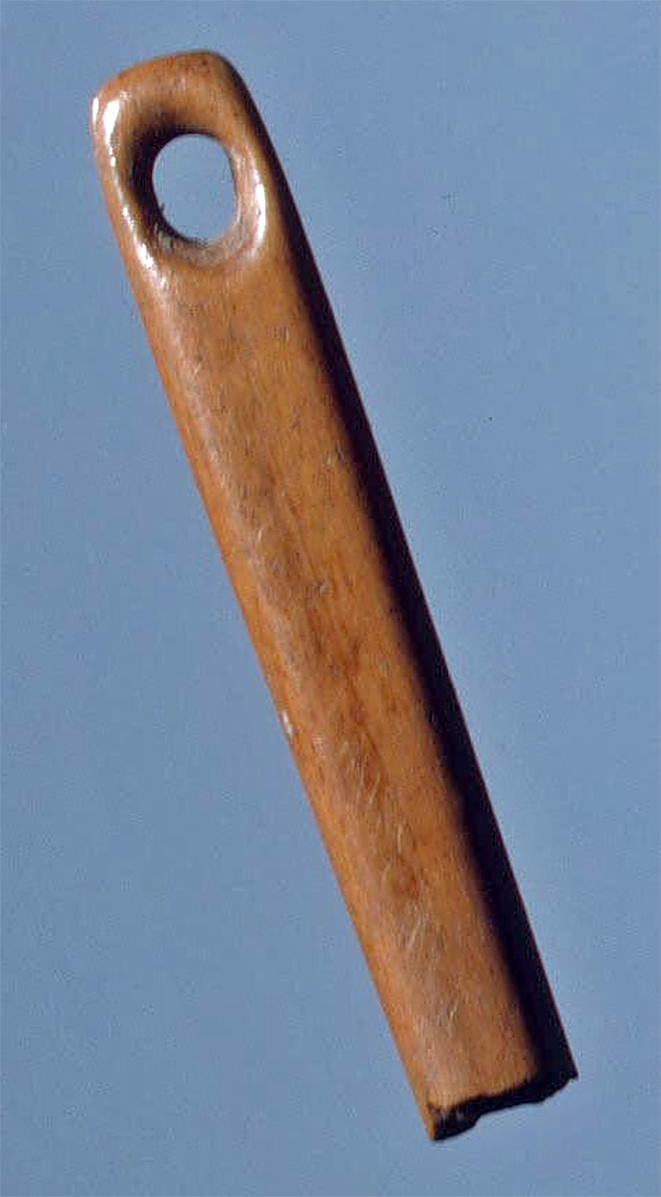
Needle with eye.
Afontovskaya Culture. Late Paleolithic, 20 000 - 18 000 BP
Location: Afontova gora (mountain) III Site (excavations by N.K. Auerbah, 1930)
Length 94 mm.
Photo: http://www.hermitagemuseum.org/
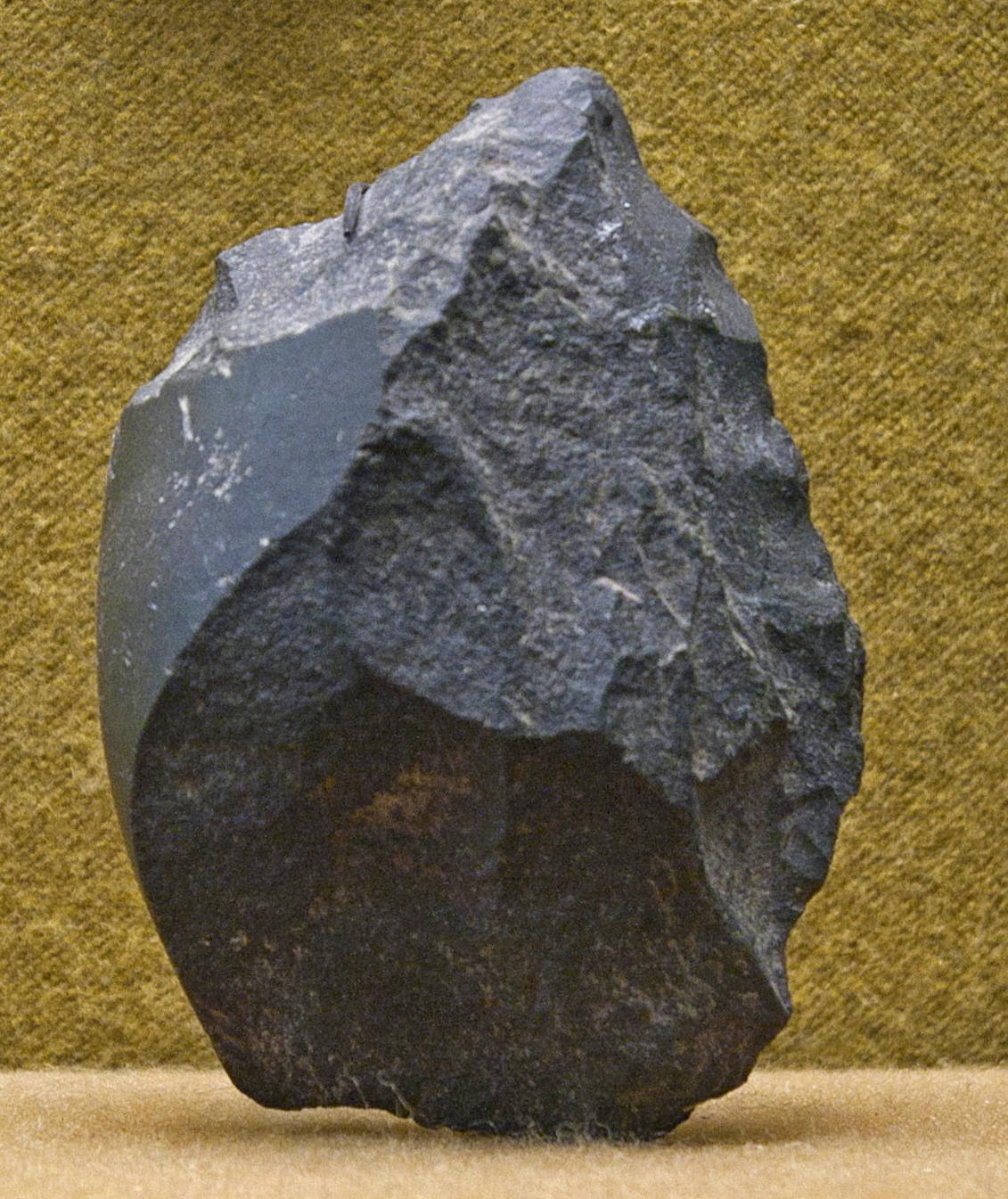
8 - scraper.
Photo: Vladimir Gorodnjanski 2014
Source: The Hermitage Museum, Saint Petersburg
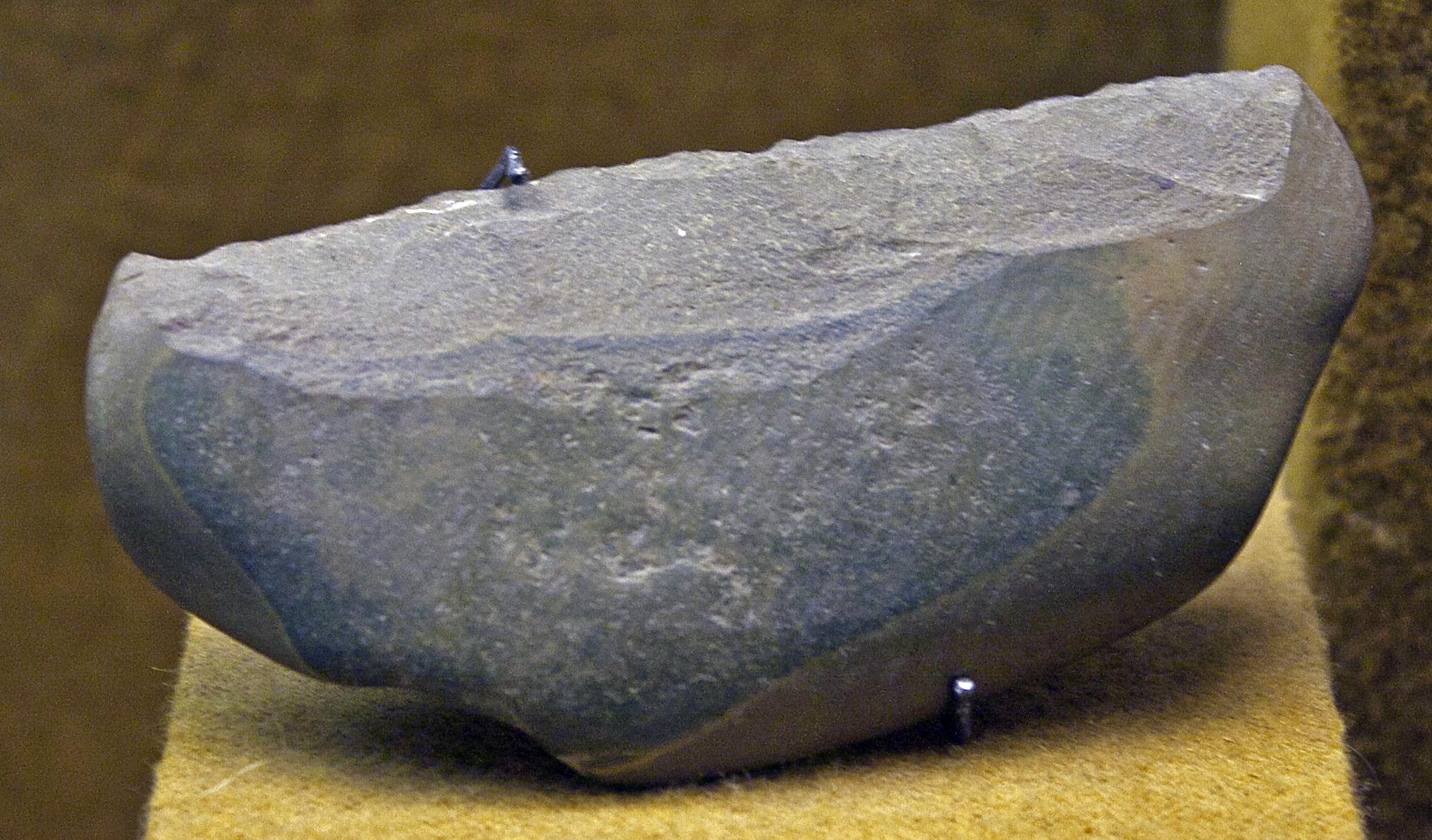
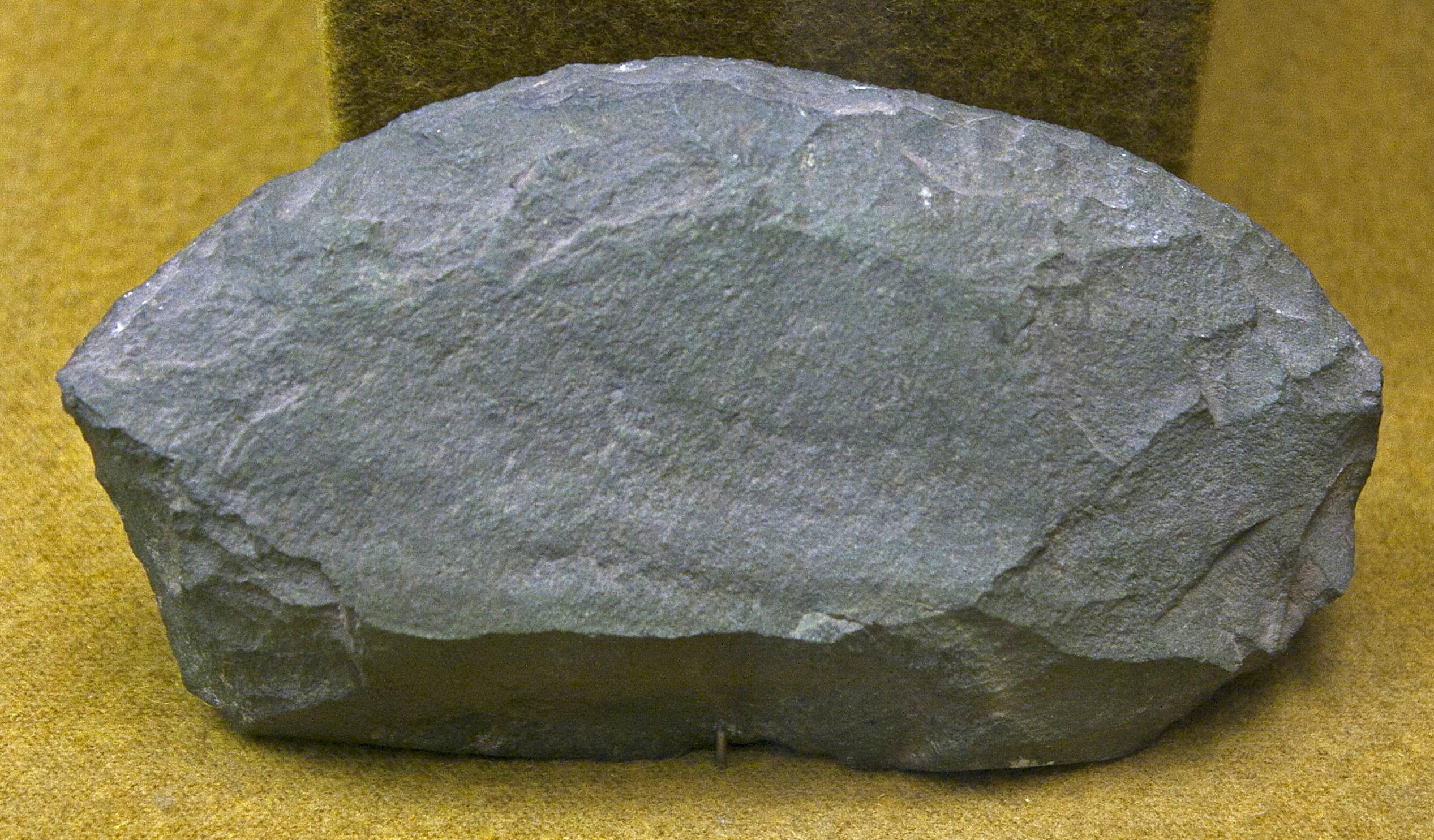
8 - scrapers.
Photo: Vladimir Gorodnjanski 2014
Source: The Hermitage Museum, Saint Petersburg
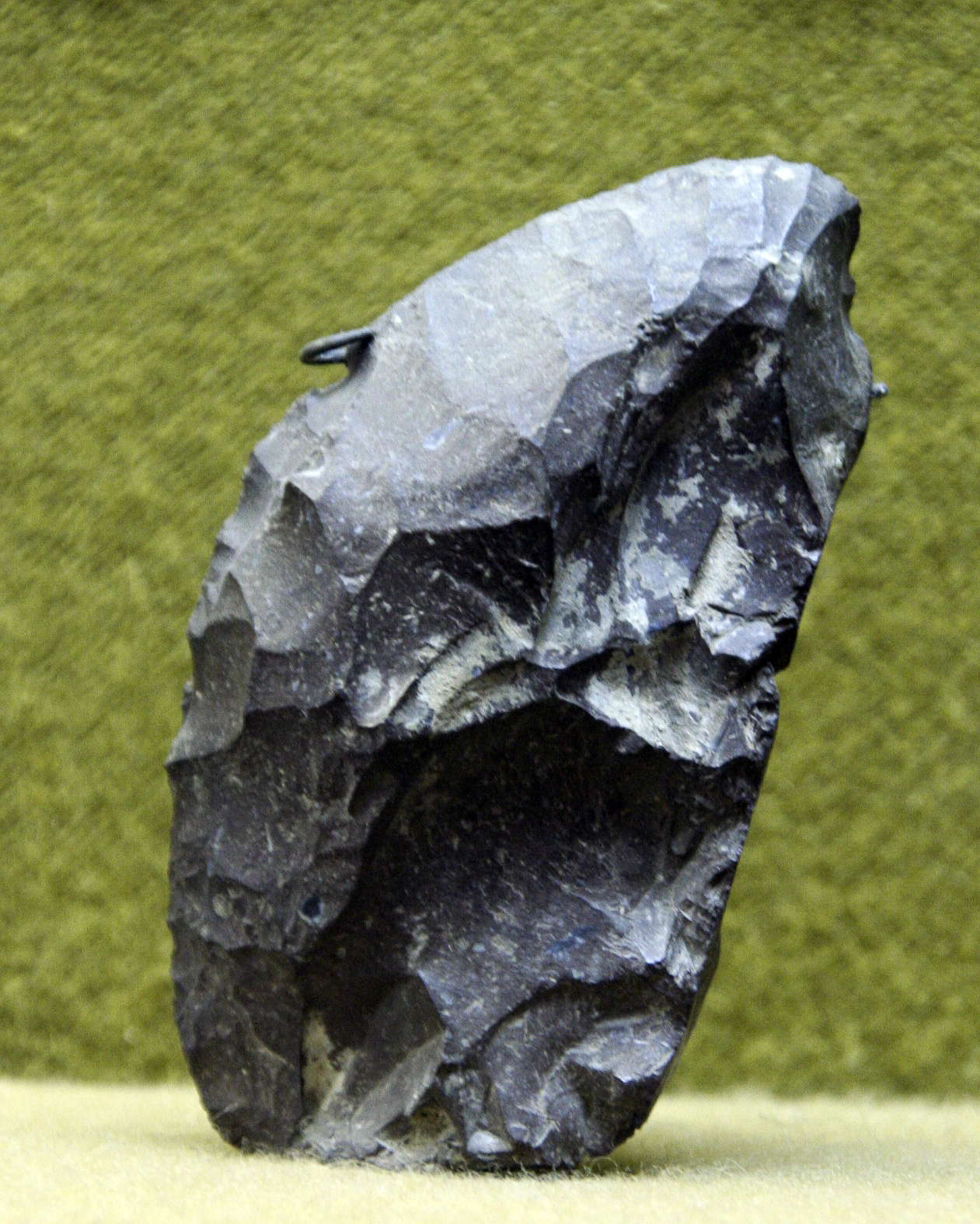
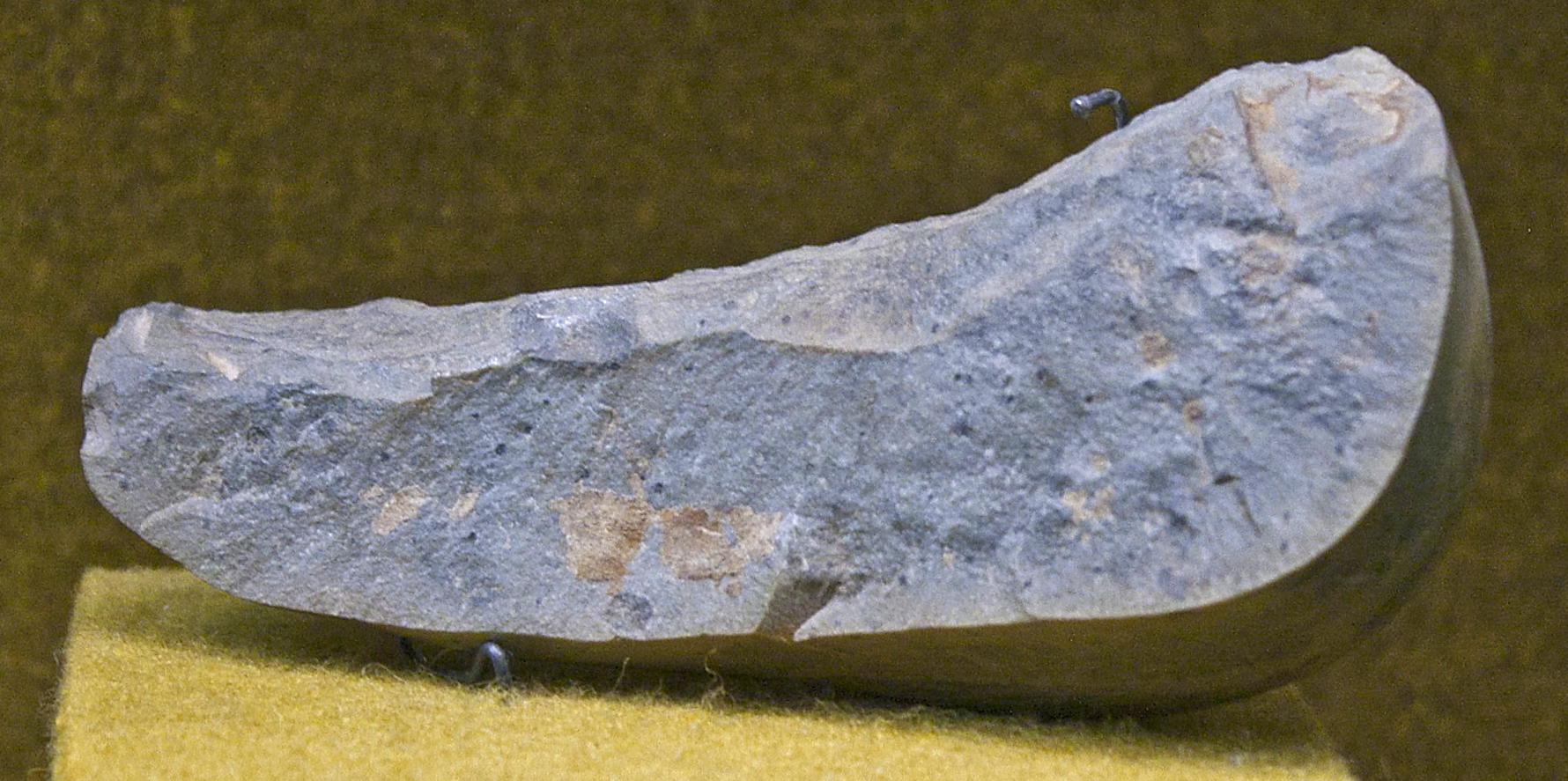
8 - scrapers.
Photo: Vladimir Gorodnjanski 2007, 2014
Source: The Hermitage Museum, Saint Petersburg
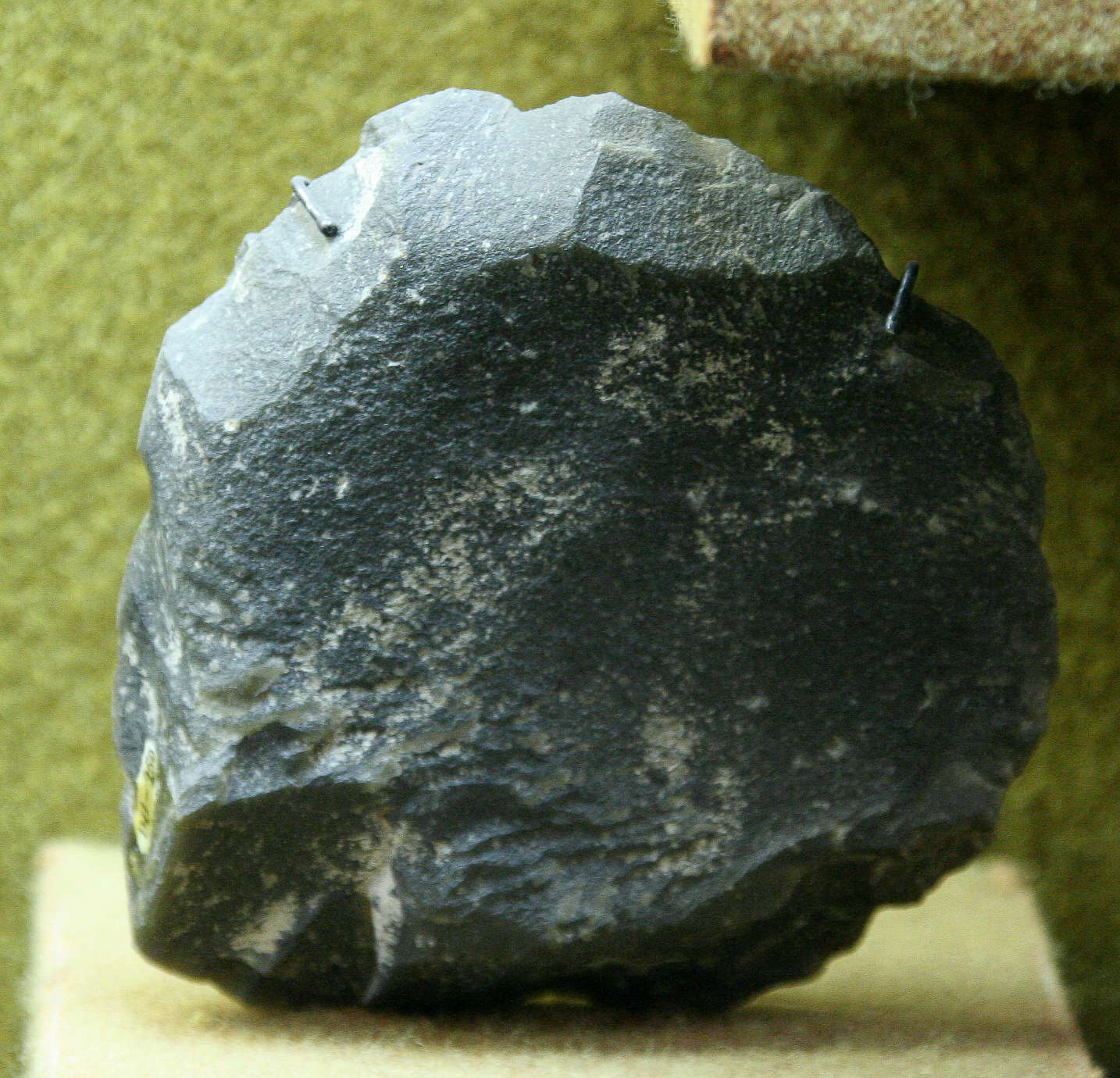
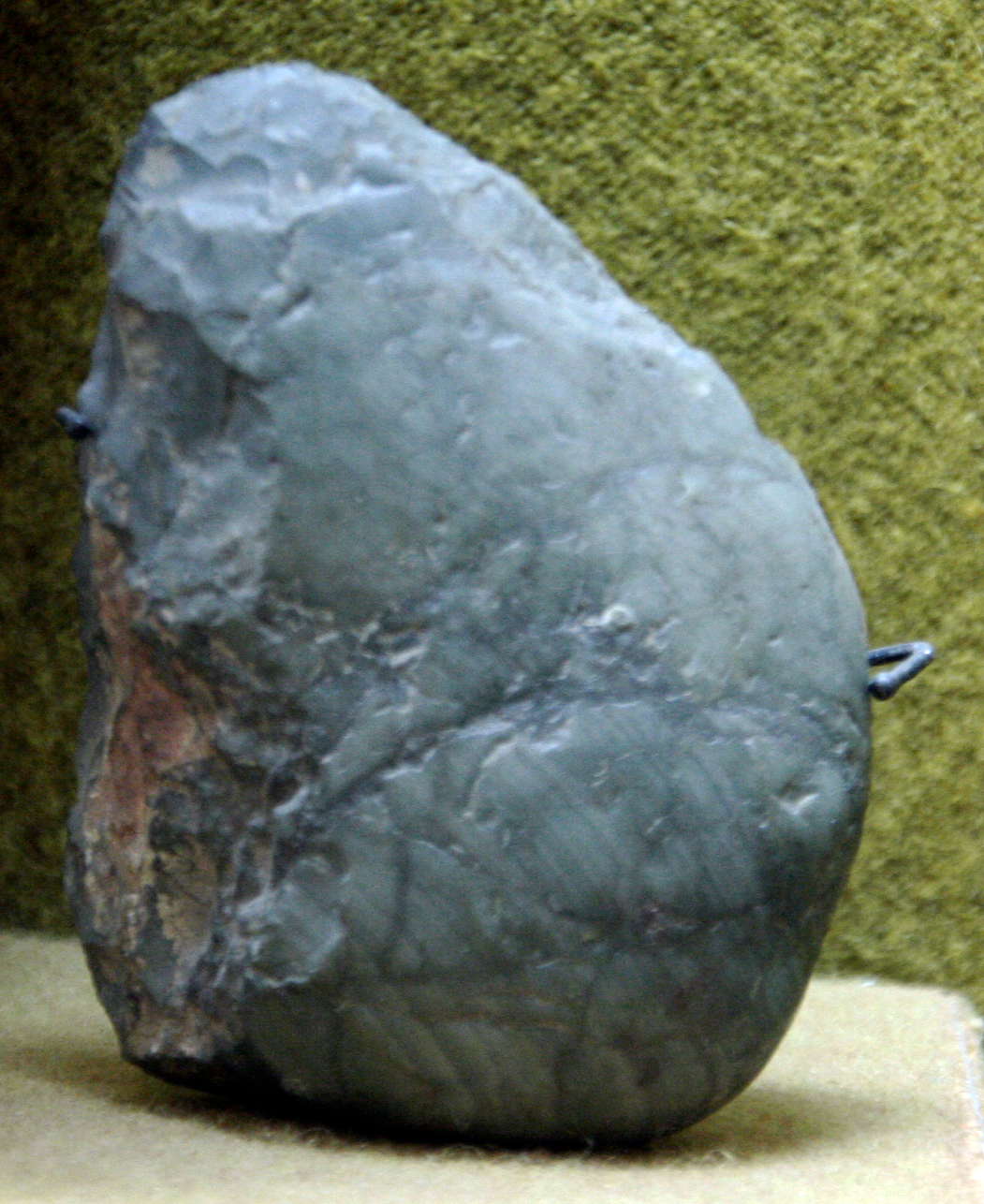
8 - scrapers.
Photo: Vladimir Gorodnjanski 2007
Source: The Hermitage Museum, Saint Petersburg

Afontova Gora, circled, on the banks of the Yenisei River. The major city nearby in the photo is Krasnoyarsk, Красноярска, on the Енисей River.
Photo: Google Earth
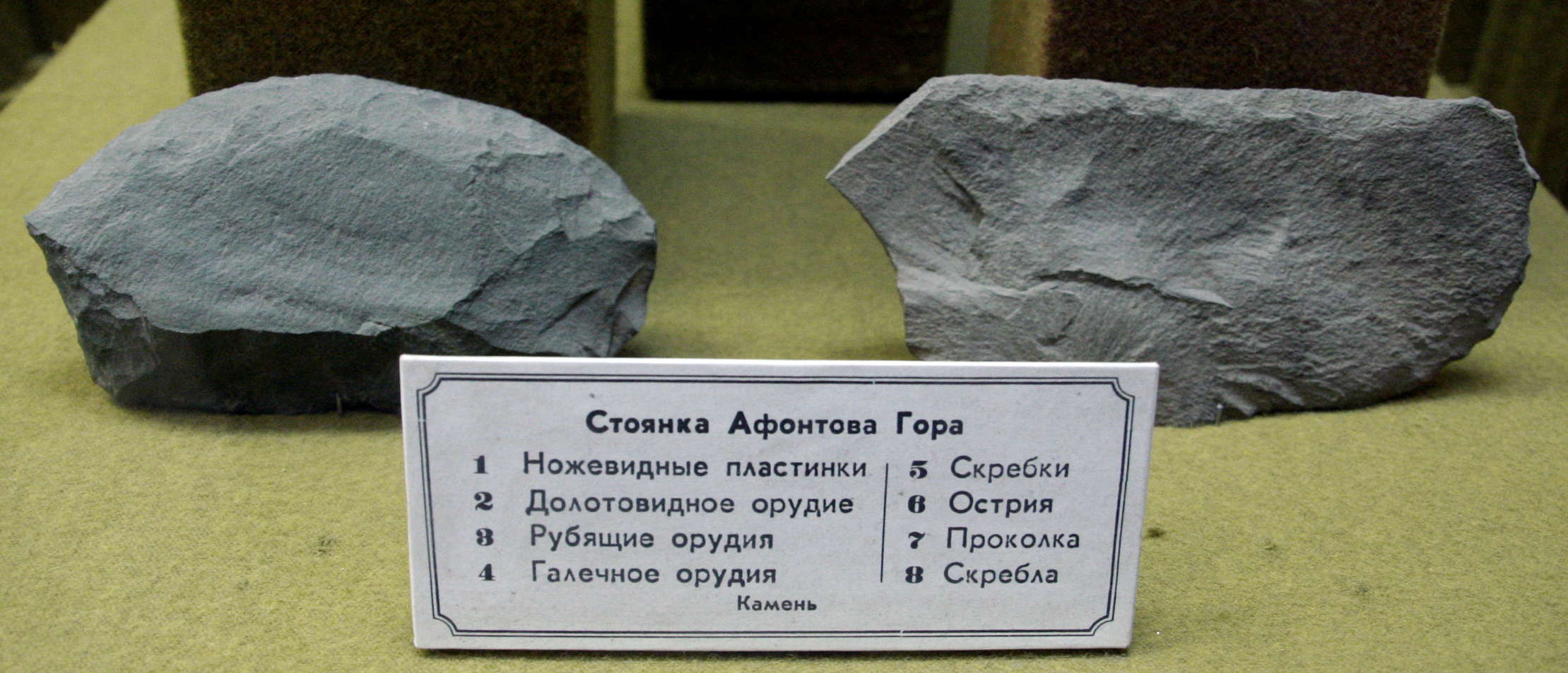
Стоянка Афонтова Гора - The archaeological site of Mount Afontova
1 - Ножевидные пластинки, knives made on blades.
2 - Доьотовидное орудие, possibly an adze.
3 - Рубящие орудия, chopping tools.
4 - Галечное орудия, pebble tools.
5 - Скребки, scrapers.
6 - Острия, points.
7 - Проколка, awls.
8 - Скребла, scrapers.
Камень, all made of stone.
The objects in this image appear to be large scrapers.
Photo: Vladimir Gorodnjanski 2007
Source: The Hermitage Museum, Saint Petersburg
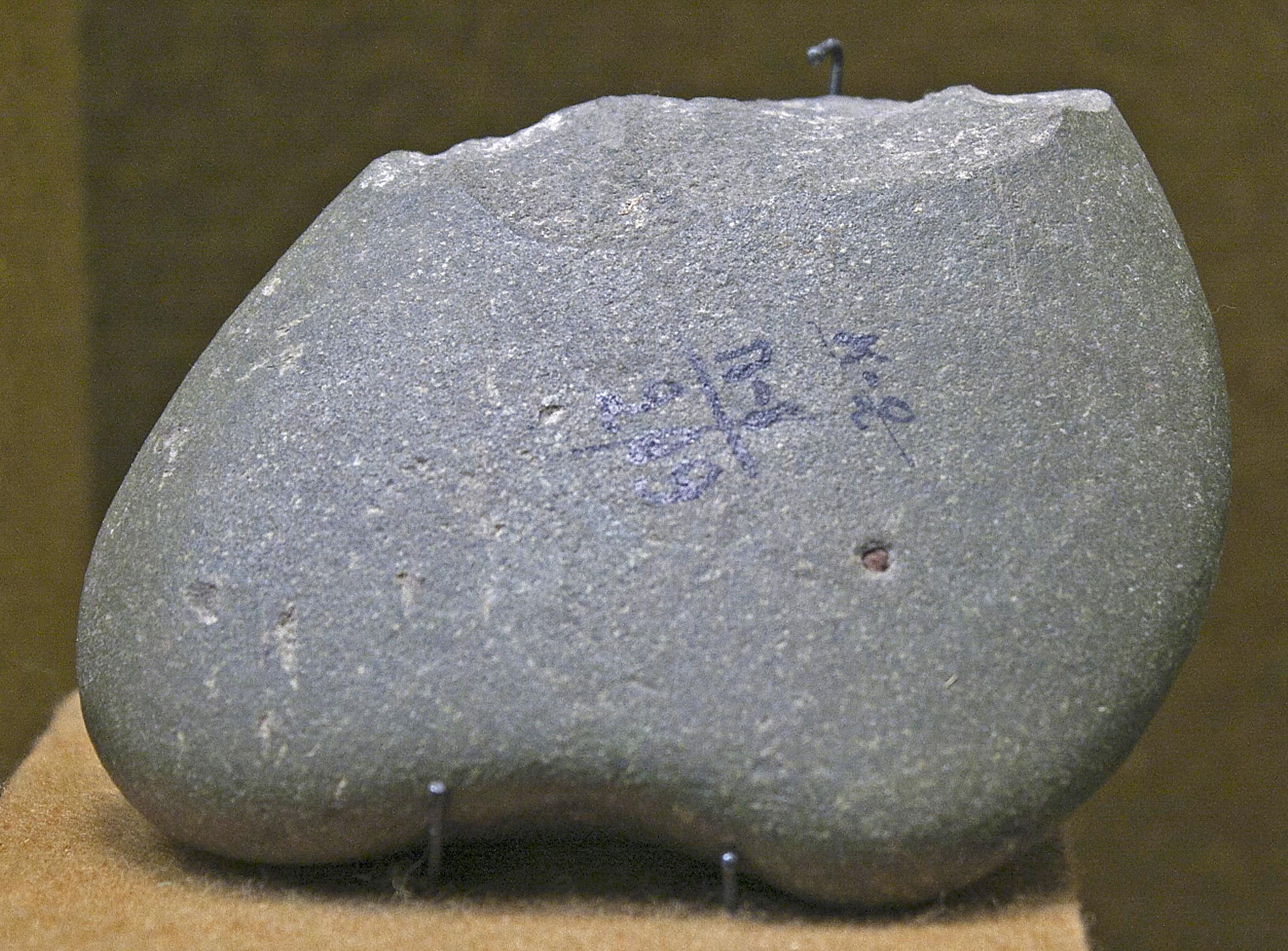
A pebble tool.
This rock from the river has been hardly changed, but forms a useful tool nevertheless.
Photo: Vladimir Gorodnjanski 2014
Source: The Hermitage Museum, Saint Petersburg
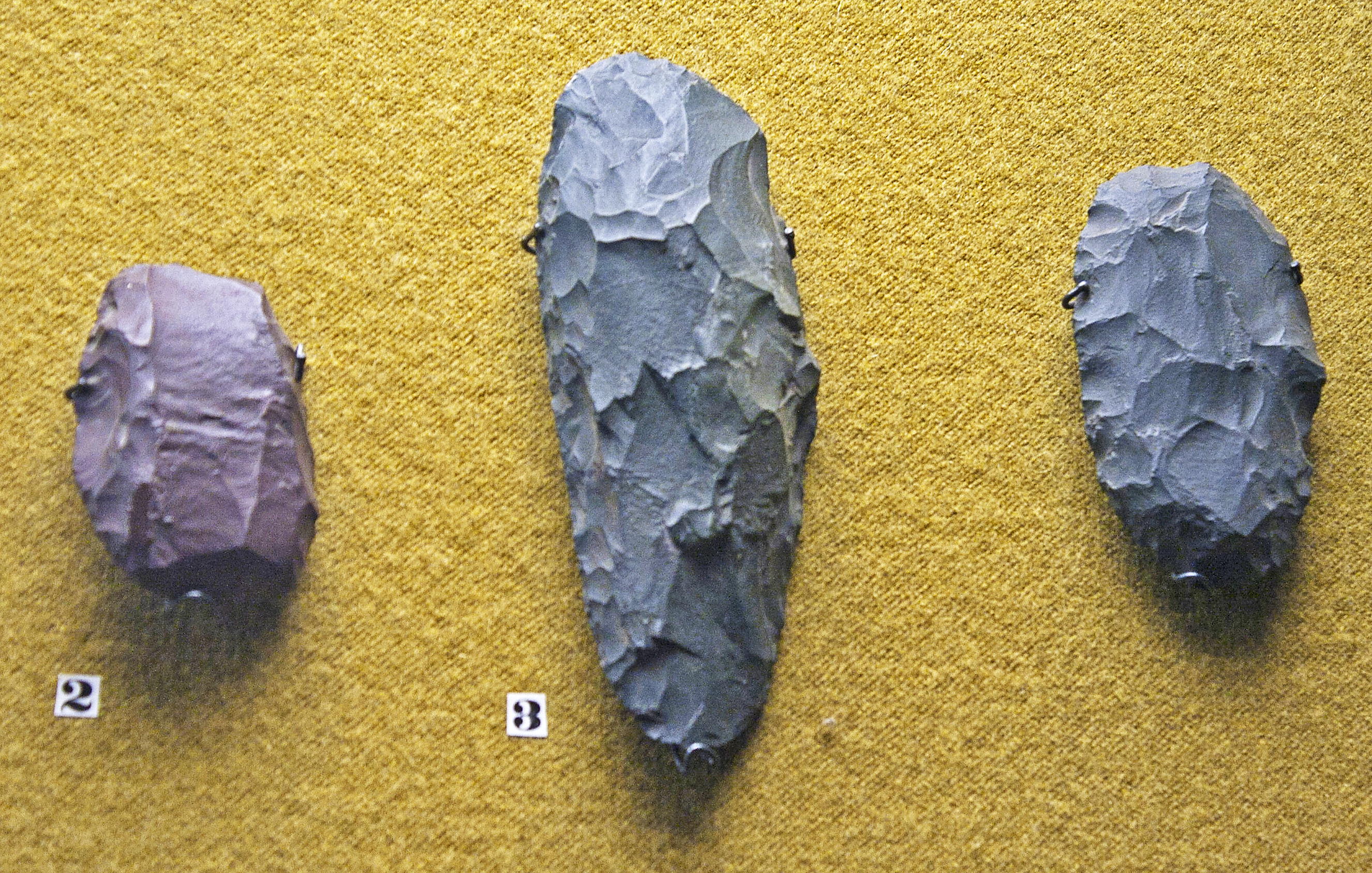
(left) Possibly an adze
(centre and right) Chopping tools
Photo: Vladimir Gorodnjanski 2014
Source: The Hermitage Museum, Saint Petersburg

Late Paleolithic
20 000 - 18 000 BP, Asian USSR, Valley of the Yenisei River.
1 - Beads
Photo: Vladimir Gorodnjanski 2007
Source: The Hermitage Museum, Saint Petersburg

2 - Pendants made of pierced animal teeth.
Photo: Vladimir Gorodnjanski 2007
Source: The Hermitage Museum, Saint Petersburg
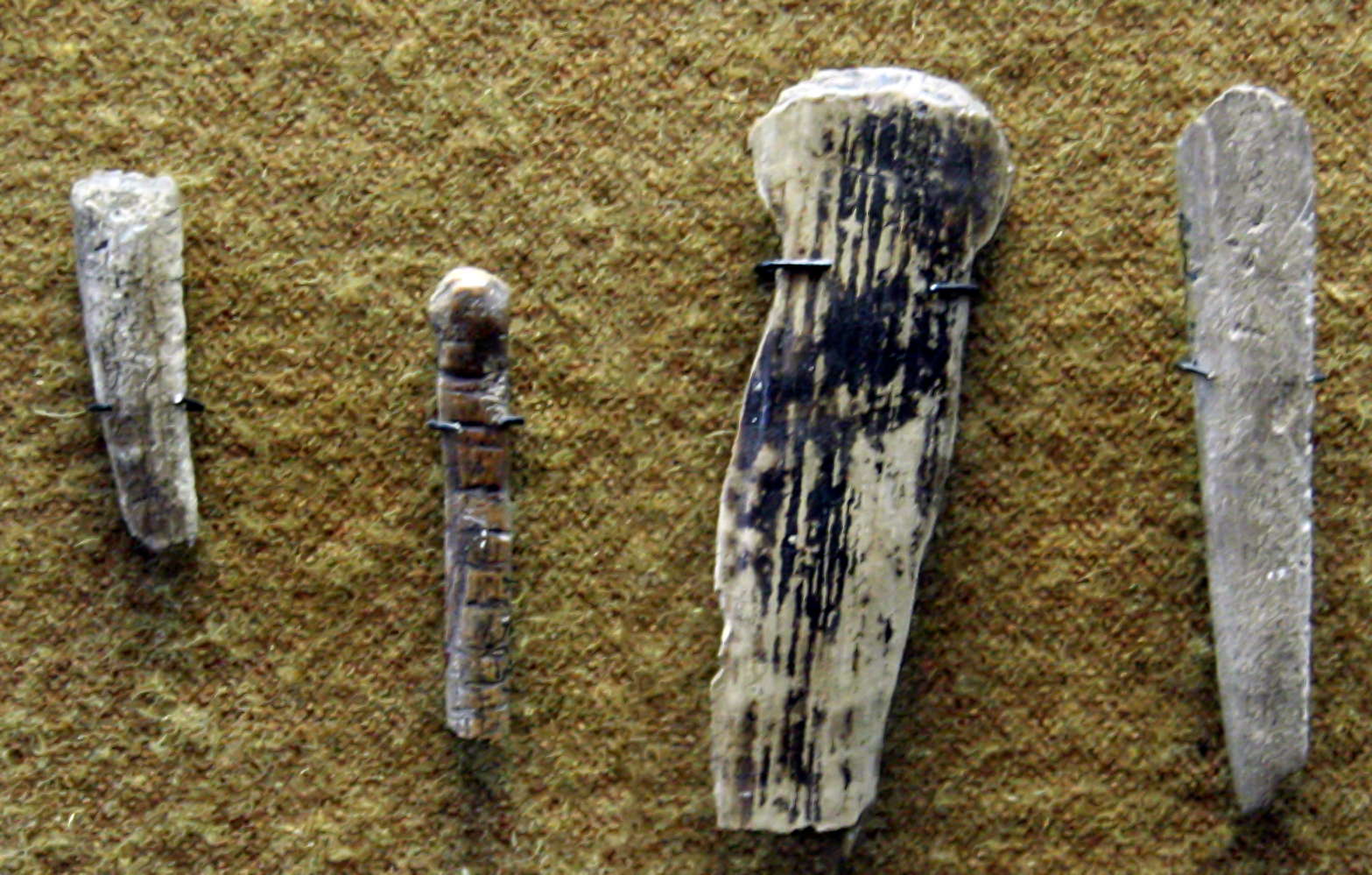
3 - Worked bone.
(The second object from the left has definite similarities of shape to one of the Mal'ta venus figures - Don )
Photo: Vladimir Gorodnjanski 2007
Source: The Hermitage Museum, Saint Petersburg

Map showing Afontova Gora (27) and Mal'ta (29), both circled.
Photo: Abramov et al. (1984)
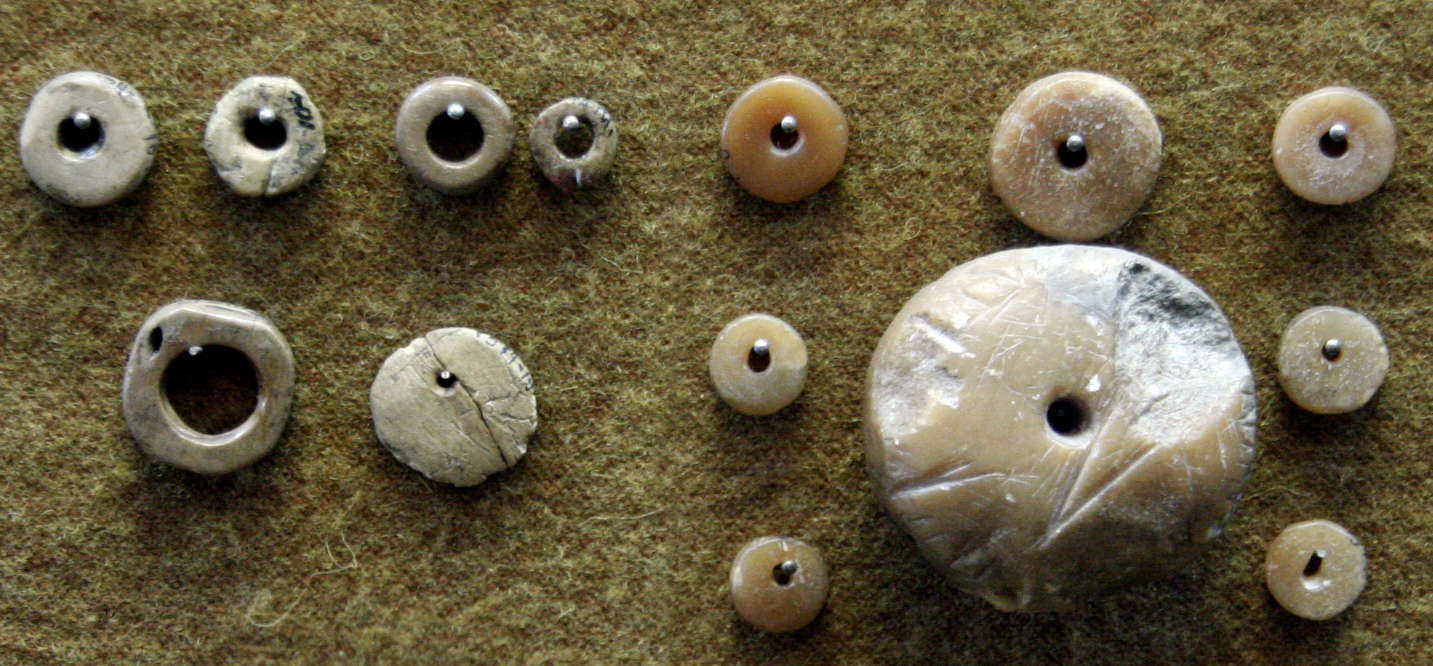
4 - beads and/or pendants.
(Note the advanced technique shown in the lower left bead. Getting a hole that size, and leaving such a narrow band around it requires very good control of the material - Don )
Photo: Vladimir Gorodnjanski 2007
Source: The Hermitage Museum, Saint Petersburg
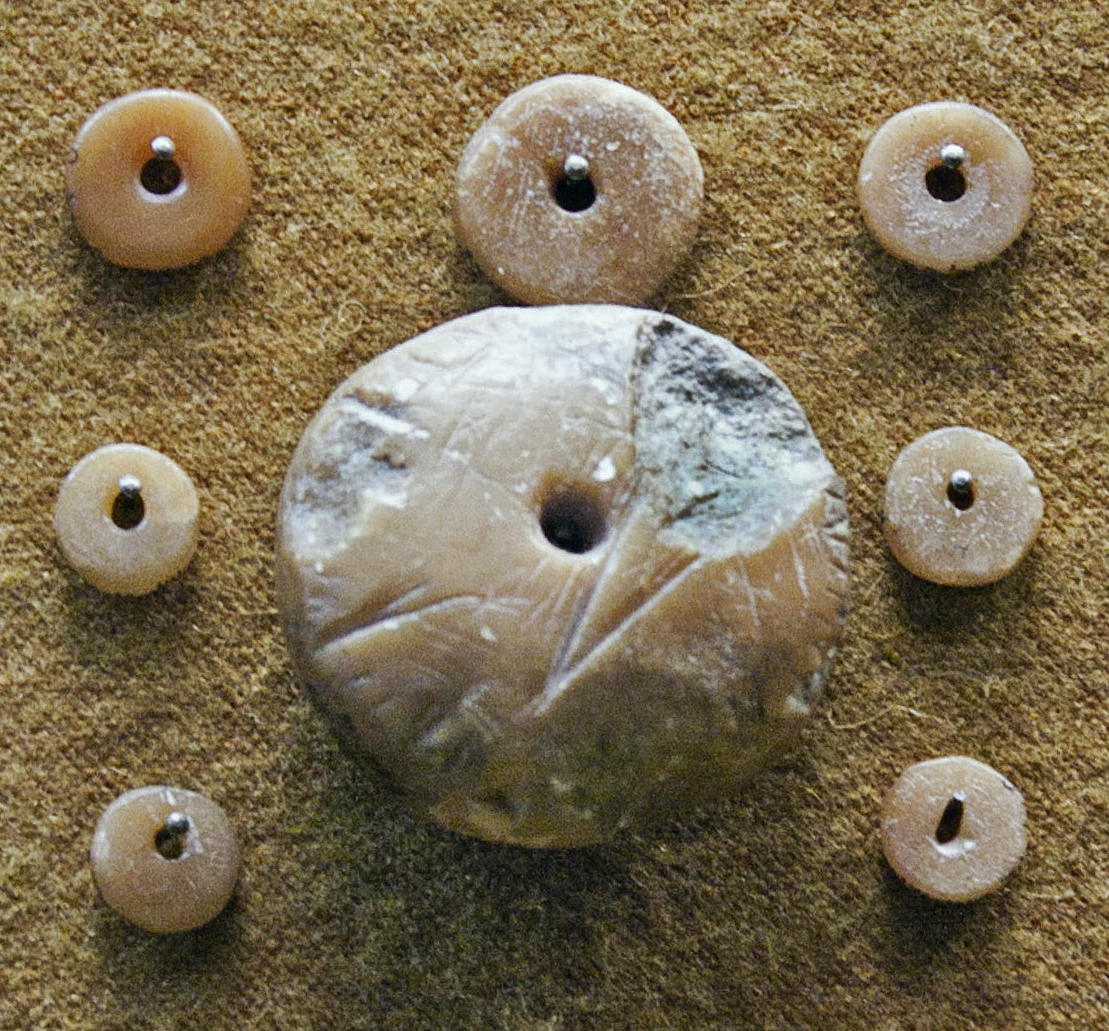
Close up of some of the beads.
Photo: Vladimir Gorodnjanski 2014
Source: The Hermitage Museum, Saint Petersburg
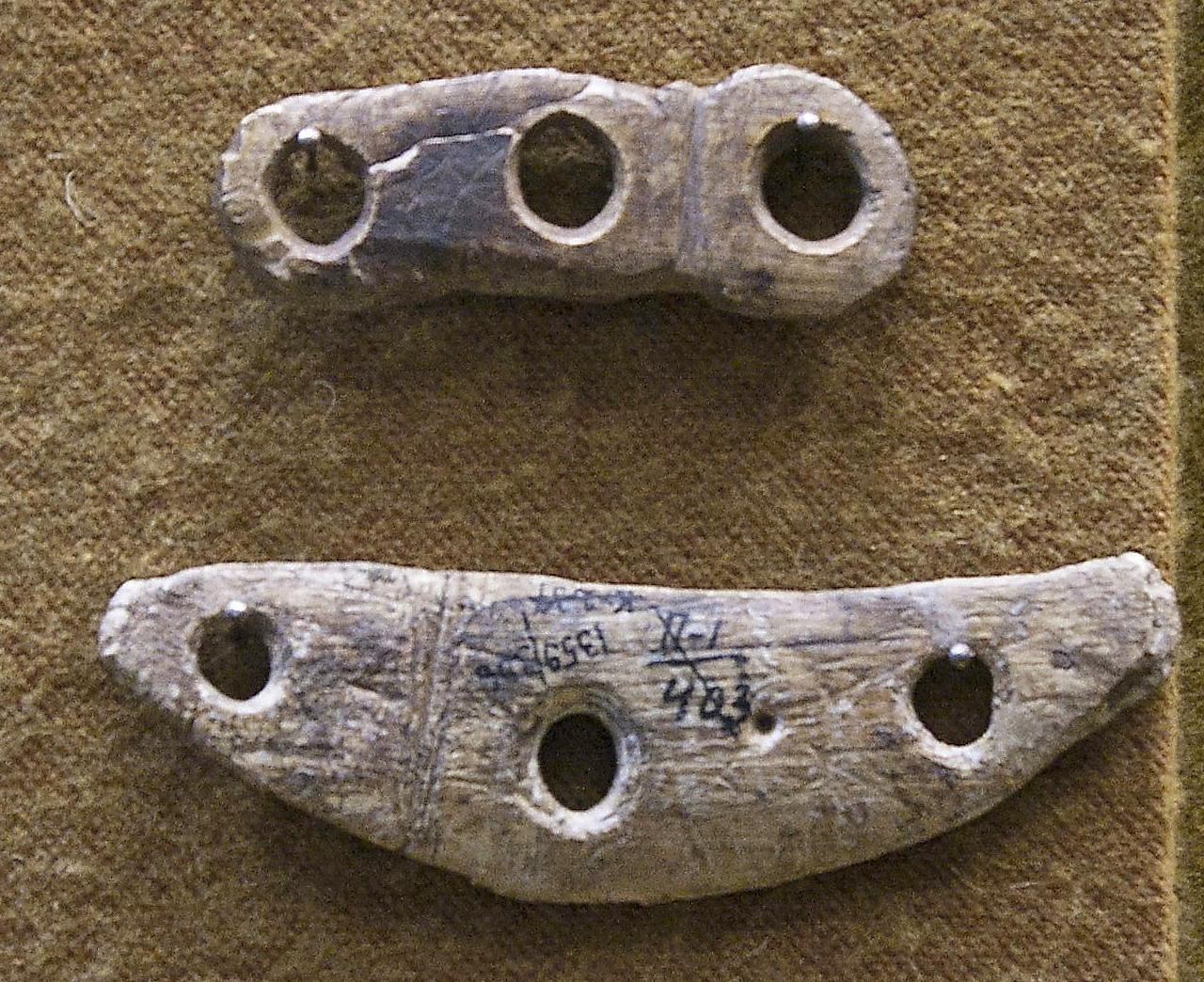
5 - Stages of manufacture of the beads and pendants.
(… and this shows how it was done! - Don )
Photo: Vladimir Gorodnjanski 2014
Source: The Hermitage Museum, Saint Petersburg
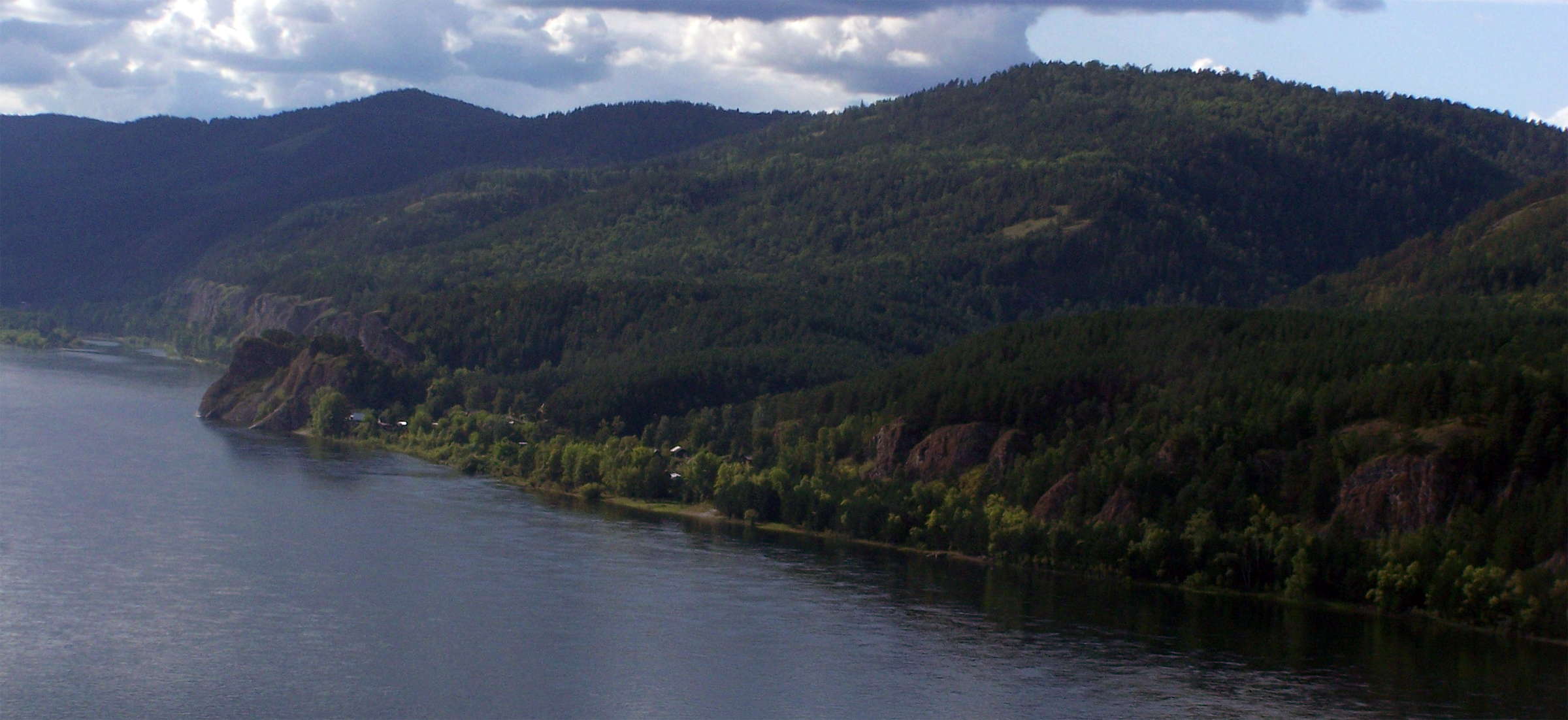
Yenisei River near Afontova Gora
Photo: Ushakov Nikolaus via Panoramio

Late Paleolithic
20 000 - 18 000 BP, Asian USSR, Valley of the Yenisei River.
1 - Needles
2 - Tools for working flint, and for making objects used for hunting.
Photo: Vladimir Gorodnjanski 2007
Source: The Hermitage Museum, Saint Petersburg
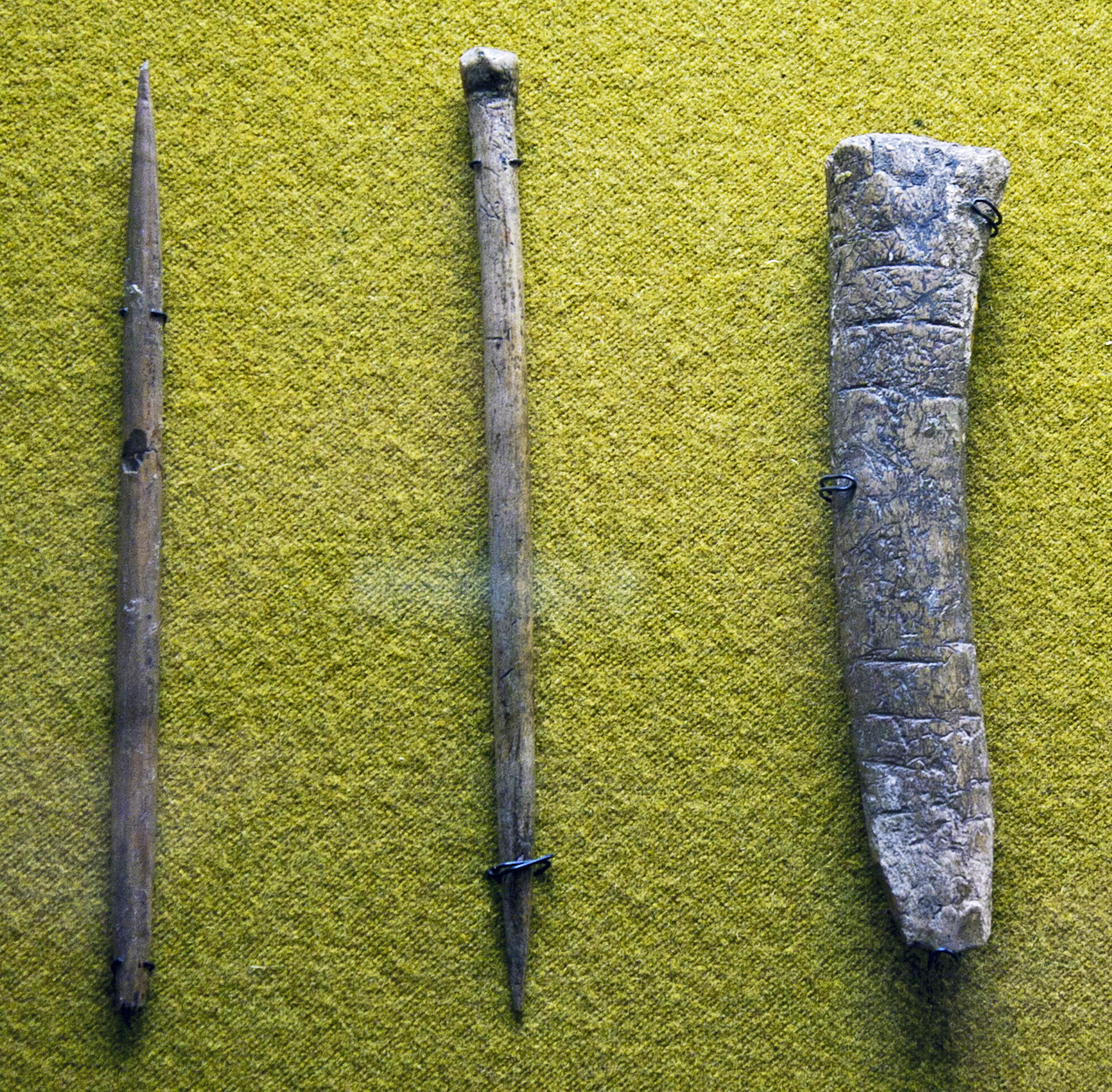
Close up of three of the artefacts in the image above.
Photo: Vladimir Gorodnjanski 2014
Source: The Hermitage Museum, Saint Petersburg
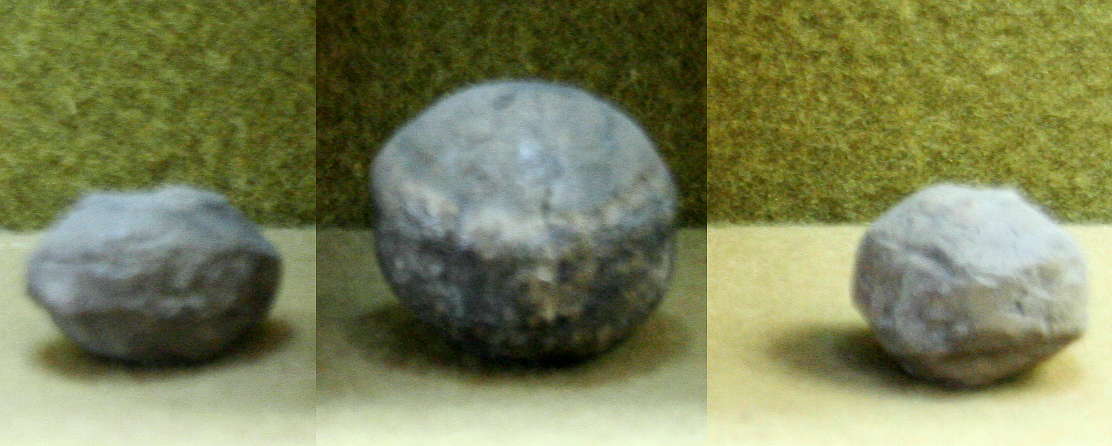
3 - 'balls'
These are rocks that have been pecked into a spherical shape. The one in the middle has an equatorial groove pecked in it. I believe these may be construed as balls for a bola, which is a hunting weapon consisting usually of two or three balls connected by cords, which wrap around the legs of the hunted animal. The groove in the middle ball is probably to accept a cord. The others would have had either a net of cord around them, or possibly be simply encased in hide.
Photo: Vladimir Gorodnjanski 2007
Source: The Hermitage Museum, Saint Petersburg
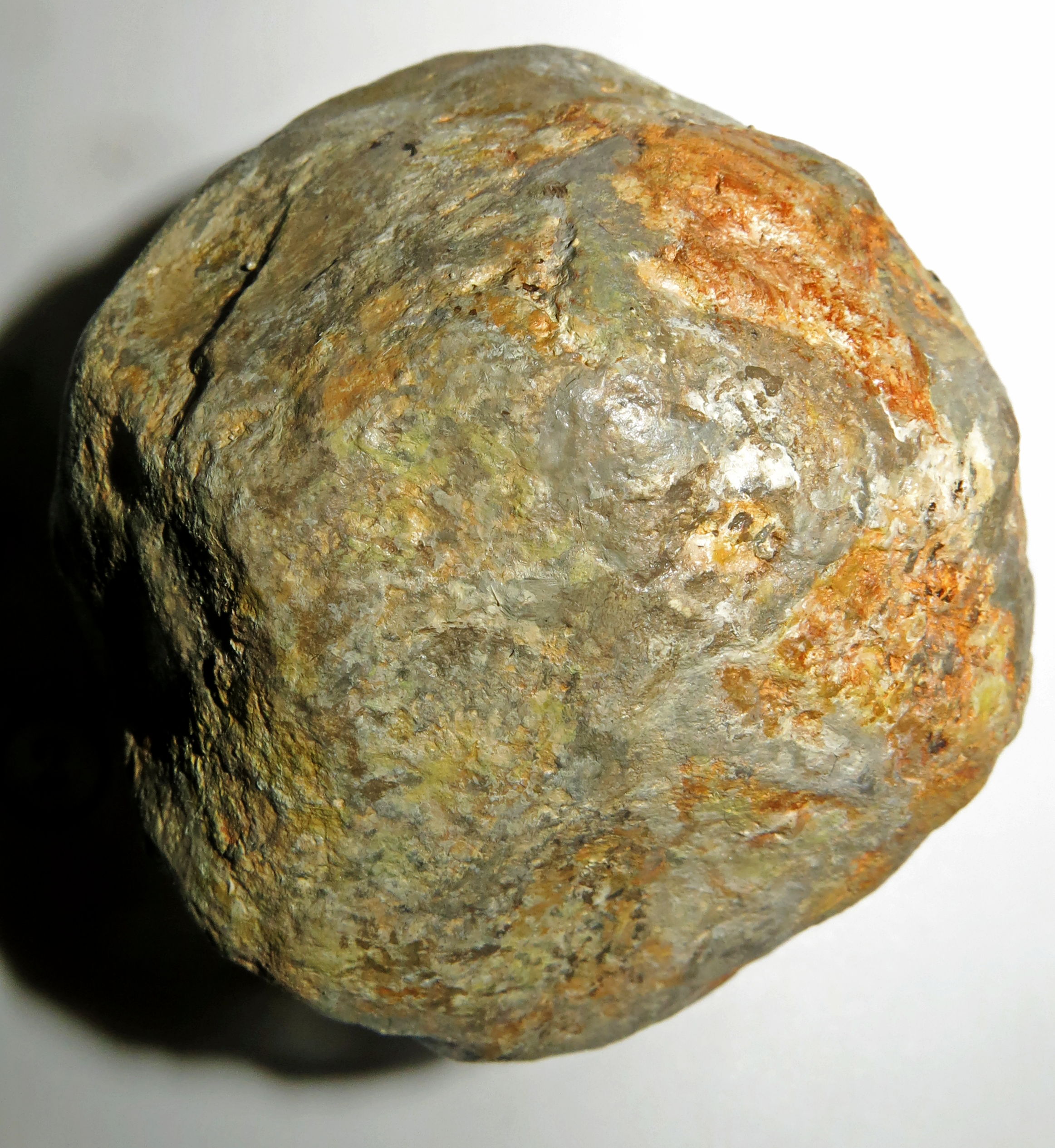
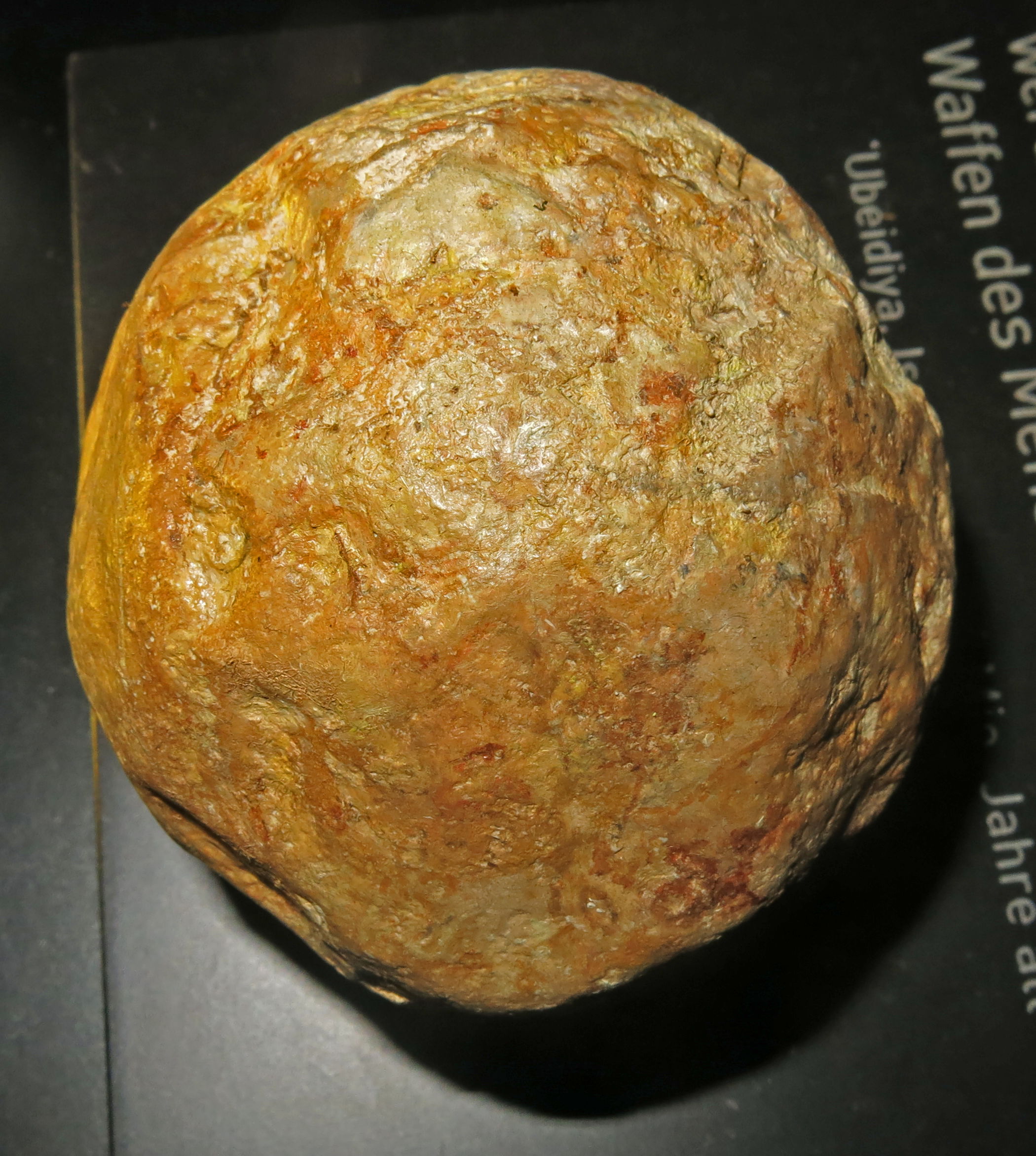
Bola, ca 1 400 000 BP.
Bolas are often used in threes, connected by leather thongs to a central point, and are thrown to entrap the legs of game animals, bringing them down to be killed by hunters.
Photos of two facsimiles of the same object from 'Ubeidiya, Israel.
Photo: Don Hitchcock 2015
Source: Facsimile, Monrepos Archäologisches Forschungszentrum und Museum, Neuwied, Germany
I am indebted to Michael Holder for pointing out that there is no clear-cut and unequivocal evidence of bolas in Europe, although they are found at Pre-Columbian American sites, for example in excavations of such cultures in Patagonia, where they were used to hunt birds and llama-like animals. Thus we must think of other possible reasons for the manufacture of these near spherical objects.
Similar equatorially grooved stones have been found in, for example, Romania, used as weights for fishing nets, with much larger ones used as boat anchors, although more from the middle ages than from the ice ages.
It is amazing how much effort is put into items like this. I imagine that if the balls were encased in a fine net or hide, any old rock would do, but the makers have gone to a great deal of trouble to make the balls as close to spherical as possible.
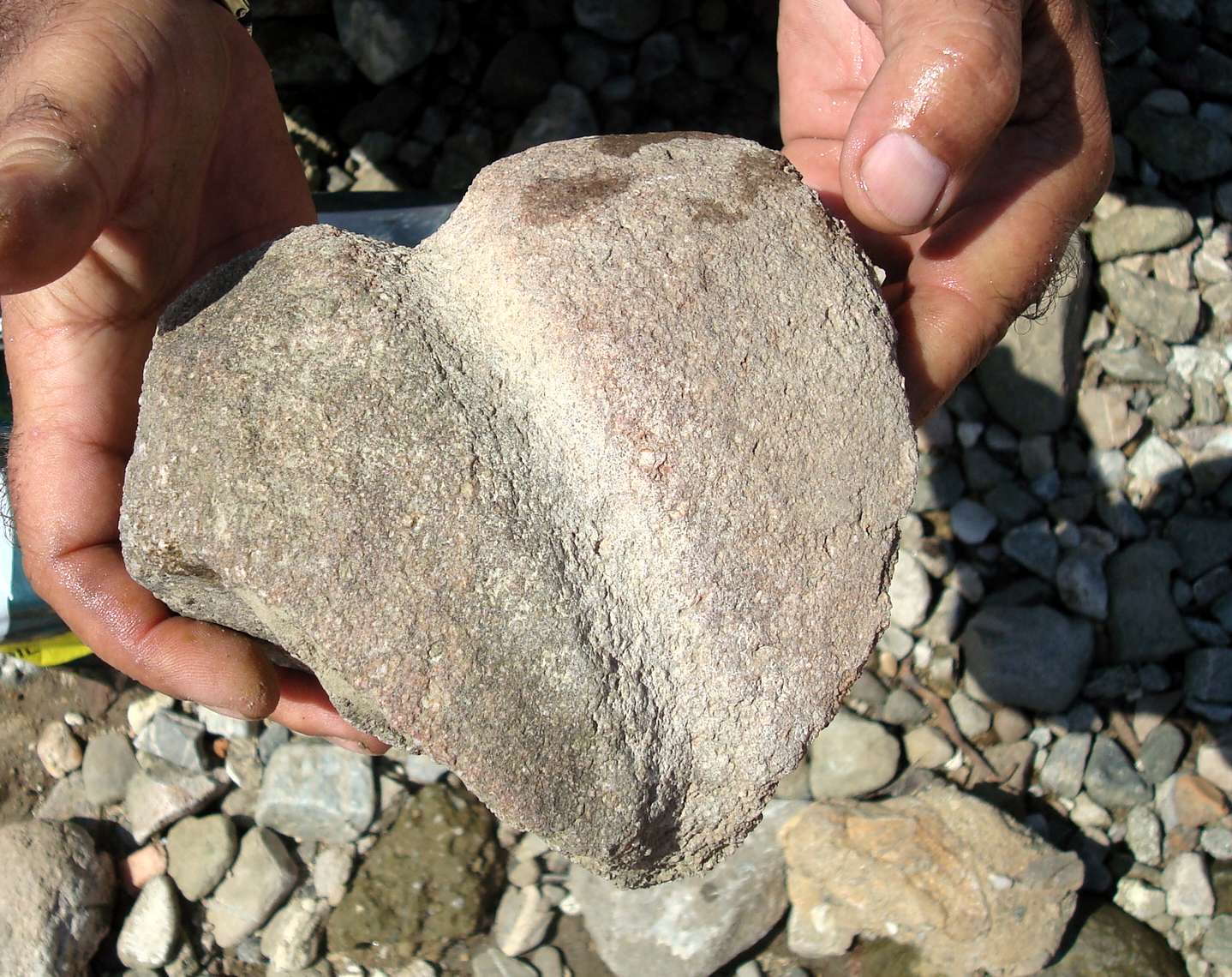
A very large and beautifully made stone anchor, possibly from the stone age, not with a hole in it, but with a groove around it to fix the rope. Found on the left bank of the River Danube near the marker 'Km 937', in Romania.
Photo: Adrian Gheorghe 31st August 2008
From Wikipedia:
There is no uniform design for bolas. Most bolas have two or three balls, but there are versions of up to eight or nine. Some bolas have balls of equal weight, others vary the knot and cord. Gauchos use bolas made of braided leather cords with wooden balls or small leather sacks full of stones at the ends of the cords.
Bolas of three weights are usually designed with two shorter cords with heavier weights, and one longer cord with a light weight. The heavier weights fly at the front parallel to each other, hit either side of the legs, and the lighter weight goes around, wrapping up the legs.
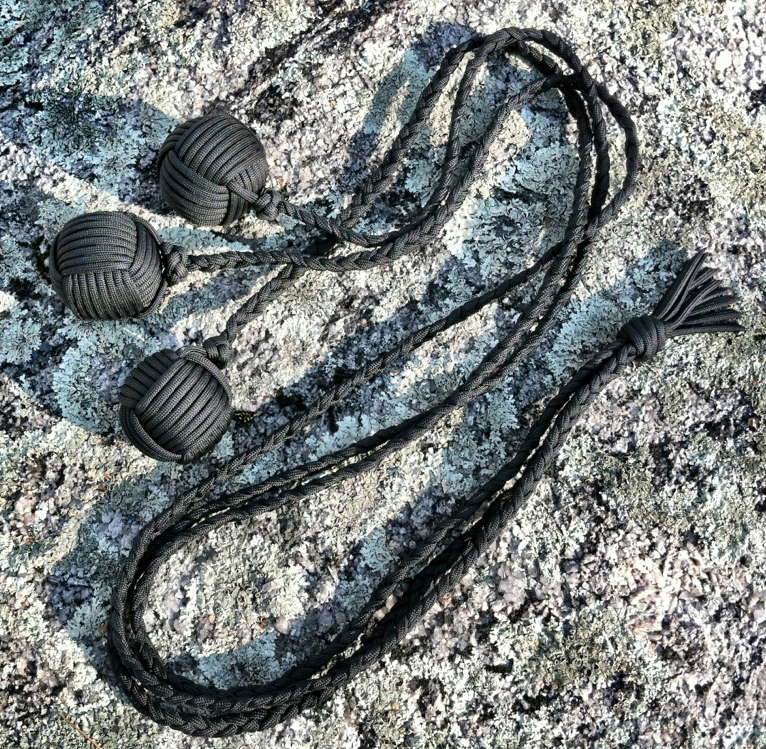
This is a superbly made modern bola. It is a work of art.
Photo: Paracordist
Source: http://www.bushcraftuk.com/forum/showthread.php?t=83896
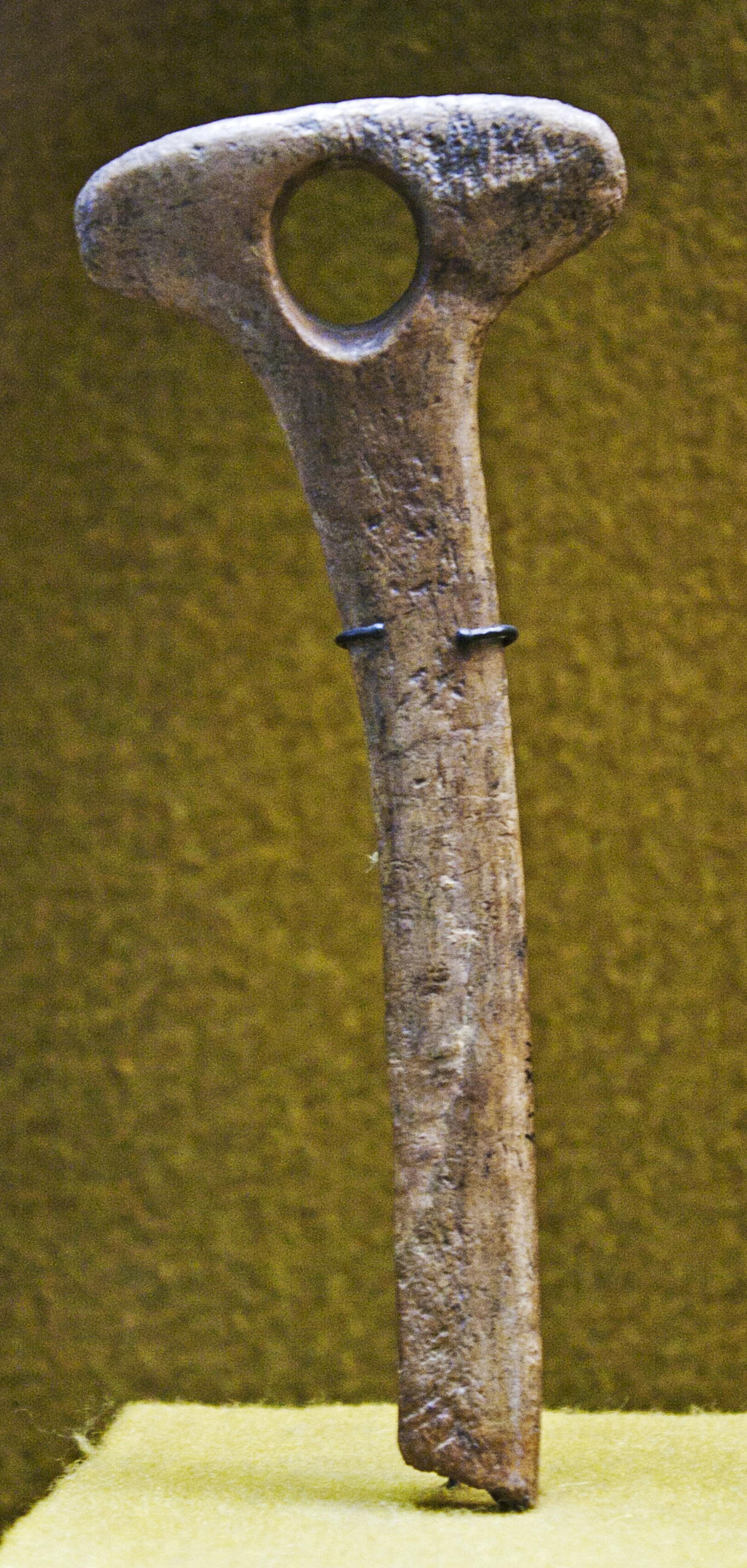
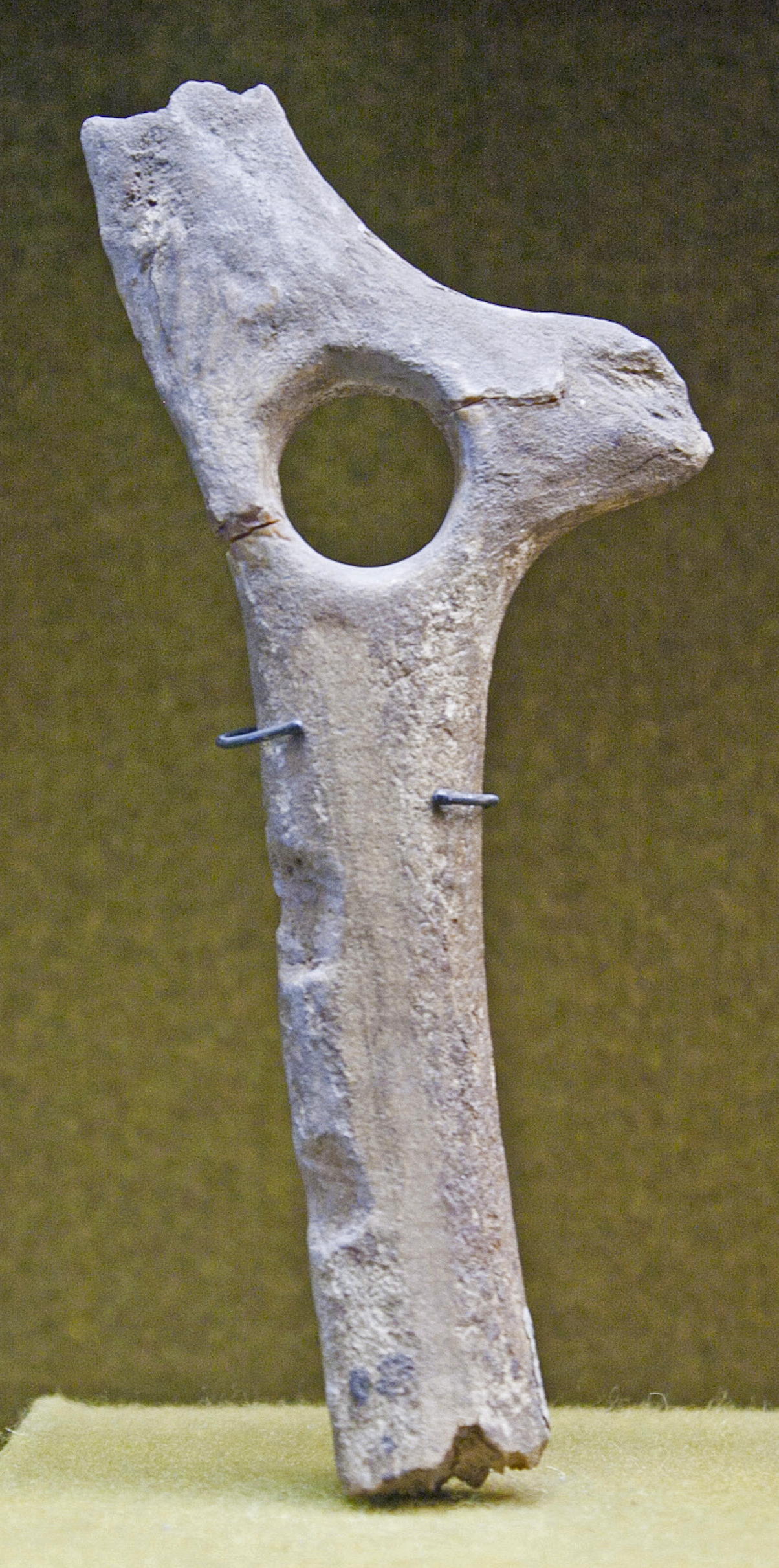
Spear straighteners.
Some of these showed evidence of a secondary use as a hammer tool or as a retoucher for flint knapping.
Photo: Vladimir Gorodnjanski 2014
Source: The Hermitage Museum, Saint Petersburg
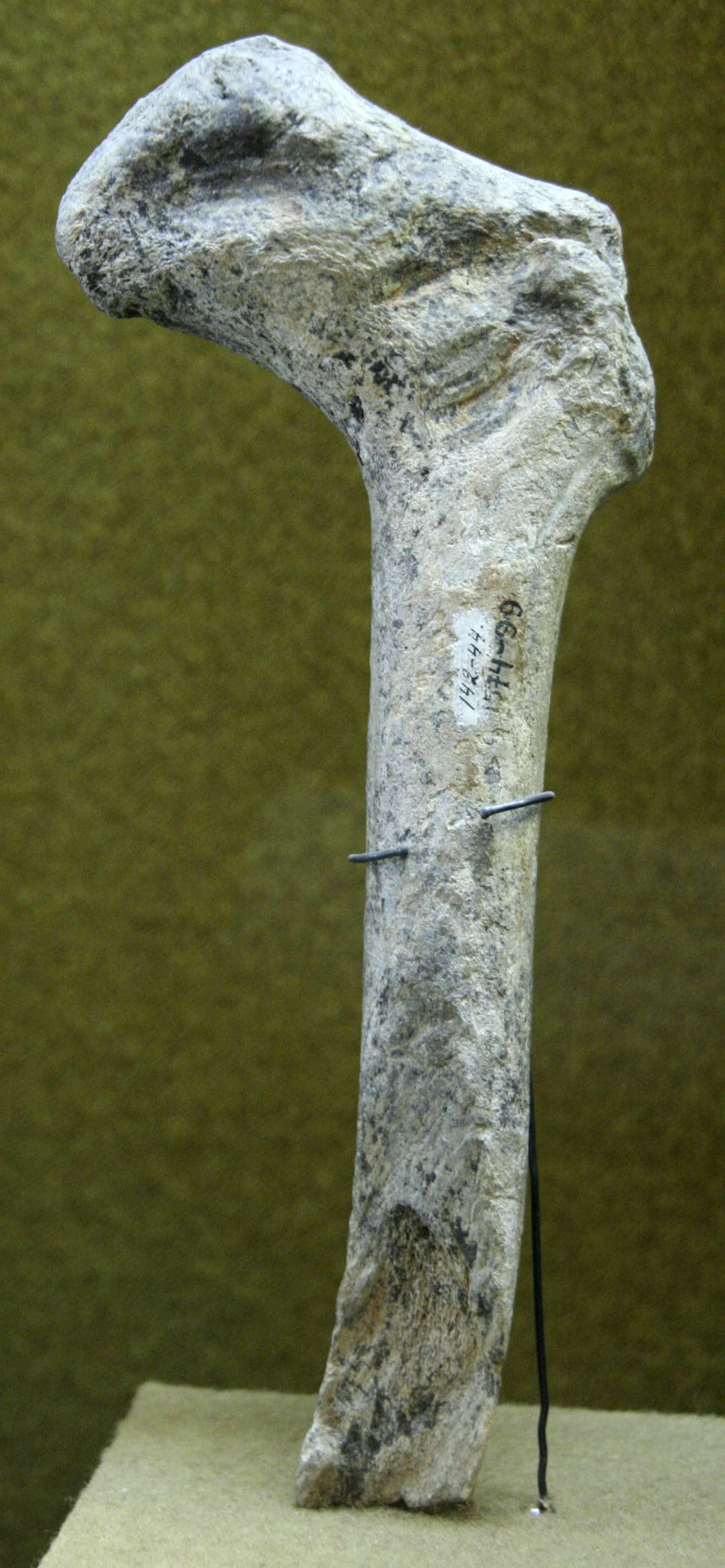
This bone shows evidence of long use as a knapping tool.
(The mark on the left end may have been from repeatedly striking a glancing blow to the flint being knapped, whereas the mark in line with the shaft of the bone looks more like damage from hitting an object at right angles - Don )
Photo: Vladimir Gorodnjanski 2007
Source: The Hermitage Museum, Saint Petersburg
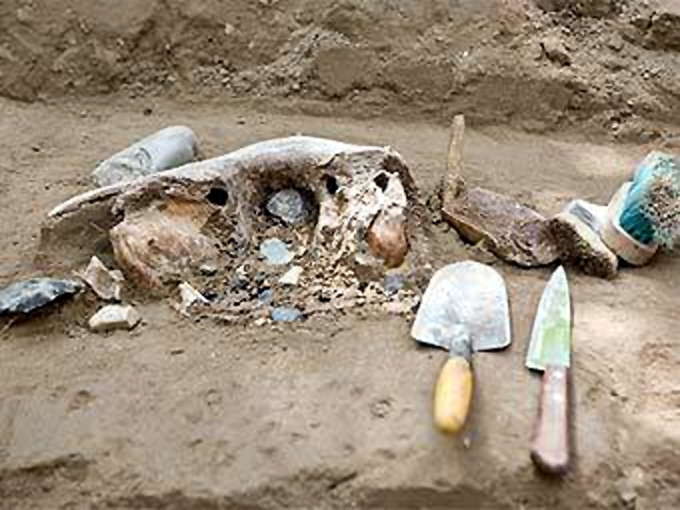
Near Krasnoyarsk, at Afontova Hill, archaeologists have discovered a baby mammoth jaw and several stone and bone tools of the Palaeolithic era. The estimated age of the finds is about 16 000 BP.
According to Dean of the Faculty of History, Krasnoyarsk State Pedagogical University, Eugene Artemyev, the artifacts were found on July 21 2008. On the jaw two teeth are preserved, and the tools found were a stone scraper for dressing hides, a stone axe, and a tool of mammoth tusk.
Afontova Hill is one of a group of the four oldest known sites of Upper Palaeolithic man. the age of the oldest layers with traces of human activities is estimated to be 35 000 years old. Archaeological research at the Mount Afontova began in 1884, with the Russian researcher Ivan Savenkovym.
It is planned that a Mount Afontova Museum will be created, which will be used to preserve and display the finds.
Photo: http://lenta.ru/news/2008/07/23/mammoth/
References
- Abramov A., Anikovich M., Bader N., Boriskovsky P., Lubin V., Praslin N., Rogachev A., А. АБРАМОВА, М. В. АНИКОВИЧ, Н. О. БАДЕР, П. И. БОРИСКОВСКИЙ, В. П. ЛЮБИН, Н. Д. ПРАСЛОВ, А. Н. РОГАЧЕВ, 1984: Archaeology of the USSR. 1984, Nauka, Moscow, 1984